









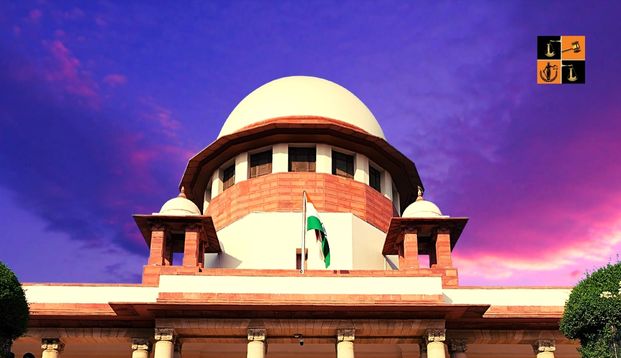
Recently, the Supreme Court set aside a Rs.2 crore compensation awarded by the National Consumer Disputes Redressal Commission (NCDRC) against ITC Limited in a consumer dispute arising out of a haircut at a luxury hotel salon, holding that while deficiency in service stood established, compensation cannot be granted in crores without reliable and admissible proof of actual loss. In a significant reaffirmation of evidentiary discipline in consumer jurisprudence, the Court cautioned that damages cannot be awarded “on the mere asking.”
Brief Facts:
The dispute traces back to 12 April 2018, when Aashna Roy visited the beauty salon at ITC Maurya Hotel, New Delhi, for a haircut. Alleging that the service was deficient and caused her professional and psychological harm, she approached the NCDRC under the Consumer Protection Act, 1986, claiming compensation for mental distress and financial loss. In September 2021, the NCDRC held ITC Limited guilty of deficiency in service and awarded Rs.2 crore as compensation.
ITC challenged the quantum before the Supreme Court. In the first round, the Apex Court upheld the finding of deficiency but set aside the compensation amount, observing that no substantive material justified such a high figure, and remitted the matter to the NCDRC for fresh determination. Upon remand, the complainant produced photocopies of various documents and enhanced her claim to Rs,5.20 crore. The NCDRC again awarded Rs.2 crore with 9% interest, prompting ITC to file the present appeal questioning the evidentiary basis of the award.
Contentions of the Appellant:
The appellant contended that the award of Rs.2 crore was arbitrary and unsupported by legally admissible evidence. It argued that the respondent relied exclusively on photocopies, without producing originals, examining authors, or offering herself for cross-examination. ITC submitted that the alleged loss of modelling or professional assignments was unsubstantiated and bore no demonstrable nexus to the haircut incident.
The appellant further pointed out that there was no documentary proof such as income tax returns or employment records establishing actual financial loss, and that the respondent’s earnings remained unaffected. It was also argued that denial of the opportunity to cross-examine and verify documents amounted to a breach of principles of natural justice.
Contentions of the Respondent:
Appearing in person, the respondent maintained that deficiency in service had already attained finality in the earlier round before the Supreme Court. She asserted that the haircut incident adversely affected her professional image, caused mental agony, and resulted in financial setbacks. Emphasising the summary and consumer friendly nature of proceedings under the Consumer Protection Act, she argued that strict technical rules of evidence should not be rigidly applied. According to her, the burden shifted to the appellant to disprove the documents she had placed on record.
Observations of the Court:
The Court underscored that although consumer fora are not strictly bound by the Indian Evidence Act, the fundamental principles of natural justice and evidentiary fairness remain indispensable, particularly when compensation claimed runs into crores. The Court noted that all documents relied upon by the respondent were photocopies, with no steps taken to prove their authenticity, summon their authors, or establish a clear evidentiary chain.
Crucially, the Court found no credible material demonstrating a proximate causal link between the alleged haircut deficiency and the claimed financial losses. It observed that compensation must rest on “cogent and reliable material,” and that speculative assertions or unverified documents cannot form the basis of substantial monetary awards. The Commission, the Court held, erred in relying on unproven photocopies and in disregarding the appellant’s request for cross-examination. Reiterating a core principle of damages law, the Bench declared that compensation cannot be granted “on the mere asking,” and must be supported by demonstrable proof of loss directly attributable to the deficiency established.
The decision of the Court:
Allowing the appeal in part, the Supreme Court set aside the Rs.2 crore compensation awarded by the NCDRC as unjustified and excessive in the absence of credible evidence, limiting the respondent’s entitlement to the Rs.25 lakh already disbursed pursuant to earlier orders. The ratio of the decision reinforces that even in consumer-friendly proceedings, substantial compensation must be grounded in proven, proximate, and quantifiable loss, deficiency in service alone does not automatically justify disproportionate damages.
Case Title: ITC Limited Vs. Aashna Roy,
Case No.: Civil Appeal No.3318 of 2023
Coram: Hon’ble Justice RAJESH BINDAL, Hon’ble Justice MANMOHAN
Advocate for the Petitioner: Adv. L.K. Bhushan, Adv. Raashi Beri, AOR Dua Associates,
Advocate for the Respondent: Caveator-in-person
Read Judgment @Latestlaws.com
Picture Source :



















