









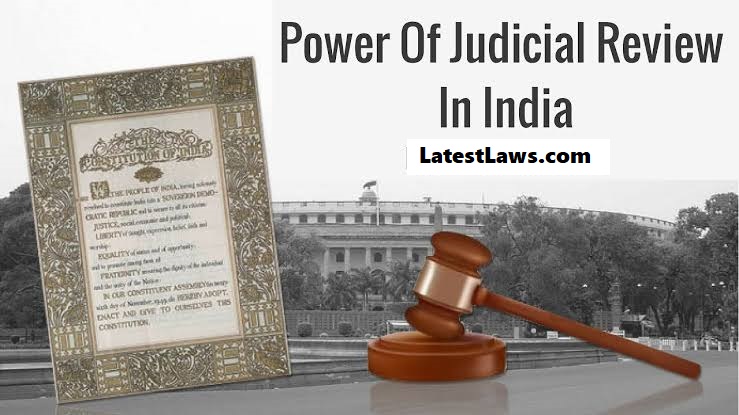
“The Government is the guardian of the finances of the State. It is expected to protect the financial interest of the State," stated the Supreme Court in its recent judgment, reinforcing the state’s right to make decisions in the interest of public resources. In a case revolving around the cancellation of an e-tender by the Divisional Forest Officer (DFO), the Court examined the delicate balance between judicial oversight and the administrative discretion necessary for ensuring fairness and protecting financial interests. Here follows an in-depth analysis of the Court's reasoning and its reaffirmation of judicial restraint in tender matters.
Brief Facts of the Case:
The case originated from the cancellation of an e-tender notification dated May 25, 2020, issued by the Divisional Forest Officer (DFO), Konni, for tree felling works in Nellidappara, South Kumaramperoor Forest Station. The cancellation, ordered on October 12, 2020, followed a circular dated February 29, 2020, which barred renewal of A-class contractor registrations for those who did not participate in tenders the previous year. This led to non-renewal of registrations for some petitioners, who challenged the circular in the Kerala High Court.
The Single Judge, on September 28, 2020, quashed the circular and directed reconsideration of renewals, allowing provisional participation in the May 2020 e-tender. Subsequently, the DFO’s re-tender notification on October 31, 2020, was challenged and set aside by the Single Judge on November 16, 2020, directing completion of the original tender. The Division Bench upheld this on January 19, 2021, prompting the appellants’ appeal to the Supreme Court.
Contentions of the Petitioner:
The appellants, led by the Principal Chief Conservator of Forest, argued that the High Court’s decision to set aside the DFO’s cancellation and re-tender notice was legally flawed. They contended that the DFO’s action was authorized under Clause 3 of the tender notice and Clause 20 of the e-government procurement notice, reserving the right to cancel bids without reasons. The appellants asserted that the cancellation addressed complaints from contractors unable to participate due to COVID-19 transport restrictions, promoting fairness.
They argued that judicial interference was unwarranted absent evidence of mala fides, citing Supreme Court precedents like Jagdish Mandal v. State of Orissa (2007). The High Court’s assumption that re-tendering would not yield lower bids was challenged as baseless, emphasizing the state’s prerogative to protect financial interests.
Contentions of the Respondent:
The respondents, who did not file a counter affidavit, orally argued that the Single Judge’s judgment was well-reasoned and correctly affirmed by the Division Bench. They contended that the DFO’s cancellation lacked concrete justification, especially since the original tender had sufficient participants and a competitive bid 12.67% below the estimated rate.
They supported the High Court’s finding that re-tendering would delay the project without guaranteed financial benefits, violating Article 14’s mandate against arbitrariness. The respondents maintained that their provisional participation, secured through interim court orders, validated their eligibility, and the cancellation unfairly prejudiced them.
Observation of the Court:
The Supreme Court reiterated the principle of judicial restraint in matters of administrative and contractual decisions, overturning the Kerala High Court’s interference with the cancellation of an e-tender. Emphasizing established jurisprudence, particularly Jagdish Mandal v. State of Orissa (2007), the Court held that judicial review in tender matters is permissible only when mala fides or patent arbitrariness is demonstrated.
The Court examined the Divisional Forest Officer’s (DFO) order dated October 12, 2020, cancelling the e-tender following complaints from contractors unable to participate due to COVID-19 transportation restrictions. Highlighting the administrative authority’s duty to address genuine grievances, the Court noted, "Some other contractors had complained that they could not participate in the e-tender due to Covid-19 transportation restrictions. Their grievances need proper redressal." It found that the DFO's decision was consistent with Clause 3 of the tender notice and Clause 27 of the e-government procurement guidelines, which empower the bidding authority to cancel or modify tenders without assigning reasons.
Criticizing the High Court's conclusion of arbitrariness, the Supreme Court ruled that "the High Court has committed a gross error" in misapplying the principles laid down in Jagdish Mandal. It observed that the DFO’s cancellation order sought to promote fairness among bidders, stating, "We are of the opinion that the order of DFO would give an equal opportunity to all the bidders and thus, there would be a fair play between them, ultimately benefitting the Government." It further emphasized that "the decision taken by the authority is not affecting the public interest, on the contrary it furthers the cause of the public interest and fair play."
Interpreting Article 14 in the context of public procurement, the Court underscored that while fairness must be ensured, the State’s financial interests remain paramount. Citing State of Orissa v. Harinarayan Jaiswal (1972), it reiterated that "The Government is the guardian of the finances of the State. It is expected to protect the financial interest of the State." And thus retains the right to cancel tenders to protect public resources.
Rejecting the High Court’s view that re-tendering for lower rates was unjustified, the Court stated, "the said observations by the High Court are contrary to the settled principles of law laid down by the Supreme Court that the Government is the protector of financial resources of the state and thus, it has every right to cancel and call for fresh tender if it is in the nature of protecting the financial interests of the State."
Relying on Tata Cellular v. Union of India (1994), the Court reaffirmed the contemporary judicial approach of minimal interference, observing, "The court does not have the expertise to correct the administrative decision. If a review of the administrative decision is permitted it will be substituting its own decision, without the necessary expertise, which itself may be fallible." Finding no mala fides in the DFO’s actions and recognizing the broader objective of ensuring equitable participation, the Court concluded that no grounds existed for judicial intervention.
Decision of the Court:
The appeals were allowed, and the judgment and order dated 19.01.2021 passed by the High Court of Kerala at Ernakulam in Writ Appeals Nos. 1568 of 2020, 1577 of 2020, and 1589 of 2020 were set aside.
Case Title: The Principal Chief Conservator of Forest & Ors. v. Suresh Mathew & Ors.
Case no.: Special Leave Petition (C) No (s). 12353-12355 of 2021
Citation: 2025 Latest Caselaw 398 SC
Coram: Hon'ble Ms. Justice Bela M. Trivedi and Hon'ble Mr. Justice Prasanna B. Varale
Advocate for the Petitioner: Adv. Nishe Rajen Shonker
Advocate for the Respondent: Adv. Namit Saxena
Read judgment @latestlaws.com, click here
Picture Source :




















