









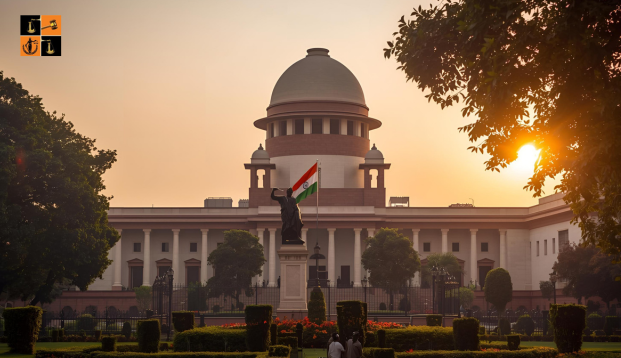
Recently, the Supreme Court examined the legality of an order passed by the Patna High Court suspending the sentence of a life convict under Section 389 of the Code of Criminal Procedure, 1973, despite his conviction for murder under Section 302 read with Section 149 of the Indian Penal Code, 1860, along with offences under the Arms Act. The challenge was brought by the original informant, whose father was killed inside a village temple, raising significant questions on whether suspension of sentence can be granted in serious offences after conviction, once the presumption of innocence stands displaced.
Brief Facts:
The case arose from an incident in December 2021, when the appellant and his father, a temple priest, went to a village temple to perform rituals. At the spot, several accused persons, including the concerned respondent, allegedly arrived armed with weapons, abused the deceased, and forcibly entered the temple. The prosecution alleged that while one of the accused fired the fatal shot, the respondent was present inside the temple armed with a country-made pistol and was instigating the killing. The victim succumbed to firearm injuries and was declared dead at the hospital. An FIR was lodged on the same day, followed by investigation, filing of charge-sheet, and trial. The Sessions Court convicted the respondent for murder and allied offences, sentencing him to life imprisonment. During pendency of appeal, the High Court suspended the sentence and granted bail, which led to the present challenge.
Contentions of the Appellant:
The counsel for the Appellant contended that the High Court committed a grave error in suspending the sentence of a convict who stood convicted for a serious offence of murder. It was argued that once a person is convicted after full trial, the presumption of innocence no longer survives, and suspension of sentence under Section 389 CrPC can be granted only in exceptional circumstances. The Appellant submitted that the respondent’s role was not merely passive, as he was armed, present at the scene, instigated the crime, and fled along with other accused. Reliance by the High Court on alleged delay in forwarding the FIR to the Magistrate and non-production of the original inquest report was described as irrelevant at the stage of suspension of sentence, particularly when the conviction was based on cogent ocular and medical evidence.
Contentions of the Respondents:
The counsel for the Respondent supported the High Court’s order by arguing that his role in the incident was limited to instigation and that he had not fired the fatal shot. It was contended that he had already undergone substantial incarceration and that the appeal against conviction was pending final hearing. The Respondent further relied on procedural aspects noted by the High Court, including the delay in sending the FIR to the Magistrate and the absence of the original inquest report, to contend that these factors created arguable points in appeal justifying suspension of sentence and grant of bail during pendency of the appeal.
Observation of the Court:
The Supreme Court found that the High Court had committed a clear error in suspending the sentence of a convict sentenced to life imprisonment for murder under Section 302 read with Section 149 IPC. Disapproving the reasons relied upon by the High Court, the Court categorically observed that the delay in forwarding the FIR to the Magistrate and non-production of the original inquest report were wholly irrelevant considerations at the stage of suspension of sentence, noting that “Delay of three days in sending the copy of the FIR to the court of the Magistrate and the non-production of original copy of the inquest report could be said to be illogical considerations… insofar as those aspects do not have any bearing on the credence of the prosecution’s case which was otherwise established on evidence before the Trial Court.”
On the issue of the respondent’s role being treated lightly by the High Court, the Supreme Court rejected the view that he was merely an instigator. It noted that the respondent was armed and actively present at the scene of crime, observing that “it may be true that respondent No.2 was instigator when the deceased was shot at, however, it is revealed from the record and the evidence… that respondent No.2 also had with him a country-made pistol.” The Court further emphasised that the overall conduct and participation of the respondent could not be diluted at the stage of suspension of sentence.
Reiterating settled principles under Section 389 CrPC, the Court underscored that suspension of sentence in murder cases can be granted only in exceptional circumstances, stating in clear terms that “once the accused is convicted at the end of the trial, the presumption of innocence does not continue,” and that orders suspending sentence “should not be passed as a matter of routine.” The Court stressed that in cases of life imprisonment, the appellate court must find a glaring or palpable error in the trial court’s judgment, which was absent in the present case.
The decision of the Court:
Allowing the appeal, the Supreme Court set aside the impugned orders of the Patna High Court suspending the sentence and granting bail to the respondent-convict. The Court held that the High Court had erred in exercising its powers under Section 389 CrPC in a case involving conviction for murder punishable with life imprisonment. The respondent was directed to surrender within ten days, with a further direction to the police authorities to ensure his custody in accordance with law.
Case Title: Rajesh Upadhayay V. The State Of Bihar & Anr.
Case No.: Special Leave Petition (Crl.) No.8736 of 2025
Coram: Hon’ble Mr Justice Manmohan and Hon’ble Mr Justice N.V. Anjaria
Counsel for the Appellant: AOR Adarsh Kumar Tiwari; Adv. Vinit Pathak; Adv. Vartika Maurya; AOR Adarsh Kumar Tiwari.
Counsel for the Respondent: Adv. Anshul Narayan, Addl. Standing Counsel; Adv. Vineeta Singh; Adv. Ashutosh Chaturvedi; Adv. Anshuman Harsh; AOR Prem Prakash; AOR Samir Ali Khan; Adv. Pranjal Sharma; Adv. Kashif Khan; Adv. Md. Arshad; Adv. Eksha Sharma; Adv. Manish Kumar; Adv. Rahul Jha; Adv. Vijay Pal; Adv. Shiv Kumar Raghunath Golwalkar; Adv. Ankur Mehta; Adv. Ashwani Kumar; AOR Anubhav.
Read Judgement @LatestLaws.com
Picture Source :




















