









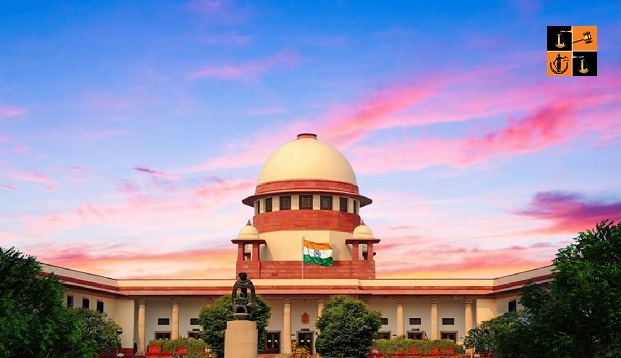
The Supreme Court reaffirmed the merit-based nature of the Senior Advocate designation while dismissing an unfounded challenge to its constitutionality. The judgment emphasized that "the classification of advocates under Section 16 of the said Act is a tangible difference established by the practice advocates have over decades, and the Court has devised a discernible and transparent mechanism to adjudicate the seniority of advocates in the profession."
Brief Facts:
The case revolved around a writ petition filed under Article 32 of the Constitution of India by practising Advocates. They challenged the designation of Advocates as Senior Advocates under Sections 16 and 23(5) of the Advocates Act, 1961, and Rule 2 of Order IV of the Supreme Court Rules, 2013. The petitioners contended that this classification created a special class of Advocates with distinct rights, privileges, and status that were not available to ordinary Advocates. They argued that this special designation resulted in the monopolization of the legal industry by a small group of designated Advocates, allegedly consisting of individuals with connections to Judges, Senior Advocates, politicians, Ministers, and more.
Contentions of the Petitioner:
The petitioners argued that the Senior Advocate designation created an unconstitutional special class with distinct rights, privileges, and status not granted to ordinary advocates. The petitioners claimed that this classification of Senior Advocates violated the principle of equality enshrined in Article 14 of the Indian Constitution and such a classification was discriminatory as it conferred superior status on a select few, including family members of judges, senior advocates, politicians, and ministers, while discriminating against other deserving advocates.
The petitioners argued that this classification resulted in a legal industry monopolized by a privileged few, discriminating against the majority of meritorious lawyers who did not hold the Senior Advocate designation.
The petitioners further contested the validity of the judgment in Indira Jaisingh vs. Supreme Court of India[1], which upheld the designation of advocates as Senior Advocates. They contended that these judgments, in their view, constituted judicial legislation and, therefore, ran afoul of the constitutional framework. The argument was centered on the belief that the judiciary had overstepped its bounds by providing guidelines for such designations, an action they deemed incompatible with the principles of separation of powers and constitutionality.
Observations of the Court:
The Supreme Court noted that while the petitioners criticized the Senior Advocate designation, this classification was created by the legislature and had a clear purpose. The designation recognized advocates with expertise, merit, and a standardized metric of excellence. It aimed to improve the legal profession's standards and efficiency.
The Court emphasized that Article 14 of the Constitution allows for reasonable classifications, and the petitioners had to demonstrate that the classification was palpably discriminatory and arbitrary to challenge its constitutionality. The classification of advocates into Senior Advocates and other advocates was not based on arbitrary grounds. The Court observed that there was a presumption of constitutionality, and the burden of showing a clear violation of constitutional principles rested on the petitioners.
The Decision of the Court:
The Supreme Court found the petitioners' arguments devoid of merit and justification. It held that the classification of advocates as Senior Advocates was not arbitrary or discriminatory. The Court dismissed the writ petition without ordering any costs. The judgment affirmed the constitutional validity of the Senior Advocate designation, underlining the system's reliance on merit and expertise in promoting excellence in the legal profession.
Case Title: Mathews J. Nedumpara & Ors. vs. Union of India & Ors.
Coram: Hon’ble Justice Sanjay Kishan Kaul, C.T. Ravikumar, and Sudhanshu Dhulia
Case No.: Case No: W.P.(C) No.- 000320/2023
Citation: 2023 Latest Caselaw 797 SC
Advocate for the Petitioner: Petitioner-in-person
Read Judgment @LatestLaws.com
[1] 2017 Latest Caselaw 3 SC
Picture Source :



















