









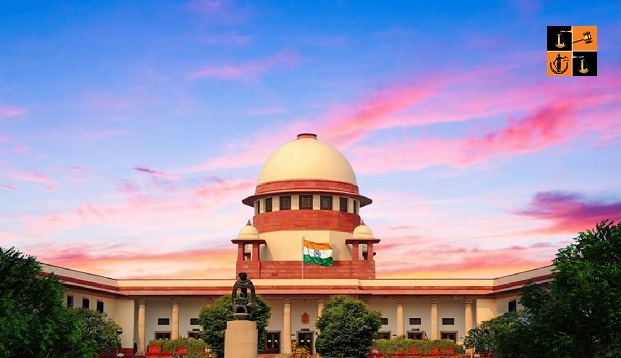
Recently, the Supreme Court held that an insurance company cannot repudiate a claim on the ground of voyage commencement during monsoon when it was aware of the intended schedule, in a matter involving the denial of marine insurance coverage for a vessel that sailed from Mumbai to Kolkata. The Court observed that enforcing such a strict condition would make the policy commercially meaningless and unreasonable.
Brief Facts:
The Appellant, engaged in the shipping business, purchased a newly built barge named Srijoy II and intended to undertake its maiden voyage from Mumbai to Kolkata. It obtained a single voyage permit, expecting departure on 30.04.2013 and arrival by 15.05.2013. The Appellant subsequently entered into an insurance contract with the Respondent, effective from 16.05.2013 to 15.06.2013, which included a special condition that the “voyage should commence & complete before monsoon sets in.” Despite necessary clearances from the Indian Register of Shipping and a “No Objection” from the Director General of Shipping, the Vessel commenced its voyage on 06.06.2013.
The next day, due to bad weather and engine failure, it was anchored near Ratnagiri Port and eventually ran aground. After the insurance period lapsed, the Appellant issued a ‘Notice of Abandonment’ on 25.07.2013 claiming total loss. However, the Respondent rejected the claim on 12.09.2013, citing breach of the special condition related to the monsoon. A surveyor’s report supported this view, attributing willful breach to the Appellant. Aggrieved by the repudiation, the Appellant filed a consumer complaint before the NCDRC, which was dismissed on 13.04.2021, holding that the Appellant had suppressed material facts and violated the principle of uberrimae fidei (utmost good faith).
Contentions of the Appellant:
The counsel for the appellant contended that the NCDRC’s decision was legally flawed and should be set aside. It was argued that the Respondent knew or ought to have known that the policy period fell within the monsoon season, making repudiation on that ground unjustified. The special condition was termed non-material, as the Respondent was aware the voyage would occur during foul weather, particularly through Kerala, where monsoon begins by June 1st, implying a waiver of the condition.
The counsel invoked the contra proferentem rule, asserting that ambiguity in the clause should be interpreted against the Respondent. It was also submitted that the Respondent failed in conducting due diligence despite knowing the voyage details. Lastly, it was argued that treating the special condition as a condition precedent would render the policy meaningless, as any claim during the insured period could be rejected.
Contentions of the Respondent:
The counsel for the respondent argued that the Appellant violated the core condition of the policy by setting sail after the monsoon had already begun, and also breached IRS norms by sailing in wave heights beyond 2 metres. It was contended that the clause “voyage should commence & complete before monsoon sets in” was clear and specific, leaving no room for ambiguity or application of the contra proferentem rule.
The Respondent accused the Appellant of submitting a tampered policy to the authorities, as no agreed-upon amendment to the special condition ever existed. It was further asserted that the foul weather season officially begins on June 1st, and the Appellant never disclosed its plan to sail during that period. Heavy reliance was placed on Supreme Court precedents to justify the repudiation of the claim.
Observation of the Court:
The Supreme Court carefully considered the parties’ submissions and examined the insurance contract, particularly the special condition that the voyage must “commence & complete before monsoon sets in.” The Court observed, “The only question which falls for our consideration is, whether the special condition stands breached justifying the de facto repudiation of the Appellant’s claim by the Respondent.” The Court then undertook a strict interpretation of the phrase “before monsoon sets in,” referring to the DGS Circular, which defines the foul weather period as beginning on 1st May along the East Coast and 1st June on the West Coast.
Thus, the Court concluded that for the East Coast, the voyage must have been completed before 1st May. Further, the Court rejected the appellant's argument that the phrase was ambiguous and therefore ought to be interpreted contra proferentem. It observed that, “As per the aforementioned rule, we are unable to find that the special condition contained in the policy is ambiguous per se.” The Court emphasized that the Appellant could not have completed the voyage from Mumbai to Kolkata, passing through multiple coastal states, before 1st May (foul weather on the East Coast), even if “There is absolutely no permutation and combination in which the Appellant could have fulfilled this condition under the policy.”
Moreover, the Court found the Respondent’s claim that it was unaware of the voyage to be undertaken during foul weather unacceptable, given that the proposal form clearly stated the voyage route and period (16.05.2013 to 15.06.2013). The Respondent’s repudiation on the basis of lack of uberrima fides was rejected. The Court also noted the unreasonableness of the special condition itself, observing that a strict interpretation would result in the insured never being able to claim, even in cases where the vessel failed to complete the voyage due to a marine peril, rendering the condition commercially and contractually unreasonable.
The decision of the Court:
The Court held that the insurance policy clearly required the voyage to "commence and complete before monsoon sets in," and based on the DGS Circular, monsoon on the East Coast begins on 1st May. Since the voyage from Mumbai to Kolkata began on 16.05.2013, it could not have met this condition, making strict compliance impossible. The Court observed that insurance terms must be interpreted reasonably to avoid unjust outcomes. It noted that the policy language was unambiguous and the rule of contra proferentem did not apply. Further, there was no misrepresentation by the appellant, and the insurer had full knowledge of the voyage plan. Thus, the repudiation of the claim was unjustified, and the appeal was allowed.
Case Title: Sohom Shipping Pvt. Ltd. vs. M/s. Assurance Co. Ltd. & Anr.
Case No.Civil Appeal No. 2323 of 2021
Coram: Justice B.V. Nagarathna, Justice Satish Chandra Sharma
Advocate for Petitioner: Adv. Huzefa Aziz Ahmadi (Sr. Adv.), M/S. Legal Options (AOR), Siddharth Bhatnagar (Sr. Adv.), Amol Chitale, Sonia Dube, Kanchan Yadav, Tanishq Sharma, Saumya Sharma, Ashray Chopra, Aditya Sidhra
Advocate for Respondent: Adv. Devadatt Kamat (Sr. Adv.), Abhishek Kumar, Nikhil Jain (AOR), Anshul Mehral, Ajay Desai, Sayantani, Divya Jain
Picture Source :



















