









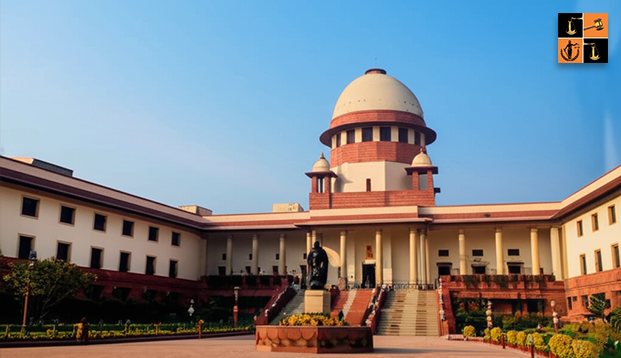
Recently, in a judgment examining the intersection of sentencing principles and constitutional safeguards, the Supreme Court addressed whether a life convict, whose sentence had been judicially fixed at 20 years of actual imprisonment without remission, is entitled to immediate release upon completing the term or must still seek executive remission. The ruling delves into the statutory meaning of “life imprisonment,” the scope of judicially imposed fixed terms, and the limits of continued detention under Article 21 of the Constitution. Read on to discover how the Court interpreted these principles and resolved the legal conundrum.
Brief facts:
The case concerns the abduction and murder of Nitish Katara, resulting in an FIR under Sections 364/34 Indian Penal Code, 1860, on his mother’s complaint. The appellant was convicted under Sections 302, 364, and 201 read with Section 34 IPC, and sentenced to life imprisonment with concurrent terms for the other offences. Co-convicts Vikas Yadav and Vishal Yadav were similarly convicted. The Delhi High Court upheld the conviction and modified the sentence to life imprisonment, equivalent to 20 years actual incarceration without remission, later clarified by the Supreme Court to run all sentences concurrently. Parole had been granted intermittently since 2015, but a 2023 furlough plea under Rule 1223 of the Delhi Prison Rules, 2018, was rejected for the offence’s gravity and absconding risk. The High Court dismissed the challenge, citing threats to the complainant and witnesses. During the pending appeal at the Apex Court, the appellant completed 20 years of actual imprisonment. The Court allowed amendment of the petition to raise the issue of release without remission and granted three months interim furlough, leading to final adjudication.
Contentions of the Appellant:
The appellant contended that he had complied with the sentence imposed, having completed 20 years of actual imprisonment without remission, entitling him to immediate release from jail. He argued that there is a distinction between release upon completion of a fixed-term sentence and remission, where remission applies only when the slot deposit pulsa sentence is incomplete, but here the fixed 20-year term has been fully served. He submitted that requiring him to seek remission post-20 years would be illegal, contrary to the judicially imposed sentence affirmed by the Supreme Court, and violative of his right to liberty under Article 21 of the Constitution. He further contended that the respondent's objections are technical and irrelevant, delaying his release, and that he no longer needs to apply for furlough or remission as the sentence is complete, provided he is not wanted in any other case.
Contentions of the Respondent:
The respondents contended that the appellant was sentenced to life imprisonment, with the 20-year period merely being without remission, and upon its completion, he must apply to the Sentence Review Board for remission of the life sentence (till natural life) under applicable policies, which could be granted or rejected. They argued that life imprisonment means imprisonment for the remainder of natural life unless remitted, and the appellant cannot be released automatically without an order of remission, as this would undermine the gravity of the crime. They submitted that post-20 years, the appellant must surrender after furlough and remain in jail unless remission is approved, emphasizing that release requires executive consideration under Sections 432 and 433-A of the Criminal Procedure Code, 1973 (CrPC), and that the fixed term does not equate to automatic release but only bars early remission.
Observation of the Court:
The Court examined the core issue of whether an accused/convict, having completed a fixed-term life imprisonment of 20 years without remission, is entitled to automatic release or must seek remission. The Court clarified the meaning of "life imprisonment" under Section 53 and Section 45 of the IPC, referring to the case Gopal Vinayak Godse vs. State of Maharashtra, where it was held that "a sentence of imprisonment for life must prima facie be treated as imprisonment for the whole of the remaining period of the convicted person’s natural life." However, it noted that in cases like Swamy Shraddananda (2) vs. State of Karnataka, courts can impose a fixed-term life sentence beyond 14 years without remission as a substitute for the death penalty, creating a "special category" to ensure proportionality.
Affirming the Constitution Bench ruling in Union of India vs. V. Sriharan, the Court observed that "imprisonment for life in terms of Section 53 read with Section 45 of the IPC only means imprisonment for rest of the life of the prisoner subject, however, to the right to claim remission, etc. as provided under Articles 72 and 161 of the Constitution to be exercisable by the President and the Governor of the State and also as provided under Section 432 of the CrPC." It emphasized that fixed-term sentences, exercisable only by High Courts or the Supreme Court, derive from the IPC and can specify periods like 20 years without remission, as in the appellant's case, where the High Court imposed "Life imprisonment which shall be 20 years of actual imprisonment without consideration of remission."
The Court distinguished remission, defined as "reduction of a sentence without changing its character" under Section 432 CrPC, from completion of a fixed sentence, noting that remission applies to link slot 5k indeterminate life sentences but not where a fixed term is judicially set and fully served. It clarified that parole and furlough are temporary releases not affecting sentence computation, while remission does not equate to acquittal and must align with constitutional safeguards under Articles 20 and 21. Relying on Maru Ram vs. Union of India, the Court reiterated that "remission, in the case of life imprisonment, ripens into a reduction of sentence of the entire balance only when a final release order is made," but in fixed-term cases, no further remission application is needed post-completion.
The Court highlighted constitutional issues under Article 21, stating that continued detention beyond sentence completion violates personal liberty, as in Bhola Kumar vs. State of Chhattisgarh, where it was stated that "when such a convict is detained beyond the actual release date it would be imprisonment or detention sans sanction of law."
Case Title: Sukhdev Yadav @ Pehalwan Vs. State Of (NCT Of Delhi) & Others
Case No: Criminal Appeal No.3271 Of 2025
Coram: Justice B.V. Nagarathna, Justice K.V. Viswanathan
Picture Source :




















