









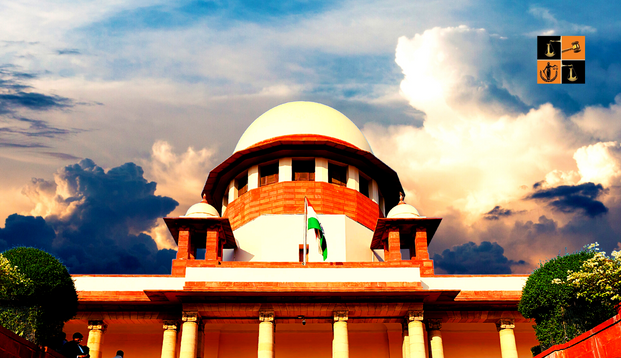
Recently, the Supreme Court unequivocally barred all High Courts and Trial Courts from granting regular or anticipatory bail based on monetary undertakings furnished by accused persons. The Court was dealing with an appeal challenging the cancellation of bail where the accused had failed to comply with his own sworn promise to deposit ₹25 lakh as a condition for bail. Emphasizing the sanctity of judicial proceedings, the Court sternly observed that “litigants are taking the courts for a ride and thereby undermining the dignity and honor of the court".
Brief Facts:
An accused, facing trial for serious financial offences including cheating and forgery, was initially denied bail by the Trial Court. On appeal, the Bombay High Court granted bail based on an affidavit-cum-undertaking voluntarily submitted by the accused, promising to deposit ₹25 lakh within five months. This condition formed a significant basis for the bail order.
However, after being released, the accused failed to fulfil the undertaking. When called upon to comply, he neither deposited the promised amount nor sought timely relaxation of the bail condition. Consequently, the complainant moved the High Court for cancellation of bail, which was eventually granted. The accused then approached the Supreme Court, challenging the cancellation of bail and contending that the financial condition imposed was onerous and should not have been a basis for granting or revoking bail.
Contentions of the Parties:
The counsel for the complainant argued that the accused had misled the High Court by offering a voluntary undertaking to deposit money and then defaulted. It was contended that this conduct not only breached a solemn assurance but also prevented the Court from deciding the bail plea on its merits. The counsel for the State supported this argument, emphasizing that the accused had, of his own volition, given an affidavit to secure his liberty and must face the consequences for flouting it.
The counsel for the accused claimed that the bail condition involving financial deposit was unreasonable. He relied on decisions like Biman Chatterjee v. Sanchita Chatterjee, Ramesh Kumar v. State of NCT of Delhi, and Apurva Kirti Mehta v. State of Maharashtra, arguing that breach of compromise terms or monetary non-compliance should not lead to bail cancellation.
Observations of the Court:
The Apex Court expressed serious concern over the practice of granting bail or anticipatory bail based on voluntary financial undertakings by accused persons. The Court noted that many High Courts have been routinely passing bail orders subject to monetary conditions, often relying on the accused’s statement that they would deposit a certain amount within a stipulated period.
The bench observed that in several such cases, accused individuals later renege on their assurances, terming the condition “onerous,” and courts are then left with no option but to cancel the bail, thereby wasting valuable judicial time. The Court remarked, “We have come across cases like the one in hand where accused persons have gone to the extent of filing affidavits in the form of undertaking that they would deposit a particular amount within a particular period and then conveniently resile from such undertakings saying it is an onerous condition".
The Court noted with disapproval that some accused even blame their lawyers for making such statements on their behalf, thereby undermining professional ethics and misusing the judicial process, “It was too much for the lawyer of the appellant to argue before the High Court that asking his client to deposit ₹25,00,000/- was unreasonable. It reflects on the professional ethics".
Issuing a clear directive to all courts across the country, the Supreme Court declared that henceforth no bail, regular or anticipatory, shall be granted based on any undertaking related to financial deposits. The Court stated, “By this order, we make it clear and that too in the form of directions that henceforth no Trial Court or any of the High Courts shall pass any order of grant of regular bail or anticipatory bail on any undertaking that the accused might be ready to furnish". The Court emphasized that bail decisions must be made solely on legal merits and not influenced by offers of monetary deposits, no matter how voluntarily they are made. In no uncertain terms, the Court warned, “This practice has to be stopped. Litigants are taking the courts for a ride and thereby undermining the dignity and honor of the court ".
Expressing grave dissatisfaction with the conduct of the accused in the case at hand, the Court concluded, “The appellant has made a mockery of justice. He could be said to have abused the process of law ".
The decision of the Court:
In light of the above observations, the Top Court dismissed the appeal and upheld the cancellation of bail originally granted to the appellant. Further, as a penalty for abuse of process, the Court imposed a cost of ₹50,000, to be deposited with the Supreme Court Mediation Centre within one week. The Registry has been directed to circulate a copy of the judgment to all High Courts, reinforcing that bail must never be granted based on undertakings of monetary deposit, and that all future bail pleas must be adjudicated strictly on the merits of the case.
The appellant has been given four weeks to surrender, after which he may file a fresh bail application, to be considered purely on legal grounds and not on the basis of any financial promises or compromise.
Case Title: Gajanan Dattatray Gore vs. The State of Maharashtra & Anr.
Citation: 2025 Latest Caselaw 733 SC
Case No.: Special Leave to Appeal (Crl.) No.10749/2025
Coram: Justice J.B. Pardiwala, Justice R. Mahadevan
Picture Source :



















