









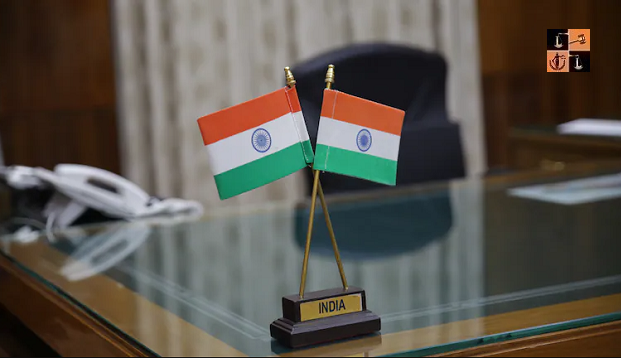
The Supreme Court of India has affirmed the unique status of the National Capital Territory of Delhi under Article 239AA of the Indian Constitution. The Court recognized that this provision establishes a constitutionally mandated legislature and Council of Ministers for the NCT of Delhi, distinguishing it from other Union Territories.
The Court also affirmed that the NCT of Delhi has legislative and executive power over Entry 41 of List II of the Seventh Schedule, which pertains to ‘Services’.
Brief Facts of the Case:
The Civil Appeal was filed before the Supreme Court concerning the dispute between the Union Territory of Delhi and the Union Government in India regarding the control of ‘services’ in the National Capital Territory of Delhi (hereinafter referred to as “NCTD”). The question was whether the Government of the National Capital Territory of Delhi or the Lieutenant Governor acting on behalf of the Union Government had control over these services.
Brief Background of the Case:
The dispute arose after a notification was issued by the Union Ministry of Home Affairs in 2015, which delegated control of services to the Lieutenant Governor to the extent delegated by the President while excluding Entry 41 of the State List of the Seventh Schedule to the Constitution.
Procedural History:
The validity of this notification was challenged before the High Court of Delhi and was upheld but was later referred to a Constitution Bench on 15 February 2017 for interpretation of Article 239AA of the Constitution of India, which deals with ‘Special provisions with respect to Delhi’. This regular Bench then differed on the exclusion of ‘services’ from the legislative and executive domain of the government of NCTD. The matter then went before a three-judge Bench, where the issue of the scope of legislative and executive powers of the Centre and NCTD with respect to ‘services’ was considered.
Contentions of the Appellants:
The appellant argued that the Legislative Assembly of NCTD had the power to enact laws under Entry 41 of List II of the Seventh Schedule, even though the entry used the term “state public services” and not “Union Territory public services”. They pointed out that Delhi Legislative Assembly had enacted laws within Entry 41. They also argued that NCTD had legislative and executive power over all entries in List II other than entries 1, 2, and 18, which Article 239AA had expressly excluded.
The appellants explained that the phrase “insofar as such matter is applicable to Union Territories” in Article 239AA was inclusionary and not exclusionary. They further argued that the Balakrishnan Committee's report was irrelevant because it preceded the inclusion of Article 239AA. The majority in the 2018 Constitution Bench judgment had expressly noted that the report would not be used as an aid in interpreting Article 239AA.
They further explained that personnel belonging to All-India Services and Central Government Services were governed by specific rules, and while the Joint Cadre Authority could make an officer available to the government of NCTD, the actual posting of the officer within the departments of the government of NCTD was the prerogative of the latter.
Additionally, the appellant argued that the power to control ‘services’ had been devolved upon the local government of the National Capital Territory, even in countries with centralized forms of government. They provided an overview of the control of services in national capital territories across the world to support their argument.
Contentions of the Respondents:
The Respondents argued that Union Territories could not avail of Entry 41 of List II as they did not have a State Public Service or a State Public Service Commission. The 2018 Constitution Bench judgment did not determine if NCTD has the legislative competence to control Entry 41 of List II. They contended that Delhi, being the national capital, had a unique status that necessitated the Union's control over services to allow it to fulfil its national and international obligations. The Respondents explained that Article 239AA meant that the legislative powers of NCTD would only extend to entries applicable to Union Territories. The power would only apply when the entry was clearly and unequivocally relevant to Union Territories.
The Respondents emphasized that List II had to be interpreted contextually, and some entries might be excluded from the government of the NCTD domain. He stated that the Union of India's control over services had not resulted in any governance problems in NCTD. They argued that the Transaction of Business Rules 1993 conferred adequate powers on Ministers of the government of NCTD to ensure supervisory and functional control over civil services, with administrative control vesting in the Union.
The Constitution Bench was only required to determine if NCTD had the power to legislate under Entry 41 of the State List and the meaning of the term “in so far as any such matter is applicable to Union Territories” in Article 239AA(3)(a).
Observations of the Court:
The Supreme Court of India examined the unique governance structure of the National Capital Territory of Delhi (NCTD) and its special status under Article 239AA of the Indian Constitution. The Court affirmed that the NCTD has a constitutionally mandated legislature and Council of Ministers that distinguishes it from other Union Territories.
The Legislative Assembly of the NCTD has jurisdiction over Entries in List II and List III, except those explicitly excluded from List II. The executive power of the NCTD extends to all matters over which it has the power to legislate, subject to the executive power conferred upon the Union by the Constitution or by a law enacted by the Parliament. However, the phrase “insofar as any such matter is applicable to Union Territories” in Article 239AA (3) does not prevent the NCTD from exercising its legislative power over Entries in the State List or Concurrent List. The Court stressed the importance of an accountable civil service and clarified that NCTD has legislative and executive power over ‘Services’ due to the applicability of Part XIV of the Constitution and the exercise of rule-making power under the proviso to Article 309.
The decision of the Court:
The Supreme Court has resolved the issue and provided clarification on the matter. Following this, the papers related to the case will be forwarded to the Regular Bench for further action, pending instructions from the Chief Justice of India on the administrative side.
Case Title: Government of NCT of Delhi v Union of India
Case No.: Civil Appeal No. 2357 of 2017
Citation: 2023 Latest Caselaw 463 SC
Coram: Hon'ble Dr. CJI Dhananjaya Y Chandrachud, Hon’ble Mr. Justice M.R Shah, Hon’ble Mr. Justice Krishna Murari, Hon’ble Mrs. Justice Hima Kohli and Hon’ble Mr. Justice Pamidighantam Sri Narasimha
Advocates for Petitioner: Dr. Abhishek Manu Singhvi, Sr. Adv., Mr. Chirag M. Shroff, AOR, Mr. Shadan Farasat, Adv., Mr. Rahul Mehra, Sr. Adv., Mr. Shourya Dasgupta, Adv., Ms. Hrishika Jain, Adv., Mr. Aman Naqvi, Adv. and Mr. Mreganka Kukreja, Adv.
Advocates for Respondent: Mr. Tushar Mehta, SG, Mr. Sanjay Jain, A.S.G., Mr. R Bala, Sr. Adv., Mr. Kanu Agarwal, Adv., Mr. Rajat Nair, Adv., Mr. Saurabh Mishra, Adv., Mr. Rajesh Kumar Singh, Adv., Mr. Padmesh Mishra, Adv., Mr. Arkaj Kumar, Adv., Mr. Arvind Kumar Sharma, AOR, Mr. Gagan Gupta, AOR and Mr. K.R. Sasiprabhu, AOR
Read Judgement @LatestLaws.com
Picture Source :




















