









Supreme Court of India was dealing with the petition challenging the judgment and decree dated 20.07.2017 passed by the High Court of Judicature for Rajasthan in Civil First Appeal, filed by the Appellants under Section 96 read with Order 41 of CPC, whereby the High Court has allowed the said First Appeal.
Brief Facts:
The original plaintiff Daulalji filed the suit seeking possession of the suit property alongwith the mesne profits, against the original defendant - Smt. Bhonri Devi, widow of Late Shri Dhannalalji and against the other defendant who were the tenants in the suit property. As per the case of the plaintiff – Daulalji, he was adopted by Sri Bakshji, who was the great-grandson of their common ancestor Gopalji on 11.06.1916. The husband of the defendant No.1 Bhonri Devi, i.e., Dhannalalji predeceased his father Ganeshnarayanji in 1936. As per the further case of the plaintiff Daulalji, Harinarayanji had executed a Will in his favour, and upon his death, he had become the owner of the suit property alongwith other properties of Harinarayanji by virtue of the said Will. Upon the death of Harinarayanji, the defendant No.1 – Bhonri Devi started harassing the plaintiff and therefore the plaintiff left the suit property, and since then the defendant No.1 was in possession of the suit property. The suit was decreed by the trial Court against which the First Appeal was preferred by the legal representatives of the defendant no. 1 Bhonri Devi. The said First Appeal having been allowed by the High Court vide the impugned order dated 20th July, 2017.
Appellant’s Contention:
Learned counsel for the appellant submitted that mere possession of property or a right to maintenance under the old Shastric Law did not give any right to the defendant no. 1 Bhonri Devi under Section 14(1) of the said Act of 1956. It was submitted that A Hindu Female having a right to maintenance would not ipso facto create any charge on the property. A right to maintenance may amount to a legal charge if such charge is created either by an agreement between the parties or by a decree.
Respondent’s Contention:
Learned Counsel for the respondent submitted that the exclusive possession of widow of HUF property itself would create a presumption that such property was earmarked for realization of her pre-existing right of maintenance, more particularly when the surviving co-parcener did not earmark any alternative property for recognizing her pre-existing right of maintenance. It was submitted that the expression “acquire” is also required to be given a widest possible meaning to include acquisition by possession, especially when such possession of widow already satisfied her pre-existing right of maintenance.
SC’s Observations:
The issue before the SC was whether Bhonri Devi, the predecessor of the present respondents had become an absolute owner on coming into force the Act of 1956, revolves around the interpretation of Section 14 thereof?
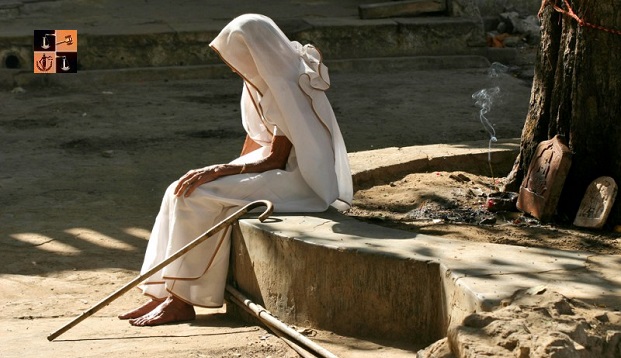
SC stated that there remains no shadow of doubt that a Hindu woman’s right to maintenance was not and is not an empty formality or an illusory claim being conceded as a matter of grace and generosity. It is a tangible right against the property, which flows from the spiritual relationship between the husband and the wife. SC stated that where a Hindu widow is in possession of the property of her husband or of the husband’s HUF, she has a right to be maintained out of the said property. She is entitled to retain the possession of that property in lieu of her right to maintenance.
SC further stated that where a Hindu widow is found to be in exclusive settled legal possession of the HUF property, that itself would create a presumption that such property was earmarked for realization of her pre-existing right of maintenance, more particularly when the surviving co-parcener did not earmark any alternative property for recognizing her pre-existing right of maintenance.
SC Held:
After evaluating submissions made by both the parties the SC held that “The word “possessed by” and “acquired” used in Section 14(1) are of the widest amplitude and include the state of owning a property. It is by virtue of Section 14(1) of the Act of 1956, that the Hindu widow’s limited interest gets automatically enlarged into an absolute right, when such property is possessed by her whether acquired before or after the commencement of 1956 Act in lieu of her right to maintenance. The High Court had rightly held that Bhonri Devi had pre-existing right to maintenance in the suit property that had ripened into full ownership by virtue of Section 14(1) of the Act of 1956.”
Case Title: Munni Devi Alias Nathi Devi v. Rajendra Alias Lallu Lal
Bench: J. Ajay Rastogi and J. Bela M. Trivedi
Citation: CIVIL APPEAL NO. 5894 OF 2019
Decided on: 18th May, 2022
Read Judgment @Latestlaws.com
Picture Source :




















