









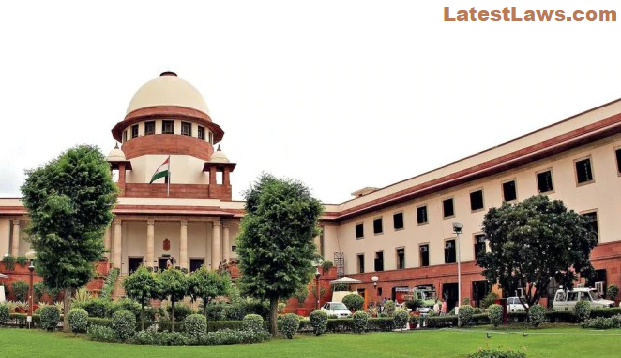
The Division Bench of Supreme Court consisting of Justices Indira Banerjee and R. Subhash Reddy held that if appellant fails to submit its reply at the conciliation stage, and fails to appear, the Facilitation Council can, at best, record the failure of conciliation and proceed to initiate arbitration proceedings as per the Arbitration and Conciliation Act, 1996, to adjudicate the dispute and make an award.
Facts
The appellant herein, which is the successor company of erstwhile Jharkhand State Electricity Board, entered a contract with the 3rd respondent - M/s. Anamika Conductors Ltd., Jaipur, for supply of ACSR Zebra Conductors. 3rd respondent claiming to be a small scale industry, approached the Rajasthan Micro and Small Enterprises Facilitation Council, claiming an amount of Rs.74,74,041/- towards the principal amount of bills and an amount of Rs.91,59,705.02/- towards interest. Claiming the appellant has not responded to earlier notices, the Council issued summons dated 18.07.2012 for appearance of the appellant before the Council on 06.08.2012. Only on the ground that on 06.08.2012 the appellant has not appeared, the order dated 06.08.2012 was passed by the Council directing the appellant to make the payment to the 3rd respondent, as claimed, within a period of thirty days from the date of the order.
Procedural History
The said order was under challenge before the High Court by way of writ petition, and same was dismissed by the learned Single Judge. An intra-court appeal preferred by the appellant was also ended in dismissal. Hence, this appeal.
Contentions made
Appellant: As there were some disputes on the supplies made by the 3rd respondent, the bill amount due was not paid immediately. Only on the ground that the appellant did not respond in the conciliation proceedings, straightaway the order was passed by the Council without giving proper opportunity. The order impugned in the writ petition was passed, in utter disregard to the mandatory provision u/s 18 of the Micro, Small and Medium Enterprises Development Act, 2006 (the ‘MSMED Act’) and the provisions of Arbitration and Conciliation Act, 1996. Even after the order passed by the Council on 06.08.2012, the appellant after inspecting the records, has paid the due amount Rs.63,43,488/- to the 3rd respondent. Such amount was paid after inspecting the records to the 3rd respondent, who had received that amount without any protest. After a period of three years thereafter, 3rd respondent has filed execution case before the Civil Judge which ultimately ended in dismissal on the ground of maintainability. When the said order was challenged by way of writ petition, said writ petition was subsequently dismissed as withdrawn.
Referring to 18(3) of the MSMED Act, it was submitted that in this case without following the procedure, straightaway the order impugned in the writ petition was passed without giving any opportunity to the appellant to participate in the arbitration proceedings. The said order is a nullity and cannot be termed as an award under provisions of Arbitration and Conciliation Act, 1996. As per the terms of the contract any dispute was subject to jurisdiction of civil courts at Ranchi and the 3rd respondent having agreed to such terms, had approached the Council in the State of Rajasthan. Thus, the order passed by the Council is without jurisdiction and contrary to terms and conditions of the agreement.
Respondent: The counsel for the 2nd respondent (Rajasthan Micro and Small Enterprises Facilitation Council) submitted that there were no grounds to interfere with the impugned order passed by the High Court. Against the award passed by the Council on 06.08.2012, it was open to appellant to challenge the same before the competent forum under Section 34(3) of the Arbitration and Conciliation Act, within the specified time. Having failed to question the award before the competent forum, the appellant made a belated attempt by questioning the order of the Council by way of writ petition, which was rightly dismissed by the learned Single Judge and confirmed by the Division Bench of the High Court. As the appellant has not responded to the various notices/summons issued by the Council, the Council itself has taken up the dispute and passed the award.
The counsel for the 3rd respondent submitted that though the supplies were made as per the terms of the contract, the appellant delayed the payment which necessitated him to approach the Council. Though several notices were issued by the Council, appellant has not responded to the same and lastly by issuing summons the Council passed the award on 06.08.2012 by recording a finding that appellant is guilty of delay in paying the amounts due to the 3rd respondent. Even after the award, a notice was issued to the appellant, instead to comply the award only an amount of Rs.63,43,488/- was paid. Thereafter as the awarded amount was not paid, the 3rd respondent filed execution case before the civil court at Ranchi, same was questioned by the appellant by way of writ petition which was subsequently dismissed as withdrawn. Civil Judge at Ranchi dismissed the execution case on the ground that it was not maintainable due to lack of territorial jurisdiction. Though proper opportunity was given, the appellant has not responded to the same before the Council and there are no grounds to interfere with the impugned order passed by the High Court.
Reliance was placed on Rajkumar Shivhare vs Asst. Director, Directorate of Enforcement & Anr. It was submitted that appellant has partly complied the award by paying an amount of Rs.63,43,488/-, as such it is not open to challenge the same at this point of time.
Observations of the Court
Having carefully perused the submissions and judgments relied upon, the Bench observed that:
“From a reading of Section 18(2) and 18(3) of the MSMED Act it is clear that the Council is obliged to conduct conciliation for which the provisions of Sections 65 to 81 of the Arbitration and Conciliation Act, 1996 would apply, as if the conciliation was initiated under Part III of the said Act. If the appellant had not submitted its reply at the conciliation stage, and failed to appear, the Facilitation Council could, at best, have recorded the failure of conciliation and proceeded to initiate arbitration proceedings in accordance with the relevant provisions of the Arbitration and Conciliation Act, 1996, to adjudicate the dispute and make an award. Proceedings for conciliation and arbitration cannot be clubbed”
They further observed that:
“In this case only on the ground that the appellant had not appeared in the proceedings for conciliation, on the very first date of appearance, an order was passed directing the appellant to pay Rs.78,74,041/- towards the principal claim and Rs.91,59,705/- odd towards interest. As it is clear from the records of the impugned proceedings that the Facilitation Council did not initiate arbitration proceedings in accordance with the relevant provisions of the Arbitration and Conciliation Act, 1996.”
Judgment
The civil appeal was allowed and the impugned judgment and order was set aside. Consequently, the order/award passed by the 2nd respondent stood quashed. However, it was left for the 2nd respondent-Council to either take up the dispute for arbitration on its own or refer the same to any institution or centre providing alternate dispute resolution services, for resolution of dispute between the parties.
Case Name: Jharkhand Urja Vikas Nigam Limited vs The State of Rajasthan & Ors.
Citation: Civil Appeal No.2899 of 2021
Bench: Justice Indira Banerjee, Justice R. Subhash Reddy
Decided on: 15th December 2021
Read Judgment @Latestlaws.com
Picture Source :



















