









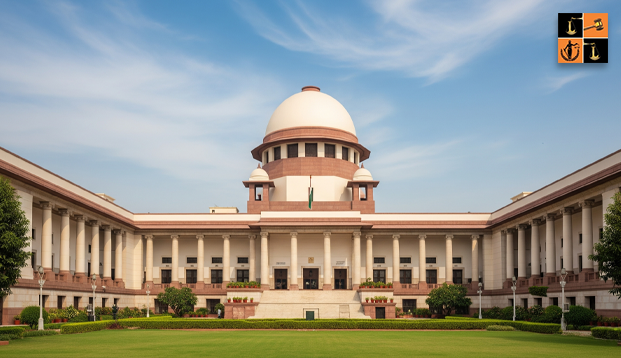
Recently, the Supreme Court held that the constitutional guarantee of a speedy trial under Article 21 of the Constitution is not eclipsed by the seriousness or gravity of the allegations. While allowing the appeal and setting aside the Delhi High Court’s refusal of bail, the Court clarified that prolonged pre-trial incarceration, in the absence of meaningful progress in the trial, impermissibly converts detention into punishment, a consequence that cannot be countenanced within a constitutional system.
Brief facts:
The case arose from proceedings relating to alleged large-scale bank fraud involving a corporate group, following the registration of FIRs by public sector banks for offences including cheating, criminal breach of trust, and corruption. On this basis, the enforcement agency initiated proceedings under the Prevention of Money Laundering Act, 2002 and effected an arrest, resulting in prolonged custody exceeding sixteen months. While prosecution complaints were filed, cognizance had not been taken, and the matter remained at the stage of document scrutiny, with over 200 witnesses cited and no realistic prospect of the trial commencing in the near future. Bail was declined by both the Special Court and the High Court, leading to the appeal before the Supreme Court.
Contentions of the Appellant:
The Counsel contended that continued incarceration infringed personal liberty and the right to a speedy trial under Article 21 of the Constitution, noting that the investigation had concluded, cooperation was complete, and only the appellant remained in custody despite multiple accused. The Appellant argued that prolonged detention, particularly where evidence is largely documentary and already seized, strongly favours bail, especially when delays were attributable to the enforcement agency’s own interlocutory challenges.
Contentions of the Respondent:
The Enforcement Directorate opposed bail on the grounds of the gravity and seriousness of the alleged economic offences, invoking the rigours of Section 45 of the PMLA. It was argued that the Appellant was an influential person who could tamper with evidence or influence witnesses, and that long incarceration alone could not justify bail in serious economic offences. The Respondent further contended that the delay in trial was not solely attributable to the prosecution and urged that statutory restrictions under the PMLA should prevail.
Observation of the Court:
The Court reiterated that “Article 21 of the Constitution applies irrespective of the nature of the crime” and that if the State or prosecuting agency lacks the ability to secure a timely trial, it cannot oppose bail merely by pointing to the seriousness of allegations. The Court emphasised that “prolonged incarceration of an undertrial, without commencement or reasonable progress of trial, cannot be countenanced, as it has the effect of converting pretrial detention into form of punishment.”
The Bench observed that “economic offences, by their very nature, may differ in degree and fact, and therefore cannot be treated as homogeneous class.” The Court also found that the delay in proceedings was largely attributable to the Enforcement Directorate itself, noting that an eight-month stall resulted from its challenge to an order of the Special Court. Allegations of witness influence and dissipation of proceeds of crime were found to be unsupported at this stage, with the Court remarking that such claims were “wholly incredulous” in the factual matrix before it.
The decision of the Court:
In light of the foregoing discussion, the Apex Court allowed the appeal and quashed the Delhi High Court’s order rejecting bail and directed the release of the Appellant on bail, subject to conditions to be fixed by the trial court, including surrender of passport and travel restrictions.
Case Title: Arvind Dham Vs. Directorate of Enforcement
Case No.: SLP (Crl.) No. 15478 of 2025
Coram: Hon’ble Mr. Justice Alok Aradhe and Hon’ble Mr. Justice Sanjay Kumar
Advocate for the Petitioner: Sr. Adv. Mukul Rohatgi and Sr. Adv. Niranjan Reddy, Adv. Mahesh Agarwal, Adv. Rishi Agrawala, Adv. Ankur Saigal, Adv. Ayushi Gaur, Adv. Anwesha Padhi, Adv. Sanjivani Pattajoshi, Adv. Sameer Rohatgi, Adv. Shambhu K. Thakur, Adv. Rishabh Basra, Adv. Shobh Nath Maurya, and AOR E. C. Agrawala.
Advocate for the Respondent: A.S.G. Suryaprakash V. Raju, Adv. Zoheb Hussain, Adv. Annam Venkatesh, Adv. Samrat Goswani, Adv. Aryansh Shukla, Adv. Hitarth Raja, Adv. Harsh Paul Singh, Adv. Agrimala Singh, Adv. Satyarth Singh, Adv. Kartik Sabharwal, Adv. Shaury Sarin, Adv. Aditi Andley, AOR Arvind Kumar Sharma, Adv. Anushka Gupta, Adv. Aakriti Mishra, and Adv. Prakhar Bharadwaj.
Read Judgment@ Latestlaws.com
Picture Source :



















