









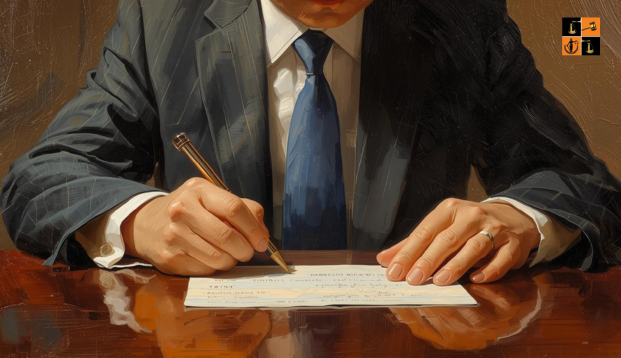
Recently, the Delhi High Court declined to quash criminal proceedings initiated under Section 138 and Section 141 of the Negotiable Instruments Act, 1881, (NI ACT), holding that a director who is a signatory to dishonoured cheques cannot seek refuge behind disputed resignations at the threshold stage. The Court emphasised that where the timing, genuineness, and effect of resignation are contested, such defences must be tested at trial and not short-circuited through quashing jurisdiction, observing that “this is not the remit of the Court while exercising jurisdiction under Section 528 BNSS.”
Brief facts:
The case arose from a batch of petitions under Section 528 of the Bharatiya Nagarik Suraksha Sanhita, 2023, seeking quashing of complaints filed by a Non-Banking Financial Company under Sections 138 and 141 of the NI Act. Loan facilities were extended between August 2021 and November 2022 to South Centre of Academy Pvt. Ltd. and Sampoorn Academy Pvt. Ltd., where the Petitioner, Dinesh Kumar Pandey, was a director at the time of sanction and execution of loan documents. Upon default, cheques issued towards repayment and signed by the Petitioner were dishonoured in March 2024 for "funds insufficient", followed by statutory notices dated 22 March 2024 and criminal complaints on non-payment. The Petitioner claimed resignation from the boards with effect from 1 April 2023 and 1 January 2024, relying on Form DIR-12 and MCA records to assert cessation of responsibility prior to dishonour.
Contentions of the Petitioner:
The Petitioner argued that the continuation of proceedings amounted to an abuse of process, as vicarious liability under Section 141 of the NI Act can arise only if the accused was in charge of and responsible for the conduct of the company’s business at the time the offence was committed. It was contended that the offence under Section 138 of the NI Act crystallises only upon dishonour, issuance of a statutory notice, and failure to pay within fifteen days, all of which occurred after the Petitioner’s resignation.
Contentions of the Petitioner:
The Counsel for the Respondent opposed the petitions, emphasising that the Petitioner was a key director who negotiated the loan facilities, executed loan documentation, and admittedly signed the cheques forming the subject matter of prosecution. It was argued that the resignations were timed after the accounts slipped into default and were disputed both in genuineness and legal effect. Invoking statutory presumptions under Section 118 and Section 139 of the NI Act, the Respondent submitted that such presumptions cannot be rebutted at the quashing stage through self-serving documents.
Observation of the Court:
The Court observed that the jurisdiction under Section 528 BNSS is narrowly confined and cannot be invoked to conduct a mini-trial. Emphasising that an offence under Section 138 of the NI Act is not an isolated act but a composite one, consisting of several acts and omissions, the Court noted that responsibility under Section 141 of the NI Act cannot be assessed by focusing only on the date of dishonour. It observed that “persons who were in charge of and responsible for the conduct of the company’s business at different legally relevant stages may be proceeded against.”
The Court highlighted that the Petitioner was an admitted signatory to the cheques, observing that a cheque signatory occupies a distinct position and cannot seek discharge merely by relying on subsequent corporate filings. While acknowledging that Form DIR-12 and MCA records are statutory documents, the Court clarified that where the timing, genuineness, or effect of resignation is disputed, such material cannot be treated as unimpeachable and incontrovertible evidence at the threshold. The Court cautioned that accepting the Petitioner’s plea would require it to “enter into a factual adjudication on controverted issues and to treat contested material as conclusive, which is not the remit of the Court” while exercising quashing jurisdiction.
The Bench further reiterated that once execution of the cheque is shown, the statutory presumptions under Section 118 and Section 139 of the NI Act operate in favour of the complainant, and whether the accused succeeds in rebutting them is a matter for trial after evidence is led. The Court concluded that disputed questions regarding resignation, continued control over company affairs, and the circumstances surrounding the issuance of cheques must necessarily be left to be tested before the trial court, rather than being pre-empted at the pre-trial stage.
The decision of the Court:
In light of the foregoing discussion, the Court dismissed all the petitions, holding that the complaints and summoning orders disclosed the basic ingredients of offences under Section 138 and Section 141 of the NI Act against the Petitioner, both as a cheque signatory and as a person prima facie responsible for the company’s affairs.
Case Title: Dinesh Kumar Pandey v. M/S Singh Finlease Pvt. Ltd. & Anr.
Case No.: CRL.M.C. 8175/2025
Coram: Hon'ble Justice Sanjeev Narula
Advocate for the Petitioner: Advs. Sumit Chauhan, Sushant Kumar
Advocate for the Respondent: Advs. Virat K. Anand, Kumar Shashank, Harish Nadda, Vikalp Singh, Srishty Kaul, Swati Kwatra
Read Judgment@ Latestlaws.com
Picture Source :




















