









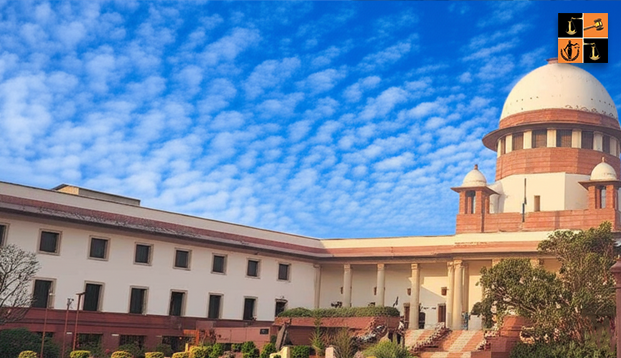
Recently, the Supreme Court strongly held that the pendency of a civil suit cannot be used as a cloak to evade criminal prosecution when clear signs of conspiracy and fraud are visible. The matter revolved around alleged manipulation of a partition deed and fabricated family tree to sideline rightful heirs from a hefty land compensation. In a scathing observation, the Court noted, “It would be unwise to rely on unverified testimony of a Sub-Registrar to ascertain the genuineness of the Partition deed.”
Brief Facts:
The dispute arose from a family property acquired for a government project, for which substantial compensation was awarded. The appellant and her sisters were allegedly left in the dark when a partition deed was executed among the male heirs of the late K.G. Yellappa Reddy. Later, a family tree was conveniently drawn up, excluding the daughters, to secure the compensation. Once the forgery was suspected and brought to light, criminal complaints followed. However, the High Court quashed the prosecution, relying on the Sub-Registrar’s statement that the partition deed was valid.
Contentions of the Respondent:
The respondents defended the High Court's quashing order, arguing that since civil suits regarding partition and injunction were already pending, criminal prosecution was unnecessary and abusive. They leaned heavily on the Sub-Registrar’s version, claiming the thumb impression on the deed was authentic and thus no offence under Sections 420, 468, or 471 IPC could be said to exist. According to them, their actions merely aimed to update land records, not to deceive or cheat.
Observations of the Court:
The Supreme Court did not mince words in reversing the High Court’s findings. It observed that a deliberate attempt was made to oust the rightful female heirs by forging documents and concealing their existence in official records. The Court categorically stated, “It appears that they... attempted to defraud their aunts by creating a forged family tree and partition deed with a motive to gain all the monetary award… All the above factors suggest that a criminal trial is necessary to ensure justice.”
Criticizing the High Court’s over-reliance on the Sub-Registrar’s testimony, the Court remarked, “This statement... has not been put to cross-examination. It would be unwise to rely on unverified testimony... to determine the genuineness of a partition deed.”
Reiterating long-settled law, the Court declared that criminal proceedings can very well run parallel to civil actions. Citing K. Jagadish v. Udaya Kumar G.S. and Pratibha Rani v. Suraj Kumar, the Court affirmed, “Civil and criminal remedies are not mutually exclusive. Fraud or forgery cannot be washed away merely because a civil dispute is pending.”
The decision of the Court:
Finding enough material to proceed against the respondents for conspiracy, cheating, and forgery, the Top Court set aside the High Court’s order and directed that the criminal trial must proceed to its logical end. The appeal was allowed, reaffirming that civil litigation cannot be used as a safe harbour against criminal accountability.
Case title: Kathyayini vs. Sidharth P.S. Reddy & Ors.
Coram: Justice Vikram Nath, Justice Prasanna B. Varale
Case No.: SLP(Crl.) No.1105 of 2024
Picture Source :



















