









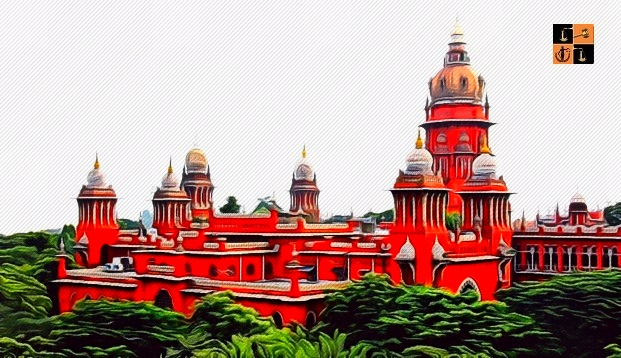
Recently, the Madras High Court expressed serious concern over the growing trend of slanderous campaigns against the judiciary on social media and emphasized the urgent need to regulate the level of public discourse in such spaces. The Court while dealing with a contempt-related matter involving allegations of caste and communal bias made by an advocate against a sitting Judge, ruled that such actions, if left unchecked, can seriously erode public confidence in the judiciary. The Court underscored that “judicial independence is a basic feature of the Constitution” and observed that launching communal campaigns under the garb of free speech cannot be tolerated.
Brief Facts:
The matter arose when an advocate, Thiru. S. Vanchinathan, whose name appeared in the cause list for a writ appeal before the Bench, was found to have made repeated allegations on social media accusing Justice G.R. Swaminathan of exhibiting caste bias. Despite being summoned, the advocate refused to clarify his position and continued with online commentary and interviews that were perceived as slanderous. Videos were played in open court showing the advocate attributing religious and caste-based motives to judicial decisions. In response, the Division Bench issued a pre-cognizance notice while clarifying that it was unrelated to any complaint pending before the Chief Justice of India.
Observations of the Court:
The Division Bench comprising Justice G.R. Swaminathan and Justice K. Rajasekar observed, “Judicial independence is a basic feature of the Constitution. We Judges have taken oath to discharge our judicial duties not only without favour but also without fear... Time has come to regulate the level of discourse in the social media. In the name of freedom of speech and expression, one cannot condone acts of contempt. The channels which rake in monies by such slanderous campaigns will have to be taken head on. Lawyers who make such statements are guilty of professional misconduct. There is something called Laxman Rekha which if crossed must invite peril".
The Bench expressed its dismay over the involvement of retired judges and senior lawyers in publicly questioning the court's proceedings without waiting for its outcome. The Court stated “We ignore them with the contempt which they deserve.” Citing legal precedents, the Court referred to judgments from both the Supreme Court and the Kerala High Court which had held that, “Allegations of partiality, bias, or improper motives strike at the very heart of judicial integrity and are treated with particular seriousness". The Court further noted, “The objective is not to shield individual judges from criticism but to protect public confidence in the administration of justice".
The Bench also noted that Vanchinathan had previously been suspended by the Bar Council of India and continued to act in a manner unbecoming of an advocate even after revocation. It stressed that repeated vilification of judges amounted to contempt and could not be protected under Article 19 of the Constitution.
On the misleading media reports suggesting that the matter was transferred due to pressure from senior lawyers and retired judges, the Court clarified, “Our course of action cannot be governed by public statements. We are aware of the procedural rules and our order will be in consonance with the same.”
The decision of the Court:
The High Court concluded the judgment by directing the Registry to place the entire matter before the Chief Justice of the Madras High Court for appropriate action. The Court made it clear that the Chief Justice alone was competent to decide the course of action in the case. The Court reiterated its zero-tolerance stance towards any individual or media channel that attempts to undermine judicial authority for personal or political gain.
Case Title: Dr D Vetrichelvan Vs The Tamil University & Ors
Case No.: W.A(MD)No.510 of 2023 and C.M.P(MD)No.5219 of 2023
Coram: Justice G.R. Swaminathan, Justice K. Rajasekar
Picture Source :




















