









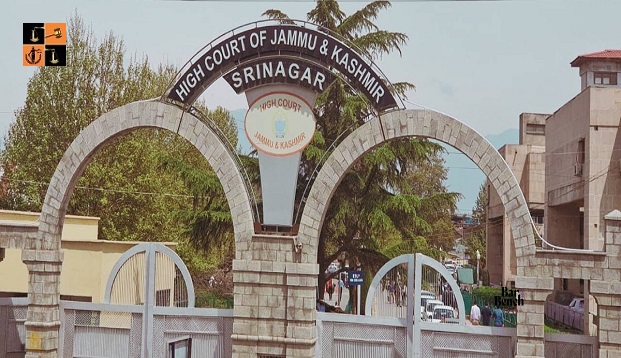
The Jammu & Kashmir and Ladakh High Court has quashed an FIR filed against a company and its director in relation to a government contract dispute, holding that the prosecution was “an abuse of process of law” and intended to defeat an arbitral award passed against the department.
A Bench of Justice Sanjay Dhar noted that the FIR, registered in 2023, stemmed from a letter issued in October 2014. The Court highlighted that the department was aware of the letter since 2015, had responded to it before the Arbitral Tribunal in 2017, and that the Tribunal had already considered its legality while delivering an award in March 2019. Despite this, the FIR was lodged nine years later without any explanation, which the Court found to be “unexplained and deliberate.”
The petitioners, represented by Senior Advocates Z. A. Shah, Syed Faisal Qadiri, and Arif Sikandar Mir, argued that the FIR was a ploy to evade compliance with the arbitral award. They submitted that the issues raised in the FIR had already been adjudicated by the Arbitral Tribunal, and allowing the criminal proceedings to continue would effectively permit the investigating agency to sit in appeal over the arbitral award. They further emphasized that since the department had full knowledge of the disputed letter since 2015, the nine-year delay in lodging the FIR demonstrated mala fide intent.
On the other hand, Senior AAG Mohsin Qadiri, appearing for the State, argued that the FIR disclosed serious allegations of criminal misconduct and conspiracy. It was contended that petitioner Raman Puri, then Chief Engineer, had no authority to vary contract terms without approval from the competent authority. By issuing the disputed letter, he allegedly conferred undue benefit upon the company, thereby causing loss to the public exchequer. The State also argued that arbitration proceedings cannot shield individuals from criminal liability when cognizable offences are made out.
After considering the submissions, the Court found merit in the petitioners’ arguments. Relying on the Supreme Court’s decision in Prakash Aggarwal v. Ganesh Benzoplast Ltd. (2023), the Court held that the dispute was “purely civil in nature having no criminal texture.” It stressed that the same issues had already been considered and decided in arbitration, which had culminated in an award now under challenge in a Section 34 petition before the District Judge. Permitting the criminal investigation to proceed, the Court observed, would amount to allowing the investigating agency to “sit in appeal” over the Arbitral Tribunal’s findings, which is legally impermissible.
The Court further remarked that “in both eventualities, whether the arbitral proceedings succeed or fail, no offence can be stated to have been made out against the petitioners.” Consequently, holding that the FIR was filed with mala fide intent and constituted an abuse of process, the High Court quashed it in its entirety.
Picture Source : twitter.com




















