









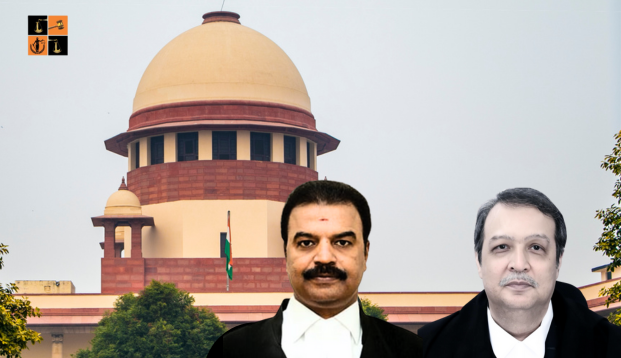
In a strong rebuke to the High Court's approach, the Supreme Court held that directing an accused to deposit money as a pre-condition for mediation in a civil dispute cloaked as a criminal case is legally unsustainable. The Court reiterated that disputes of commercial nature must be addressed through appropriate civil remedies and warned that allowing criminal prosecution in such matters amounts to an abuse of process. The Bench emphasized, “Money cannot be recovered, more particularly, in a civil dispute between the parties by filing a First Information Report and seeking the help of the Police.”
Brief Facts:
The case arose from a writ petition before the Allahabad High Court, where the petitioner sought quashing of an FIR registered for offences under Sections 60(b), 316(2), and 318(2) of the Bharatiya Nyaya Sanhita, 2023. The allegations stemmed from a business dispute between the petitioner, a media production head, and the complainant, a co-financier of media projects. Instead of deciding on the maintainability of the FIR, the High Court referred the matter to mediation and directed the petitioner to pay ₹25 lakhs upfront to the complainant as a condition for initiating mediation proceedings.
Contentions:
Appearing before the Apex Court, counsel for the petitioner contended that the FIR lacked any ingredients of cheating or criminal breach of trust and was clearly an attempt to give a civil dispute a criminal colour. The counsel submitted that no dishonest intention existed from the inception of the transaction, and the High Court's direction to deposit money was wholly unwarranted and prejudicial.
Observations of the Court:
The Apex Court was categorical in stating that the FIR did not disclose any prima facie cognizable offence. It underscored that “to constitute an offence of cheating, there has to be something more than prima facie on record to indicate that the intention of the accused was to cheat the complainant right from the inception.” The Bench emphatically stated, “How many times the High Courts are to be reminded that to constitute an offence of cheating, there has to be something more than prima facie on record to indicate that the intention of the accused was to cheat the complainant right from the inception. The plain reading of the FIR does not disclose any element of criminality.”
Referring to its earlier decision in Delhi Race Club (1940) Ltd. v. State of U.P., the Court observed that the High Court had failed to examine the settled principles governing quashing of criminal proceedings under Article 226 or Section 482 CrPC. Instead, it wrongly assumed the role of facilitating monetary recovery through mediation, which should be left to civil courts, commercial courts, or arbitral forums.
The Bench further noted, “We are quite disturbed by the manner in which the High Court has passed the impugned order… That’s not what is expected of a High Court in a Writ Petition under Article 226 or an application under Section 482 CrPC. The High Court seems to have forgotten the well-settled principles as enunciated in State of Haryana v. Bhajan Lal.” It also clarified that the complainant had not filed any civil suit or initiated recovery proceedings till date, and criminal proceedings cannot be a substitute for civil enforcement.
The decision of the Court:
Concluding that the High Court’s order suffered from a fundamental legal error, the Top Court allowed the appeal and quashed the FIR. The Court also permitted the complainant to pursue appropriate legal remedies before a competent civil forum, stating, “It shall be open for the Respondent No.4 to avail appropriate legal remedy before the appropriate forum in accordance with law for the recovery of the alleged amount due and payable to him.”
Case Title: Shailesh Kumar Singh Alias Shailesh R. Singh vs. State of Uttar Pradesh & Ors.
Case No.: Special Leave to Appeal (Crl.) No.4880/2025
Coram: Justice J.B. Pardiwala, Justice R. Mahadevan
Picture Source :



















