









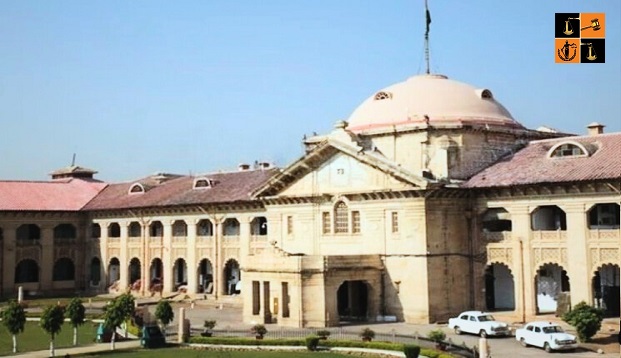
In a decision arising from allegations of medical negligence during a delayed cesarean procedure at a private nursing home, the Allahabad High Court confronted critical questions regarding the criminal liability of doctors, the reliability of institutional medical reports, and the limits of professional protection in the healthcare sector. At the heart of the case lay the issue of whether the delay in performing surgery, in the absence of necessary medical support, amounted to prima facie criminal negligence. Read on to see how the Court applied established legal standards and scrutinised the conduct of the practitioner in light of the broader concerns surrounding private healthcare practice.
Brief facts:
The case arose from an FIR filed by the brother-in-law of a woman who was admitted for delivery at Savitri Nursing Home in Deoria, run by Dr. Ashok Kumar Rai. The patient was advised to undergo a cesarean section, and her family gave consent for the procedure. However, the surgery was delayed by several hours due to the unavailability of an anesthetist. Following the operation, the fetus was declared dead, and the post-mortem attributed the cause of death to "prolonged labour." The complainant alleged that the delay in conducting the surgery amounted to medical negligence and also claimed that the hospital staff assaulted the family when they raised objections. Additional allegations included overcharging, a further demand for ₹10,000, and refusal to provide a discharge slip. The police referred the matter to the Chief Medical Officer, who constituted a Medical Board. Based solely on Dr. Rai’s statement and without considering the post-mortem report, the Board concluded that there was no negligence. Relying on this, the police submitted a final report in Dr. Rai’s favour. The complainant filed a protest petition, and the Additional Chief Judicial Magistrate rejected the final report, found a prima facie case of medical negligence, and issued a summoning order under Sections 304A, 315, 323, and 506 of the IPC. Dr. Rai then filed a petition under Section 482 CrPC before the Allahabad High Court, seeking quashing of the summoning order and the proceedings.
Contentions of the Appellant:
The Appellant asserted that he was duly competent and had rendered appropriate medical care without any negligence. He relied on the Medical Board’s report, which found no evidence of medical negligence, to support his stand. Citing Jacob Mathew v. State of Punjab and Anr. and Dr. Suresh Gupta v. Govt. of NCT of Delhi and Anr., he contended that criminal prosecution in cases of alleged medical negligence is unwarranted unless there is gross negligence, and that mere errors of judgment do not attract criminal liability. He further submitted that initiating prosecution in the absence of an independent medical opinion not only lacks legal foundation but also exposes the medical profession to undue harassment. According to him, the FIR was motivated by an attempt to extort money, and the proceedings were frivolous, which, if allowed to continue, would deter medical professionals from discharging their duties fearlessly.
Contentions of the Respondent:
The Respondent highlighted inconsistencies in the appellant's statements regarding the patient’s admission, alleging these contradictions indicated an attempt to conceal lapses in treatment. It was argued that the post-mortem report, which cited “prolonged labour” as the cause of fetal death, was not considered by the Medical Board, rendering its conclusions unreliable. Despite the family having given timely consent for the surgery, the operation was delayed due to the anesthetist being called at a much later stage, which was presented as evidence of medical negligence. Further concerns arose from the submission of two conflicting Operation Theatre notes, one of which was alleged to be fabricated in Dr. Rai’s favour. The State maintained that the Magistrate had rightly found a prima facie case of negligence, and that such disputed factual issues required adjudication at trial, not dismissal at the threshold.
Observation of the Court:
The Court noted that the FIR alleged a delay in performing a cesarean section, leading to the fetus’s death due to "prolonged labour," as confirmed by the post-mortem report. It observed significant discrepancies in the appellant's statements regarding the patient’s admission time and the timing of the surgery, stating that there is a contradiction of time of admission, time of consent, and time of operation. The Court further highlighted the existence of two O.T. notes, noting, “the second O.T. note seems to be manufactured and created to fill in lacunas, for the help of the applicant.” Critically, the Court found that the Medical Board’s report, which exonerated Dr. Rai, did not consider the post-mortem report or provide an opportunity to the complainant, undermining its credibility and stated “there is nothing on record to show that the post mortem report was placed before the Medical Board and even the report of the Medical Board does not talk anything about the post mortem report.”
The Court relied on established legal principles governing medical negligence, particularly the Bolam test, as reiterated in Jacob Mathew v. State of Punjab and Anr., which holds that a doctor is not negligent if they act in accordance with a practice accepted by a reasonable body of medical professionals. However, it emphasized while referring to the case of Dr. Suresh Gupta v. Govt. of NCT of Delhi and An that criminal negligence requires a “gross” degree of recklessness or indifference, stating, “for fixing criminal liability on a doctor, the standard negligence required to be proved should be high and can only be proceeded if it is a case of gross negligence or recklessness.” The Court, further, distinguished between civil and criminal liability, noting, “there is difference between civil liability and criminal liability. It cannot be said that if action has been taken in civil liability, no criminal liability rises.”
The Court expressed concern over the broader context of private healthcare practices, observing, “private nursing homes/hospitals tend to entice the patients for treatment even though they do not have the doctors or infrastructure.” The Court emphasised, while referring to Kusum Sharma and others vs. Batra Hospital & Medical Research Centre and others, that although medical professionals deserve protection from frivolous prosecutions, such protection cannot extend to those who operate nursing homes without adequate facilities, qualified staff, or proper infrastructure. It observed that liability may attach to those doctors who have opened nursing home without proper facilities, doctors and infrastructure and enticing the patients just to extract money out of them The Court concluded that the delay from 12:00 P.M. to 5:30 P.M. in conducting the surgery, due to the absence of an anesthetist, constituted prima facie negligence, as the post mortem report shows that the foetus died because of the prolonged labour.
The Court rejected the petitioner’s reliance on the Medical Board’s report, emphasizing that disputed facts, such as the timing of consent and surgery, required trial adjudication. It stated, “The arguments raised by learned counsel for the applicants are all disputed question of fact, which cannot be adjudicated upon by this Court under Section 482 Cr.P.C.” It further clarified that its observations would not prejudice the trial, stating, “the observation made in this judgment would not come in the way of the trial and the trial would proceed independently without taking findings of this Court into consideration.”
The decision of the Court:
In light of the foregoing discussion, the Court dismissed the application under Section 482 Cr.P.C., holding that a prima facie case of medical negligence had been made out. It upheld the summoning order and found the application devoid of merit, directing that the trial proceed independently, with liberty to the applicant to raise all defences during the course of the trial.
Case Title: Dr. Ashok Kumar Rai Vs. State of U.P. and another
Case No.: Application u/s 482 No. - 28703 of 2008
Coram: Justice Prashant Kuma
Advocate for Appellant: Senior Advocate, Shailendra Kumar Rai
Advocate for Respondent: Govt. Advocate, S.K.Mishra
Picture Source :



















