









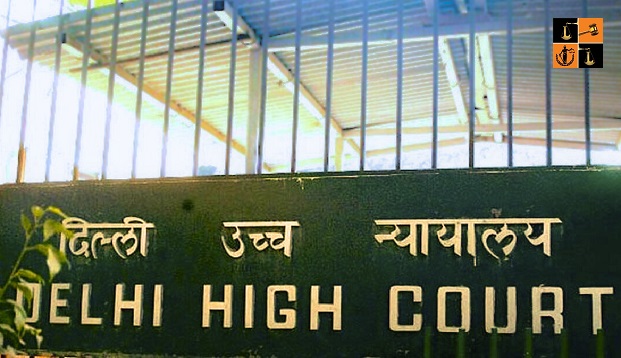
Recently, while scrutinising the contours of investigative powers under the Prevention of Money Laundering Act, 2002 (PMLA), the Delhi High Court set aside the Enforcement Directorate’s freezing orders issued against the bank accounts of Poonam Malik, holding that the agency acted on mere suspicion without meeting the statutory threshold of a recorded “reason to believe”. The Bench of Justice Subramonium Prasad and Justice Harish Vaidyanathan Shankar held that the ED’s action, premised solely on unsubstantiated assumptions, fell foul of the procedural rigour mandated under Section 17 of the PMLA. The Court rejected the agency’s appeal against the Appellate Tribunal’s direction to unfreeze the accounts, concluding that the orders suffered from fundamental legal infirmities.
Brief Facts:
The Case arose from freezing orders issued under Section 17(1A) of the PMLA against two bank accounts held by Poonam Malik, one with Delhi State Co-operative Bank and another with ICICI Bank. During investigations linked to multiple FIRs concerning the Sterling Biotech Group, the ED suspected that Malik’s husband, Ranjit Malik, who allegedly assisted a co-accused in cash operations, routed unexplained funds through these accounts As part of its proceedings, the ED filed Original Applications under Section 17(4) of PMLA, which were allowed by the Adjudicating Authority. The Respondent successfully challenged these confirmation orders before the Appellate Tribunal, which directed unfreezing of both accounts. The ED thereafter approached the High Court in appeal.
Contentions of the Appellant:
The ED contended that its freezing orders were supported by adequate “reasons to believe” and that the Adjudicating Authority rightly confirmed them under Section 8 of PMLA. It argued that unexplained cash deposits in Malik’s accounts, evasive responses by her husband, and the alleged use of her account for onward transfer of funds constituted sufficient grounds to freeze the property. The agency further submitted that proceedings under PMLA are civil in nature, requiring only a preponderance of probabilities, and relied on decisions such as Vijay Madanlal Choudhary v. Union of India and Union of India v. J.P. Singh to assert that freezing can continue even if the account holder is not named as an accused.
Contentions of the Respondent:
The Respondent argued that the freezing orders were inherently defective because they were based only on “suspicion”, not on any “reason to believe” recorded by an authorised officer. It was pointed out that neither the FIRs nor ECIRs named Malik or her husband, and that no material was ever disclosed linking her accounts to any “proceeds of crime”. It was further contended that none of the prosecution complaints filed by the ED identified her bank accounts as assets representing illicit funds, and that the ED had already attached property far exceeding the alleged loan fraud, rendering the continued freezing disproportionate.
Observation of the Court:
The Court subjected the freezing orders to close scrutiny and reproduced the relevant extract, noting that the order merely stated, “it is suspected that amount involved in money laundering are lying in the above mentioned bank account”.
Finding that the ED failed to demonstrate compliance with statutory prerequisites, the Bench held,“it is evident that the authorised officer has passed a cryptic freezing order under Section 17(1A) solely on the basis of suspicion. No material has been placed before us to demonstrate compliance with the mandatory requirements of Sub-sections (1) and (1A) of Section 17 of the PMLA and of Rules 3 and 4 of the PMLA (Search and Seizure or Freezing) Rules, 2005.”
The Court further observed that “There is nothing on record to indicate that the „Director, or any other officer not below the rank of Deputy Director authorised by him‟, had, on the basis of information in his possession and upon recording in writing the requisite „reasons to believe‟, concluded that the Respondent or her husband had, through impugned bank accounts, committed the offence of money launderin.”
Emphasising the statutory distinction between suspicion and a “reason to believe”, the Bench observed, “the freezing orders dated 05.09.2018, being cryptic in nature and founded solely on mere suspicion, do not meet the standard prescribed, which is the formation of a “reason to believe”. We are of the firm opinion that “suspicion” cannot be equated to a “reason to believe”. In fact, suspicion cannot also be equated with a “prima facie” opinion.”
The Court cautioned that freezing is an intrusion into the constitutional right to property under Article 300A of the Constitution and cannot be undertaken without strict adherence to procedure. The Bench also rejected the ED’s attempt to justify the freezing by furnishing additional reasons during court proceedings, stating, “any attempt by the ED to supplement or improve the contents of the impugned freezing orders through their submissions cannot cure the fundamental legal infirmities inherent in the Order.”
Finally, the Court criticised the manner in which the ED sought relief before the Adjudicating Authority, observing, “The Application of the Appellant under Section 17(4) and the order have conflated all these terms and served up what can at best be called a ‘khichdi’.”
The decision of the Court:
In light of the foregoing discussion, the Court held that the ED’s freezing orders were legally untenable, having been issued without adherence to mandatory statutory safeguards or the formation of a requisite “reason to believe.” Consequently, the Bench upheld the Appellate Tribunal’s directions and dismissed the ED’s appeals as devoid of merit.
Case Title: Directorate of Enforcement through Deputy Director Vs. Poonam Malik
Case No: MISC. APPEAL (PMLA) 4/2021
Coram: Hon’ble Justice Subramonium Prasad, Hon’ble Justice Harish Vaidyanathan Shankar
Advocate for Appellant: Special Counsel Zoheb Hossain, Panel Counsel Vivek Gurnani, and Advs. Kanishk Maurya, Satyam.
Advocate for Respondent: Sr. Adv. Madhav Khurana, Adv. Vignaraj Pasayat.
Read Judgment @Latestlaws.com
Picture Source :




















