









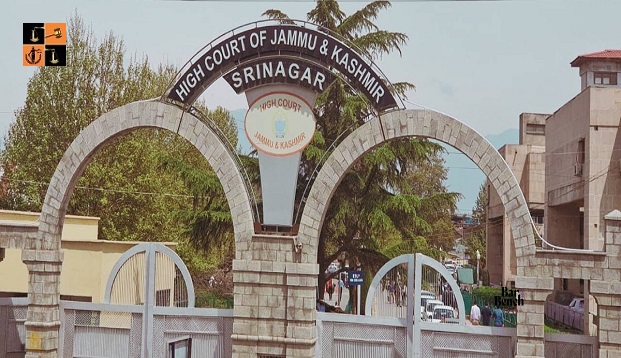
The Jammu and Kashmir High Court, on Friday, granted a stay on a judgment related to the new village defence guard’s scheme. This stay will remain in effect until the appeal is resolved. The scheme, introduced by the Centre last year, aims to address terrorist activities in the Union Territory. The division bench, consisting of Chief Justice N Kotiswar Singh and Justice Rahul Bharti, stayed the verdict of the single-judge bench. The single-judge bench, on April 6, had invalidated the 2022 scheme and instructed the authorities to consider Special Police Officers (SPOs) as appointed under the village defence committee of 1995, granting them all the powers and privileges conferred upon SPOs under the Police Act.
Brief Facts:
The dispute in this case revolves around two government schemes. First, there was a scheme in 1995 for the establishment of village defense groups. Later, this scheme was replaced by a new scheme in 2022 for the creation of village defense guards. The respondents, who were part of the Village Defence Guards (VDG) 1995 scheme and held a certain status, raised concerns about the legality and validity of the 2022 scheme. The scheme came into effect on August 15 last year and replaced a 1995 scheme of the Jammu and Kashmir government. Under the old 1995 scheme, the heads of the Village Defense Guards (VDG), known as Special Police Officers (SPOs), used to receive a monthly honorarium of Rs. 1,500/-. Over time, this amount was periodically revised and increased, reaching Rs. 18,000/- before the introduction of the new 2022 scheme. Under the new scheme, the persons leading the VDGs were paid Rs 4,500 per month by the government, while others get Rs 4,000 each. In the VDCs, only the Special Police Officers (SPOs) leading them were provided a remuneration, of Rs 1,500 monthly. The SPOs, the lowest rank in the J&K Police, used to be retired army, para military or police personnel. The appellant filed a writ petition arguing that the new scheme undermines their claimed vested status.On April 6, a judge ruled in favor of the petitioners and invalidated the 2022 scheme. The court ordered the authorities to consider the Special Police Officers (SPOs) as if they were appointed under the village defense committee of 1995, granting them all the powers and privileges of SPOs under the Police Act.
Contentions of the Appellant:
It is argued by the Senior Additional Advocate General Monika Kohli, who was appearing for the government, that the new Scheme of 2022, being a state policy decision, should not have been interfered with or quashed by the Writ Court unless there was evident arbitrariness or malafide intent. The nullification of the scheme cannot be justified, and therefore, the impugned judgment should be suspended. Additionally, it was contended that the Single Judge's order retained the SPO posts and directed payment of Rs. 18,000/- per month to the writ petitioners, even though the new Scheme does not provide for such remuneration. This inconsistency raises concerns. Furthermore, the new Scheme primarily focuses on maintaining state security, and the court should be cautious about intruding or quashing it, as it could compromise state security. Moreover, it was argued that the new Scheme is voluntary in nature, and there is no obligation on the part of the state to provide remuneration as demanded by the respondents. Lastly, the respondents under the 1995 scheme were not appointed as SPOs but were given their powers. Therefore, she argued, they cannot claim parity with SPOs appointed under the Police Act to demand the same remuneration.
Contentions of the Respondent:
Contrarily, the Ld. Senior Counsel Mr. P.N. Raina, representing the respondents, argued that there was no need to interfere with the impugned judgment or suspend it during the appeal. It was contended that the Single Judge rightly quashed the new Scheme of 2022, as it did not align with previous judgments in favor of the respondents. Furthermore, even if it is considered a policy decision, it was argued that executive actions cannot retrospectively take away accrued rights, unlike legislative actions. The impugned Scheme of 2022, which came into effect on 15.08.2022, retroactively affected the rights accrued to the writ petitioners based on the order dated 01.06.2022 in WP(C) No. 3262 of 2019. The respondents emphasized that the SPOs have been functioning for over two decades, appointed as such, and receiving a salary of ₹18,000 per month, indicating their settled status as SPOs. They asserted that the new Scheme of 2022 is arbitrary, mala fide, and discriminatory. It is argued that denying the respondents the benefits they enjoyed for over two decades is arbitrary and against the directions of the Writ Court. The respondents also claimed that the new scheme is discriminatory, as the writ petitioners perform similar duties and functions as SPOs appointed under the Police Act but are deprived of similar status and remuneration. Therefore, according to the respondents, there is no justification to interfere with the impugned judgment that quashed the new Scheme of 2022.
Observations by the Court:
During its evaluation of the potential consequences of not granting a stay on the impugned judgment, the court emphasized the importance of considering the resulting inconvenience and harm that could be suffered by the appellants. The court acknowledged that it had already examined the issue of irreparable loss and injury that may befall the appellants if the impugned judgment remains unchallenged. Conversely, the court observed that the respondents or writ petitioners could be adequately compensated through the provision of a higher honorarium in the event of their ultimate success.
The court further highlighted that the appellants in this appeal are challenging a common judgment issued on April 6 by a single-judge bench. This judgment pertains to 19 petitions involving 2,396 writ petitioners who are seeking a stay on the operation of the judgment until the final adjudication of the present letters patent appeal.
Moreover, the court expounded on the purpose of the VDG (Village Defense Group) scheme, stating that it is designed to foster a sense of self-help and enhance local population involvement in security matters. Additionally, the scheme aims to complement the ongoing efforts of the security forces in combating militancy, subversive acts, and cross-border movements.
“Keeping in mind all the factors and circumstances and legal issues of seminal importance involved, in the context of a security sensitive part of the country and weighing the rival contentions, we are of the opinion that interest of justice would be better served if the impugned judgment and connected writ petitions, is stayed in terms of its operation during the pendency of this letters patent appeal,” the division bench said.
“In assessing the balance of convenience, we have also kept in mind that the issues raised in the appeal in the context of the UT of Jammu and Kashmir, which is still not out of the woods in the context of its security issues and problems, have a direct bearing on the scheme of 2022 getting nonstarter and any uncertainty which may be caused in the implementation of the impugned judgment ought to be avoided,” the order read. The court said it is equally conscious that these issues ought to be resolved at the earliest, stressing on the need to notify and hear all the parties.
The Order of the Court:
The judgment passed by the single judge bench was stayed till the final adjudication of the Letters Patent Appeal.
Case Title: UT of J&K vs Madan Lal and others
Coram: Chief Justice N Kotiswar Singh and Justice Rahul Bharti
Case No.: LPA No. 49/2023 CM No. 2337/2023
Advocate for the Applicant: Mrs. Monika Kohli, Sr. AAG
Advocate for the Respondent: Mr. P. N. Raina, Sr. Advocate Mr. Gagan Basotra, Sr. Advocate Mr. Tarum Shanna, Advocate and Mr. J. A. Hamal, Advocate Mr. Mohinder Kumar, Advocate Mr. Asheesh Singh Kotwal, Advocate Mr. N. D. Qazi, Advocate Mr. D. S. Saini, Advocate Mr. M. A. Bhat, Advocate
Read Order @LatestLaws.com
Picture Source : twitter.com



















