









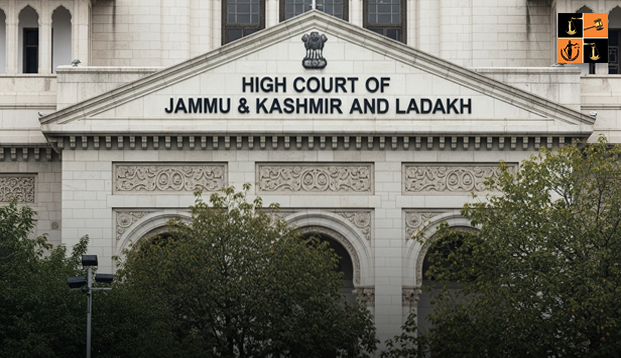
Recently, the Jammu and Kashmir High Court examined whether a court can prematurely intervene in ongoing arbitral proceedings on allegations of bias and improper constitution of the arbitral tribunal. The case tested the boundaries of judicial restraint under the Arbitration and Conciliation Act, 1996, in the midst of an active arbitration process.
Brief Facts:
The dispute arose from a road upgradation contract awarded to the Respondent under the Jhelum Tawi Flood Recovery Project. Differences during execution led to the invocation of the arbitration clause. After the petitioner failed to appoint its nominee arbitrator, the tribunal was constituted through the Institution of Engineers (India). The arbitral proceedings commenced, during which the tribunal allowed additional documents and conducted a site inspection. The Petitioner’s application under Section 14 of the Act seeking termination of the tribunal’s mandate was dismissed, leading to the present challenge.
Contentions of the Appellant:
The counsel for the Petitioner argued that the arbitral tribunal was unlawfully constituted, as one arbitrator was a former senior officer of the Petitioner department and therefore ineligible under Section 12(5) of the Act. It was further contended that the tribunal acted with bias by permitting additional documents, conducting a site visit without due notice, and making observations that allegedly prejudged the dispute, in violation of principles of natural justice.
Contentions of the Respondents:
The counsel for the Respondent submitted that the petition under Section 14 was not maintainable and that all objections could only be raised after the final award under Section 34 of the Act. The counselcontended that the petitioner had consented to the appointment of its nominee arbitrator, participated in the proceedings, and that procedural orders or allegations of bias could not justify termination of the arbitral mandate mid-proceedings.
Observation of the Court:
The High Court observed that mere past employment with a party does not automatically render an arbitrator ineligible under Section 12(5) of the Arbitration and Conciliation Act, 1996. The Court noted that “merely because a person has been in employment of either of the parties in the previous past does not make him ineligible to be appointed as an Arbitrator”, unless the relationship falls within the specific disqualifications enumerated in the Seventh Schedule.
Dealing with the allegation of bias, the Court reiterated the settled legal position that challenges concerning impartiality or procedural irregularities cannot be entertained mid-arbitration through a Section 14 petition. Relying on Supreme Court precedents, the Court held that “if a challenge is laid to the jurisdiction of the Arbitral Tribunal on the ground of independence or impartiality and the said challenge is not successful, the arbitral proceedings have to continue and the award has to be made.”
On the issue of judicial interference, the Court emphasised that grievances against interlocutory orders of the arbitral tribunal must await the final award. It observed that “it is not open to the petitioner to ventilate its grievance against the order passed by the Arbitral Tribunal under Section 16 of the Act by making an application under Section 14”, and that the only remedy available was to challenge the award under Section 34 of the Act.
The Court further clarified that any discussion on alleged procedural lapses or apprehension of bias at this stage would be premature and could prejudice the parties. Accordingly, it stated that it “refrains from making any observation on the merits of the contentions raised by the petitioner regarding its apprehension of bias of the Arbitral Tribunal and non-adherence to the procedure” until the arbitral process reaches its conclusion.
The decision of the Court:
The Court dismissed the petition, holding that no case was made out for termination of the arbitral tribunal’s mandate under Section 14 of the Arbitration and Conciliation Act, 1996. The Court clarified that all grievances relating to alleged bias, procedural irregularities, or improper constitution of the tribunal may be raised only at the stage of challenging the final arbitral award under Section 34 of the Act.
Case Title: Union Territory of Jammu & Kashmir v. M/s SRM Contractors Ltd.
Case No.: CM(M) No. 568/2025
Coram: Hon’ble Mr Justice Sanjay Dhar
Counsel for the Appellant: Deputy Advocate General Syed Musaib.
Counsel for the Respondent: Sr. Adv. Syed Faisal Qadiri with Adv. Manik and Adv. Sikander Hayat Khan.
Read Judgement @LatestLaws.com
Picture Source :



















