









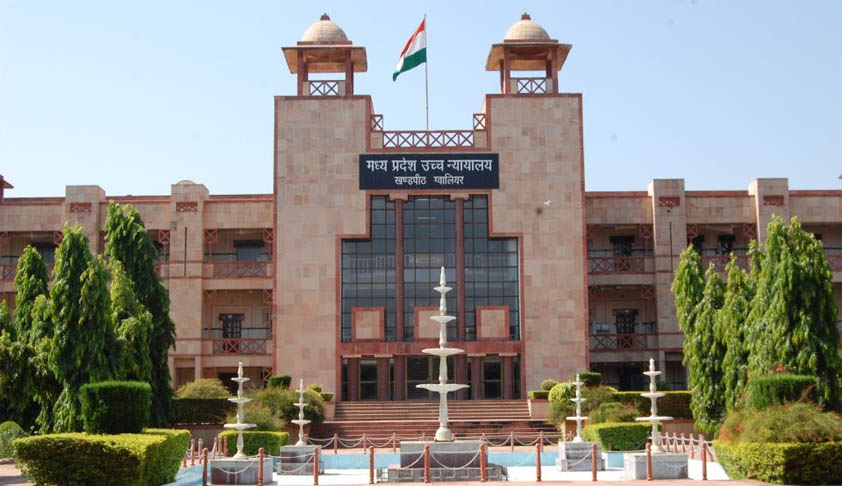
The Madhya Pradesh High Court recently comprising of a bench of Justice G.S. Ahluwalia and Justice Rajeev Kumar Shrivastava observed that section 34 of IPC does not envisage a separate act by all of the accused persons for becoming responsible for the ultimate criminal act. (Murarilal (since dead) and Ashok Versus State of Madhya Pradesh)
The bench noted that the case under Section 302 of IPC is made out against accused Ashok and taking into account the aforesaid facts and circumstances of the case coupled with the fact that co-accused Ashok was having 12 bore double barrel gun, the trial Court has rightly held that there was a common intention between accused Murari & Ashok and has rightly convicted the accused Ashok under Section 302 read with Section 34 of IPC.
Facts of the case
The facts of the case date back to 4.2.2003 when the Session Court convicted the appellants under Sections 302, read with Section 34, and Section 302 read with Section 34 of IPC and sentenced them to undergo RI for life and a fine of Rs.5000/- each and in default of payment of fine, to undergo further RI for six months. Assailing the judgment of the Sessions Court, the appellants filed an appeal under Section 374 of CrPC, challenging the conviction and sentence.
Contention of the Parties
The grounds raised are that there are material discrepancies in the statements of the witnesses but the same has been ignored and overlooked by the trial Court. Factum of the previous enmity between the parties in respect of agricultural land was possible to reason to falsely implicate the appellant-accused. Eye-witnesses have been left unexamined which creates doubt over the prosecution case. The statements of the witnesses are not reliable despite considering improvements, omissions and deliberations in the statements of the witnesses the trial Court has erred in relying on them. In the present case, there is no recovery of weapons from the appellant and there is a lack of evidence supporting the prosecution’s story which makes it concocted
On the other hand, the learned State Counsel opposed the submissions and submitted that the trial Court has rightly convicted the appellants and awarded a sentence. Hence, no case is made out for interference.
Courts observation & Judgment
The Court referred to the case of Ramashish Yadav v. State of Bihar [AIR 1999 SC 1083], wherein it was observed that “it requires a pre-arranged plan and pre-supposes prior concert, therefore, there must be a prior meeting of the mind. It can also be developed at the spur of the moment but there must be pre-arrangement or premeditated concert”.
After perusing the findings of the Trial Court and the statutory meanings, the Court opined that “The present case is of double murder and total five gunshot wounds were found on the body of deceased persons. There is sufficient evidence that there was a prior meeting of minds of accused Murari and Ashok and accused Ashok was also having a firearm. Fire-arm injuries had been caused, therefore, inference can only be drawn on the basis of nature of the injury, the part of the body where it is caused, the weapon used in causing such injury, which reflects that the accused caused the death of the deceased with an intention of causing death or not. Therefore, offence under Section 302 read with Section 34 of IPC is proved against the accused Ashok”. Hence, the appeal filed by the appellant was dismissed.
Read Judgment @Latestlaws.com
Picture Source :




















