









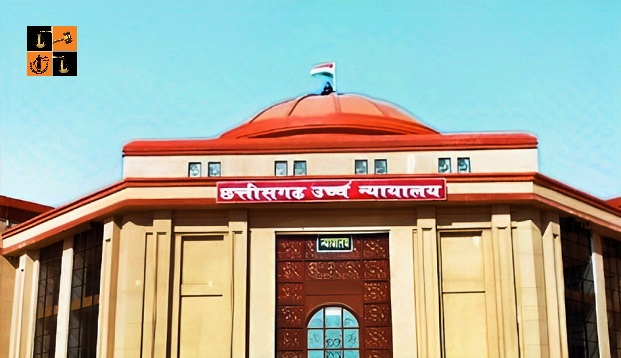
Recently, the High Court of Chhattisgarh altered a conviction for rape under Section 376 of the IPC, holding that the evidence on record proved only an attempt to commit rape and not the completed offence. Partly allowing the appeal, the Court converted the conviction to one under Sections 376 read with 511 IPC and reduced the sentence, observing that while “even slight penetration is sufficient,” such penetration must still be established through clear and cogent proof.
Brief Facts:
The prosecution case stemmed from an incident dated 21.05.2004, when the victim alleged that the accused forcibly took her from her house to his residence, removed their clothes, and sexually assaulted her against her will. It was further alleged that he confined her in a locked room by tying her hands and mouth. An FIR was lodged, and following investigation, a charge-sheet was filed. The Trial Court convicted the accused under Section 376(1) IPC for rape and Section 342 IPC for wrongful confinement, sentencing him to seven years’ rigorous imprisonment for rape and six months for confinement. Challenging both conviction and sentence, the accused approached the High Court, primarily disputing the finding of rape on the ground that penetration had not been conclusively proved as required under Section 375 IPC (as it then stood).
Contentions of the Petitioner:
Counsel for the appellant contended that the prosecution failed to establish the essential ingredient of penetration beyond reasonable doubt. It was argued that the victim’s testimony contained material inconsistencies, at one stage indicating penetration and at another stating that the accused merely placed his private part over hers. The medical report, according to the defence, showed an intact hymen and did not conclusively confirm penetration. The appellant also highlighted alleged procedural lapses, including delayed recording of statements and lack of independent corroboration, urging that the conviction under Section 376 IPC was unsustainable.
Contentions of the Respondent:
The prosecution maintained that the victim’s testimony was credible and sufficiently corroborated by medical and forensic evidence indicating sexual assault. It was submitted that the law is settled that even partial or minimal penetration constitutes rape, and that the surrounding circumstances, including the forcible removal of clothes and subsequent confinement, demonstrated the accused’s culpability. The State argued that the Trial Court had correctly appreciated the evidence and that no interference was warranted.
Observations of the Court:
Undertaking a close scrutiny of the evidence, the High Court focused on the crucial element of penetration. It noted that the victim’s statements were not consistent on this aspect; while she initially suggested penetration, she later clarified that the accused kept his private part over hers without actual penetration. The medical examination revealed an intact hymen and recorded only the “possibility of partial penetration,” without a definitive opinion confirming the act of rape. The Court reiterated the settled principle that “even slight penetration may amount to rape,” but emphasised that such penetration must be affirmatively proved.
In the present case, the Bench found that although the evidence unmistakably established sexual assault and an overt act towards commission of rape, it did not conclusively satisfy the threshold required for a conviction under Section 376 IPC. However, the Court found the offence of wrongful confinement clearly made out under Section 342 IPC, as the evidence established that the victim had been restrained against her will.
The decision of the Court:
Partly allowing the appeal, the High Court set aside the conviction under Section 376(1) IPC and instead convicted the appellant under Sections 376 read with 511 IPC for attempt to commit rape, reducing the sentence to three years and six months’ rigorous imprisonment with fine, the conviction and sentence under Section 342 IPC were affirmed, with both sentences directed to run concurrently and set-off granted for time already undergone. The ratio is clear, while minimal penetration suffices to constitute rape, the prosecution must prove it with certainty, failing which, the offence may fall within the ambit of attempt rather than completion.
Case Title: Vasudeo Gond vs. State of Chhattisgarh,
Case No.: CRA No. 355 of 2005
Coram: Hon'ble Justice Narendra Kumar Vyas
Advocate for the Petitioner: Adv. Rahil Arun Kochar, Adv. Leekesh Kumar
Advocate for the Respondent: Adv. Manish Kashyap
Read Judgment @Latestlaws.com
Picture Source :




















