









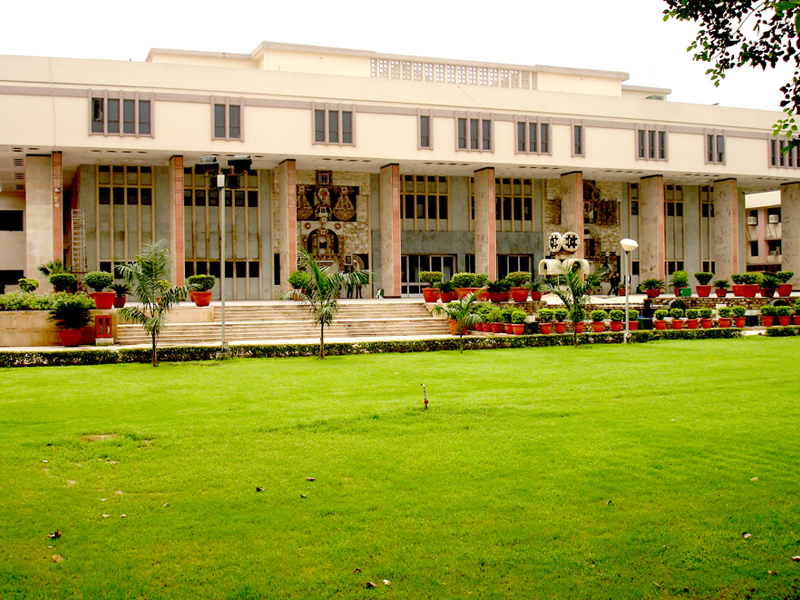
High Court of Delhi was dealing with petition filed against the order passed by NBE regarding the maximum number of attempt available for clearing the practical component of the DNB.
Brief Facts:
The petitioner is a doctor. He enrolled for the Diplomate of National Board [“DNB”] examination and has cleared the theory component of the said examination. The grievance with which he has approached the Court concerns the maximum number of attempts available for clearing the practical component of the DNB. The undisputed position is that, in terms of the Information Bulletin issued for the DNB Final examination from time to time, a candidate is given maximum of three attempts to clear the practical examination. The petitioner availed of those three attempts. However, he was unable to score the minimum pass marks of 150/300. The National Board of Examinations [“NBE”] has, therefore, taken the position that he cannot be granted any further attempts. By an order dated 07.09.2021, the petitioner was permitted to withdraw the writ petition. The petitioner’s representation was for essentially the same relief. The petitioner’s representation has been rejected by the NBE.
HC’s Observations:
HC observed that the writ petition does not lie in the light of the unconditional withdrawal of the petitioner’s earlier writ petition. The relief sought in the present petition, framed in terms of challenge to the rejection of the representation, is essentially directed at the same result as the earlier writ petition. Court stated that upon unconditional withdrawal of a writ petition, albeit with liberty to pursue a pending representation, the petitioner abandons his right to institute a fresh writ petition for the same relief. It is significant that the petitioner was not granted any liberty to institute such fresh proceedings.
HC relied upon the case of Sarguja Transport Service vs. State Transport Appellate Tribunal, M.P., Gwalior and Others, where SC held that “It is common knowledge that very often after a writ petition is heard for some time when the petitioner or his counsel finds that the court is not likely to pass an order admitting the petition, request is made by the petitioner or by his counsel to permit the petitioner to withdraw from the writ petition without seeking permission to institute a fresh writ petition. A court which is unwilling to admit the petition would not ordinarily grant liberty to file a fresh petition while it may just agree to permit the withdrawal of the petition.”
Court found that the petitioner participated in the examination knowing fully well the contents of the Information Bulletin and the maximum number of attempts afforded to a candidate. Clause 4 gave candidates an option to opt out of the revised scheme of examination and to await the examination held in the conventional manner, when circumstances permitted.
HC Held:
Court held that “In the circumstances arising out of the Covid-19 pandemic, the examining authority attempted to devise a revised scheme of the examination to obviate the need for large scale postponement and extension of the tenure of the course. It, nevertheless, permitted candidates who wished to take the examination in the conventional manner to opt out of the revised scheme. The petitioner, conscious of this choice, did not opt out, and took the examinations in the revised scheme, not just once, but twice. There is no arbitrariness or unreasonableness in the actions of the NBE, visiting the petitioner with the consequences his own choice. The role of the writ court in examining policy matters of this nature is extremely limited.”
Bench: Hon’ble Mr. Justice Prateek Jalan
Case Title: Dr. Akant Pandey v. The National Board Of Examinations & Anr.
Case Details: W.P.(C) 11213/2021 & CM APPL. 34519/2021
Read Judgment @Latestlaws.com
Picture Source :



















