









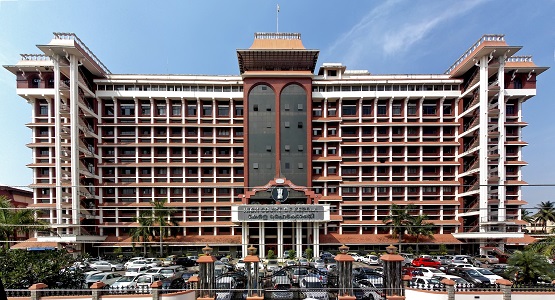
The Kerala High Court recently comprising of a bench of Justice Sophy Thomas observed that consuming alcohol in a private place does not constitute an offence as long as they do not cause any nuisance in the public. (Salim Kumar B.S. v. State of Kerala & Anr.)
The bench while quashing the ongoing proceedings against the petitioner remarked, "Consuming liquor in a private place without causing nuisance or annoyance to anybody will not attract any offence. Mere smell of alcohol also cannot be construed to mean that the person was intoxicated or was under the influence of any liquor."
Facts of the Case
The petitioner was booked under Section 118(a) of the Kerala Police Act for allegedly appearing under the influence of alcohol before a Police Station when called to identify an accused.
Contention of the Parties
The counsel for the petitioner submitted that petitioner is a Village Assistant and he was called to the Police Station at 07.00 p.m., in order to identify an accused, against whom a case was registered under Section 353 of IPC and Section 20 of the Kerala Protection of River Banks and Regulation of Removal of Sand Act (for short 'the Sand Act'). Since that accused was a stranger to him, he could not identify him, and only because of that fact, Police registered this crime against the petitioner.
He further contended that In order to attract an offence punishable under Section 118(a) of the KP Act, a person should be found in a public place in an intoxicated manner or rioting condition incapable of looking after himself.
Courts Observation & Judgment
The Court noted that there was no evidence to show that the petitioner committed rioting or misbehaved himself in the Police Station. The only allegation in the F.I.R was that he was intoxicated and was unable to control himself.
The bench further observed that in order to attract an offence punishable under Section 118(a) of the KP Act, a person should be found in a public place in an intoxicated manner or rioting condition incapable of looking after himself.
The bench noted, "The very fact that the petitioner reached the Police Station, when he was asked to be present there, itself will negative the case of the prosecution that he was incapable of looking after himself even if it is taken for argument sake that he had consumed alcohol at that time."
To examine the meaning of the word 'intoxicated', the Court relied upon the Advanced Law lexicon, "The meaning of the word 'intoxicated' as given in Advanced Law lexicon by P.Ramanatha Aiyar is that "a man is intoxicated whenever he is so much under the influence of spirituous or intoxicating liquors that it so operates upon him, that it so affects his acts or conduct or movement, that the public or parties coming in contact with him could readily see and know that it was affecting him in that respect."
The Court also referred to the Blacks Law dictionary where intoxication was defined to be a diminished ability to act with full mental and physical capabilities because of alcohol or drug consumption, or drunkenness.
The bench coming to the condition that 'incapable of looking after himself' envisaged under Section 118 (a) of the KP Act, weakening of self control, weakening of self awareness, and incapacity to know or realize the consequences of the action etc are relevant factors. The bench referred to the case of Shybu Mathew v. State of Kerala [2012 (1) KLT 653]}.
Moreover, Incoherent speech, unsteady gait, staggering etc., and the manner in which he conducts himself towards fellow men are also relevant factors to hold whether the accused person was in proper control of himself.
The bench allowing the case remarked, “Even if it is taken for argument that the petitioner had consumed alcohol, the available facts and materials are not sufficient to suggest that, he was not able to control himself or he committed rioting inside the Police Station causing nuisance. He reached Police Station, only because he was asked to be present there. Prosecution has no case that the petitioner is having any criminal antecedents.”
Read Judgment @Latestlaws.com
Picture Source :



















