









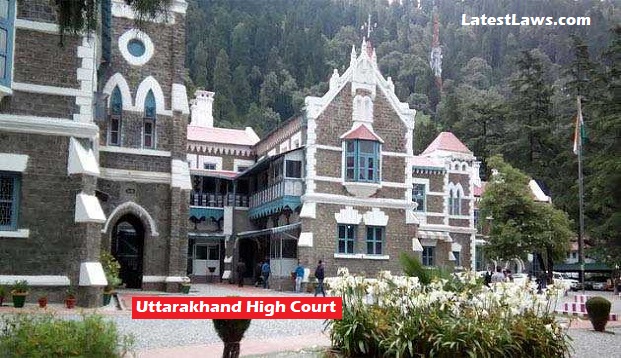
The Single Bench of the Uttarakhand High Court at Nainital in the case of Gulnaaz Khan vs State of Uttarakhand & Ors. consisting of Justice Sanjaya Kumar Mishra ordered the State to pay Rupees thirty-five lakhs to an acid-attack survivor as compensation. It observed that even if an effective alternative remedy is available, the High Court might hear a writ petition if a fundamental right is violated.
Facts:
Via this petition, the petitioner, an acid attack victim, asked for Rs. 50,000,000/- in damages. She also asked for a writ of Mandamus to make a detailed rehabilitation plan and pay hospitals directly for future medical operations. She also had certain other ancillary prayers in the writ petition.
Procedural History:
Petitioner was attacked with acid in 2014, causing third-degree burns on her face and chest. She had 60% burns on her upper body, knee, and ear. The accused who assaulted the petitioner with acid was convicted and sentenced to 10 years of hard imprisonment along with a fine of Rs. 20,000/- u/s 326-A IPC by the learned Sessions Judge, who referred the issue to District Legal Services Authority for payment of compensation. District Program Officer gave Rs. 1,60,000/- in conformity with Criminal Injury Compensation Board's 2013 Uttarakhand Victim from Crime Assistance Scheme order. By interim order of the Coordinate Bench in 2019, an additional compensation of Rs. 1,50,000/- was granted to her.
Contentions Made:
Respondent: Since the petitioner was already paid the compensation by the District Legal Service Authority, as per the Scheme, and if she had any grievance, she should have appealed to the Uttarakhand State Legal Service Authority ("UKSLSA"), the writ petition was not maintainable due to the availability of an effective alternative remedy.
Observations of the Court:
Relying on Whirlpool Corporation Vs. Registrar of Trademarks, it was reiterated that even if an effective alternative remedy is available, if a fundamental right is violated, if order or proceedings are without jurisdiction or if the vires of an Act is challenged, the High Court can entertain the writ petition.
Article 21 of the Constitution provides that no person shall be deprived of his life or personal liberty except according to a procedure established by law. It opined that the petitioner was an acid attack victim, whose right to live with dignity protected by the Constitution of India was infringed. Hence, the writ petition was maintainable.
A report by the UKSLSA Member Secretary suggested that the Scheme is a beneficiary scheme and if the cause of action persisted on the date of implementation, 02.10.2018, then the victim should benefit. The incident took place before 2018. The process of determining compensation is still ongoing, and the victim has undergone multiple reconstructive surgeries of the face, and right ear, and other medical treatments and treatment. Thus, the cause of action continued on 02.10.2018, the scheme's enforceability date, per the Apex Court's ruling in Nipun Saxena's case. Considering this, the UKSLSA proposed paying the petitioner Rs. 23,00,000/-. In light of Section 19 of the Rights of Persons with Disabilities Act, 2016, he advised the government to provide vocational training to acid attack victims and help them start a business as self-employment. It agreed with the SLSA Member Secretary on the new Scheme's application.
Order:
The Bench concluded that an additional Rs. 350,000 would be appropriate, proper, and adequate compensation for the petitioner. The petitioner was to be provided vocational training if she was ready to do so, as she had completed her postgraduate degree and diploma in mass communication and was working for Flipkart. In addition to the above-mentioned compensation and vocational training, the State Government shall also offer free medical treatment to the petitioner, who required skin grafting. If hospitals in Uttarakhand lacked the requisite technology, equipment, or doctors to perform the surgery she needed, the state was compelled to have her treated in New Delhi or PGI, Chandigarh. The state had to pay for the petitioner's operation, travel, and accommodation. Travel and lodging expenses of the petitioner's attendant were also to be covered by the state.
Case: Gulnaaz Khan vs State of Uttarakhand & Ors.
Coram: Hon’ble Mr. Justice Sanjaya Kumar Mishra
Case No: Writ Petition (MS) No. 26 of 2019, decided on 16th December 2022
Advocate for Petitioner: Ms. Snigdha Tiwari
Advocate for Respondent: Shri Ajay Singh Bisht, learned Addl. CSC for the State of Uttarakhand.
Read Judgment @LatestLaws.com
Picture Source :



















