









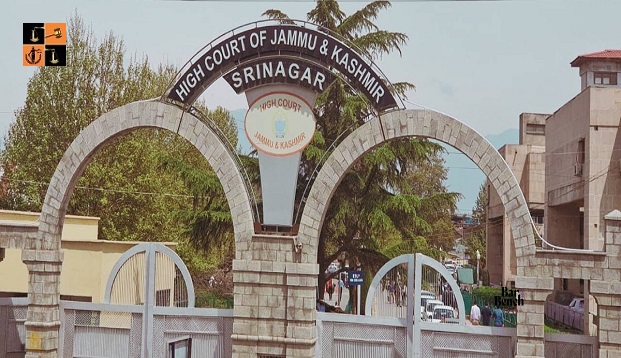
The Jammu and Kashmir high court recently comprising of a bench of Justice Ali Mohammad Magrey observed that Provisions like preventive detention must be used only in cases where ordinary law is not sufficient. (Shaheen Ahmad Parray v.s Union Territory of JK and others)
The bench noted that Preventive detention allows for a person to be detained on the basis of his past record for a crime he had not yet committed. This provision violates the fundamental rights of the person being detained and hence must be used only in exceptional cases where ordinary law is insufficient.
Facts of the case
The detenue was arrested by the Police Station Zainapora, in case FIR no. 53/2016 & 54/2016 allegedly for the commission of offences punishable in terms of Section 13 ULA (P) Act without any rhyme; reason or justification. The District Magistrate, Shopian, detained him in the preventive custody under the provisions of J&K Public Safety Act, 1978, in terms of the impugned order and lodged him in Central Jail, Srinagar.
The petitioner, Shaheen Ahmad Parray through the present Habeas Corpus petition challenged the detention order passed by the District Magistrate in Shopian which detained him under provisions of the Jammu and Kashmir Public Safety Act 1978.
Contention of the Parties
The counsel for the petitioner submitted that it is unwarranted and illegal to detain an individual under the provisions of public safety Act on the same set of facts on which he previously stands arrested and was in police custody already. He further submitted that there is a complete non-application of mind on the part of Detaining Authority as the order of detention is issued against the detenue for his activities being prejudicial to the security of State when there is no material placed before the Detaining Authority to reach to such conclusion, therefore, the grounds of detention and the impugned order are inconsistent with each other which makes the impugned order bad in law, therefore, deserves to be quashed.
On the other hand, learned Counsel appearing for the respondents, while resisting the claim of the petitioner, submits that the impugned order is quite in consonance with law and the safeguards, as were required to be taken in terms of the provisions of the Act, have been taken.
Courts Observations & Judgment
The bench at the very outset remarked, “the detenue has been prevented from making an effective representation against his detention as he was not supplied the dossier and the other allied material and has, as such, been deprived of an important constitutional right, and that the detaining authority did not apply his mind while passing the detention order and has not revealed as to on what materials he assumed subjective satisfaction regarding necessity of having the subject detained when the detenu was in police custody in connection with case FIR no. 53/2016 and 54/2016 of police station Zainapora.”
The bench referred to the case of Pooja Batra v Union of India & Others [5 SCC 296 of 2009] where it was held by the Supreme Court of India “since an order of detention in prison involves the fundamental rights of citizens, freedom of movement and pursuit of normal life and liberty, no absolute immunity can be claimed by the authorities as to the decision arrived, and it is open to the Courts to see whether there has been due and proper application of mind and that all the relevant and vital materials for the purpose have been noticed, adverted to and considered”.
The bench noted that the Division Bench of this Court has also, in a case, reported as 2020 (2) JKJ 102 titled Younis Nabi Naik v. Stae of J&K & others has laid down the same principle. The court reiterated that steps must always be taken to ensure that a provison like preventive detention is not misused by authorities in any manner and is reserved for cases where ordinary law was insufficient.
The bench directing the detenu to be released from prison remarked, “I am of the considered view that there must have been some additional material adverted to and considered by the Detaining Authority in arriving at a conclusion that the ordinary law was not enough for deterring the detenue from indulging in the alleged subversive activities, registered against the detenue three years back where no bail has even been granted to him and that being unavailable in the instant case renders the impugned order as bad in law. Nowhere do the respondents state that from the year of registration of FIR 53/2016 & 54/2016, till the year of issuance of impugned order i.e. 2019, the detenue has indulged in activities that additionally constituted to commission of offence which compelled the Detaining Authority to issue the impugned order”.
Read Judgment @Latestlaws.com
Picture Source : twitter.com



















