









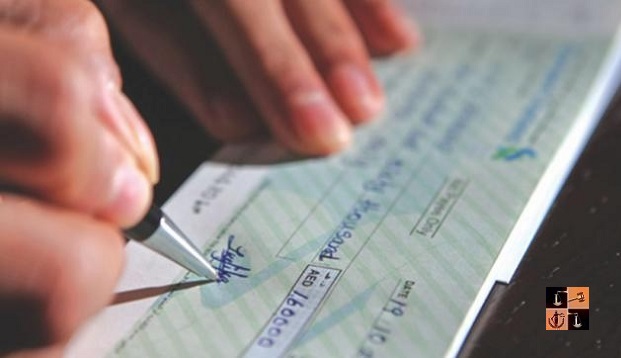
The single judge bench of the Jharkhand High Court held that once execution of the cheque is admitted Section 139 of the N.I. Act mandates that the cheque was for the discharge of a debt or other liability. The presumption under Section 139 is rebuttable and the onus shifts upon the accused to prove the probable defence. The standard of proof is a preponderance of probabilities.
Brief facts
The factual matrix of the case is that the complaint was filed by the complainant in which it was alleged that the accused approached the complainant as he wanted to sell his land and the complainant became ready to purchase the same and Rs.20 lakhs was given in advance. However, despite taking advance from the complainant accused sold the land to another person. Then, he made the demand to refund the money and two cheques were issued each of Rs.10 lakhs. When both the cheques were presented in the bank for encashment they were returned dishonored on account of insufficient funds in the account of the drawer of the cheques. Thereafter, the legal notice was sent and then the promise was made by the accused that he would return the said amount, however, no compliance was made to the said promise. Furthermore, the complaint was filed and the trial court convicted the accused under Section 138 of the N.I. Act. The appeal was filed before the learned District & Additional Sessions Judge-VII, which was dismissed and resulted in the present criminal revision.
Contentions of the Petitioner
The Petitioner contended that the cheques were never issued in order to discharge any debt or liability. It was furthermore submitted that no transaction was made in regard to selling any land. Also, both the cheques were blank and were filed by the complainant.
Contentions of the State
The state contended that the accused didn’t deny his signature on the cheque. It was furthermore submitted that no evidence was presented by the accused in order to rebut the presumption under Sections 118 and 139 of the N.I. Act.
Observations of the court
The Hon’ble court observed that the prosecution case is proven beyond a reasonable doubt in light of the complainant's oral examination and the documentary evidence submitted on his behalf. Additionally, the presumption under Section 118 of the N.I. Act arises in favor of the complainant with regard to the consideration of the cheque, the time of acceptance of the cheque, and the time of transfer of the cheque. Furthermore, the presumption under Section 138 of the N.I. Act that the holder of the cheque received the cheque for discharge in whole or in part of any debt or other liability. The presumption under Sections 138 and 139 of the N.I. Act both are rebuttable presumptions.
It was furthermore observed that the Petitioner admitted his signature on the cheque and the complainant stated that the cheque was issued in order to discharge the liability of the payment of Rs.20 lakhs, which was paid by him to purchase the land; but the same land was sold by the accused to any other person though there is no written document to this effect only the oral evidence has been adduced by the complainant. However, even the oral evidence was not rebutted by the Petitioner.
The court relied upon the judgments titled Oriental Bank of Commerce Vs. Prabodh Kumar Tewari, Yogesh Jain Vs. Sumesh Chandra, Jain P. Jose Vs. Santosh, T. Vasant Kumar Vs. Vijay Kumari, and Raja Ram Srimulu Naydu (D) Vs. Maruthachalam (D).
It was noted that the preponderance of probabilities standard of proof is used in Section 139 to rebut a presumption. As soon as the cheque is accepted for execution, Section 139 of the N.I. Act mandates that it be used to pay off debt or other liabilities. Under Section 139, the burden of proof moves to the accused to establish the likelihood of the defense, and the presumption is rebuttable.
It was furthermore noted that no evidence has been adduced to rebut both the presumption under Sections 118 and 139 of the N.I. Act and also the evidence adduced by the complainant oral and documentary even on the touchstone of preponderance of probabilities.
Based on these considerations, the court was of the opinion that the complainant has proved the case beyond a reasonable doubt. The court affirmed the order passed by the learned trial court.
The decision of the court
With the above direction, the court dismissed the appeal.
Case title: Rakesh Kumar Sinha Vs The State of Jharkhand
Coram: Hon’ble Mr. Justice Subhash Chand
Case No.: Criminal Revision No.147 of 2023
Advocates for the Petitioner: Mr. R.S. Mazumdar, Sr. Advocate Mr. Lukesh Kumar, Advocate
Advocates for the State: Mr. Arup Kumar Dey, Advocate
Advocates for the Opp Party: Mr. Indrajit Sinha, Advocate Mrs. Jyoti Nayan, Advocate Mr. Prem Piyari, Advocate
Read Judgment @Latestlaws.com:
Picture Source :




















