









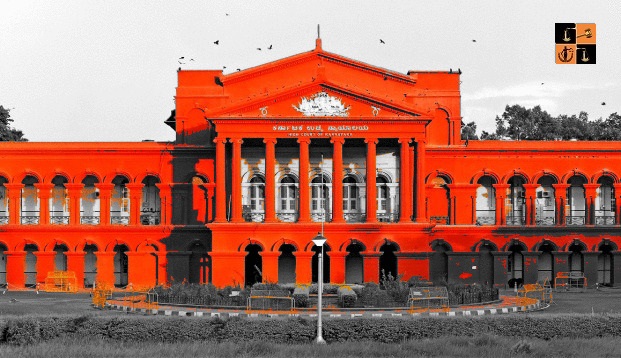
In a significant judgment addressing the misuse of judicial process to curtail fundamental rights without due process, the Karnataka High Court examined whether a party not impleaded in a civil suit could be effectively restrained through an injunction order aimed at intermediaries. The case, involving a dispute over the alleged misuse of trademarks and social media broadcasting rights, raised pressing questions on procedural fairness, third-party injunctions, and the limits of ex-parte judicial restraint. Read on to explore how the Court engaged with these vital issues and delivered a ruling that clarifies the permissible reach of injunctive relief under civil procedure.
Brief facts:
The case stemmed from a dispute involving M/s Btv Kannada Private Limited and its director, Mr. Rachappa Sathish Kumar, who operate a social media page under the logo "Btv Kannada" for broadcasting and publication. In April 2025, their page was suddenly blocked by various social media platforms, pursuant to an order from the LIX Additional City Civil and Sessions Judge. The suit, filed by M/s Eaglesight Media Private Limited (ESMPL), alleged trademark misuse, defamatory content, and reputational harm, seeking an injunction against platforms from allowing two companies, including the petitioners, to post content using ESMPL’s logos. However, the petitioners were not made parties to the suit despite being directly affected. The trial court granted an ex-parte ad-interim injunction, which was later modified. Challenging the order, the petitioners approached the Karnataka High Court under Articles 226 and 227 of the Constitution, contending that the injunction violated natural justice and Order XXXIX Rule 3 of the Code of Civil Procedure, 1908 (CPC) by restraining their rights without notice or hearing.
Contentions of the Petitioner:
The petitioners argued that the plaint contained specific allegations against them, yet they were not made parties to the suit, thereby violating the principles of natural justice. They contended that the ad-interim injunction granted under Order XXXIX Rules 1 and 2 of the CPC was illegal, as it restrained their activities without affording them an opportunity to be heard. They further asserted that the trial court’s order effectively curtailed their right to use the "Btv Kannada" logo on social media platforms, causing direct harm to their business and reputation.
Contentions of the Respondent:
The ESMPL argued that the injunction was a continuation of a prior restraint order from 2022, where M/s Btv Kannada Private Limited was a defendant. They contended that the petitioners did not need to be parties, as the relief sought was directed at restraining social media platforms, not the petitioners directly, from hosting content by the alleged "dubious companies." The respondent maintained that the injunction was necessary to safeguard their trademark rights and prevent defamatory programs by M/s Btv Kannada Private Limited, whom they accused of misusing their logos.
Observations of the Court:
A Bench Justice M. Nagaprasanna observed, “It is trite that what had to be done directly, cannot be done indirectly. An indirect method of keeping the petitioners away by not arraying them as parties and filing the O.S.No.2499 of 2025 was itself a dubious step, on the part of the 1st respondent/plaintiff…Temporary injunctions can be granted only against those who are made defendants in the suit. Restraint orders against third parties who are not made parties to the suit cannot be granted by any cannon of law.”
The Court critically examined the trial court’s ad-interim ex-parte injunction order, and its correction. The Court noted that the plaint in O.S. No. 2499/2025 was replete with allegations against M/s Btv Kannada Private Limited, yet the petitioners were not arrayed as parties. The Court observed that the prayer sought to restrain social media platforms from providing a platform to the petitioners, effectively targeting their rights indirectly.
Further, the Court held that granting a temporary injunction against parties not named in the suit violated established legal principles. The Court also highlighted the violation of Order XXXIX Rule 3 of the CPC, which mandates notice to affected parties before granting such injunctions. The Court rejected the respondent’s argument that the injunction was a continuation of a prior order, clarifying that the direct effect of the restraint was on the petitioners’ rights, not merely the social media platforms, which were intermediaries.
The decision of the Court:
In the light of the foregoing discussion, the High Court allowed the writ petition with a cost of ₹50,000 payable by the first respondent to the petitioners. The ad-interim ex-parte temporary injunction order, and its correction, passed by the LIX Additional City Civil and Sessions Judge, in O.S. No. 2499/2025, were set aside qua the petitioners. The Court directed the plaintiff to implead the petitioners as defendants in the suit, failing which no further orders could be passed against them. All other contentions were kept open for future consideration.
Case Title: Rachappa Sathish Kumar and Anr. Vs. M/S Eaglesight Media Private Limited (Esmpl) and Ors.
Case No.: Writ Petition No.13365 Of 2025
Coram: Justice M. Nagaprasanna
Advocate for Petitioner: Sr. Advocate D.R.Ravishankar and Advocate Kashinath J.D.
Advocate for Respondent: Sr.Advocate K.N.Phanindra, Advocate Arnav A.Bagalwadi And Varun Pathak
Read Order @ Lateslaws.com
Picture Source :



















