









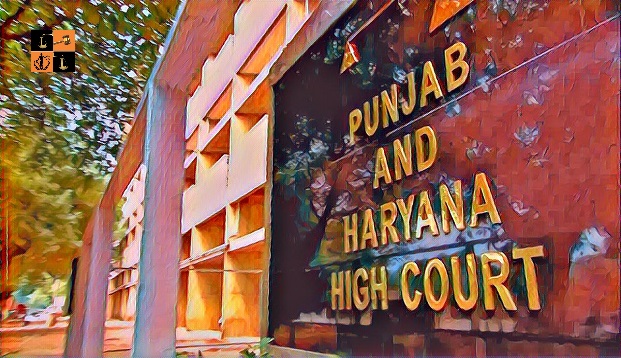
Recently, in a notable pronouncement examining the contours of criminal liability under Section 306 Indian Penal Code, 1860 (IPC), the Punjab and Haryana High Court delved into what truly constitutes abetment in cases of suicide arising from alleged domestic harassment. The case invited judicial scrutiny on whether prolonged discord and vague accusations, absent any proximate act of instigation, can sustain a conviction for abetment of suicide. Read on to know how the Court interpreted the statutory threshold of mens rea and proximate causation in such prosecutions.
Brief Facts:
The Case arose from a judgment of conviction under Section 306 IPC. The prosecution's case was that the deceased was subjected to harassment by her in-laws on account of dowry and non-birth of a child. On receiving information of her ill-health, her family reached her matrimonial home and found her dead. The police were informed, and after investigation, the charge sheet was filed for abetment of suicide. The trial court convicted the appellant while acquitting the co-accused. The appellant, being the mother-in-law of the deceased, challenged the conviction before the High Court.
Contentions of the Appellant:
The Appellant contended that she was an elderly woman who had been falsely implicated. It was urged that the deceased had been married for several years and was a well-educated person employed as a teacher, making it improbable that she endured harassment over such a long period. The defence further relied on the initial statement of the deceased’s father to the police, where he stated that the relations between his daughter and her in-laws were cordial, and that she was under depression due to childlessness. It was also pointed out that no medical evidence was presented at trial, as the doctor who conducted the post-mortem examination was not examined. It was submitted that there was no evidence of mens rea or active instigation. The appellant argued that “mere harassment by itself is not sufficient to hold an accused guilty of abetting suicide” and that the allegations were “vague and general, and do not constitute an offence under Section 306 IPC.”
Contentions of the Respondent:
The State opposed the appeal, asserting that the deceased had taken her own life due to continuous maltreatment by the appellant. It argued that “from the evidence on record, it has been established that on account of harassment and maltreatment being meted to the deceased at the hands of the appellant, she had committed suicide.” Accordingly, it was submitted that the conviction and sentence recorded by the trial court were well-founded and did not warrant interference.
Observation of the Court:
The Court, while outlining the statutory foundation of abetment under Section 306 and Section 107 of the IPC, observed that “to establish which, the prosecution must prove that the person who is said to have abetted the commission of suicide, has played an active role in the same.” It noted that Section 306 of the IPC comprises two elements, an act of suicide and abetment of the same by another person. For such abetment to be proved, one of the three conditions under Section 107 of the IPC, instigation, conspiracy, or intentional aiding, must be satisfied.
Referring to the case Jayedeepsinh Pravinsinh Chavda v. State of Gujarat, the Court reiterated, “The act of abetment must be explicitly demonstrated through actions or behaviors of the accused that directly contributed to the victim's decision to take their own life. Harassment, in itself, does not suffice unless it is accompanied by deliberate acts of incitement or facilitation. Furthermore, these actions must be proximate to the time of the suicide, showcasing a clear connection between the accused's behavior and the tragic outcome. It is only through the establishment of this direct link that a conviction under Section 306 IPC can be justified. The prosecution bears the burden of proving this active involvement to hold the accused accountable for the alleged abetment of suicide.”
Further, the Court reiterated, while referring to the case Abhinav Mohan Delkar v. The State of Maharashtra and Ors., that “always a proximate incident or act prior to the suicide was held to be a very relevant aspect in finding the death to be a direct causation of the acts of the person accused of abetting the suicide.” Expanding on this principle, the Court observed while referring to the case of Ramesh Kumar v. State of Chhattisgarh that “Instigation is to goad, urge forward, provoke, incite or encourage to do “an act”. To satisfy the requirement of instigation though it is not necessary that actual words must be used to that effect or what constitutes instigation must necessarily and specifically be suggestive of the consequence. Yet a reasonable certainty to incite the consequence must be capable of being spelt out. The present one is not a case where the accused had by his acts or omission or by a continued course of conduct created such circumstances that the deceased was left with no other option except to commit suicide in which case an instigation may have been inferred. A word uttered in the fit of anger or emotion without intending the consequences to actually follow cannot be said to be instigation.”
The Court observed, “Even if there is allegation of constant harassment, continued over a long period; to bring in the ingredients of Section 306 read with Section 107, still there has to be a proximate prior act to clearly find that the suicide was the direct consequence of such continuous harassment… Merely because the victim was continuously harassed and at one point, he or she succumbed to the extreme act of taking his life cannot by itself result in finding a positive instigation constituting abetment.”
On examining the evidence, the Court found material inconsistencies in the testimony of key witnesses and noted the prosecution’s failure to examine the post-mortem doctor. It held that the prosecution “was unable to point out or prove any active role on the part of the appellant to instigate or aid in commission of suicide by the deceased.”
Concluding that the essential ingredients of Section 306 IPC were not established, the Court held that “It is not even prima facie established that the appellant had any intention to instigate or aid or abet the deceased to commit suicide.” While acknowledging the tragedy of the young woman’s death, the Court observed that “in the absence of sufficient material to show that the appellant had intended by her words or actions to push the deceased into such a position where she was left with no other option but to commit suicide, continuation of criminal proceedings against the appellant would result in an abuse of process of law.”
The decision of the Court:
In light of the foregoing discussion, the Court allowed the appeal, setting aside the judgment of conviction and the sentence imposed by the trial court, and consequently acquitted the appellant of all charges.
Case Title: X Vs. Y
Case No: CRA-S-1168-SB of 2006
Coram: Justice Kirti Singh
Advocate for Appellant: Advs. Nikhil Ghai, Komal Parveen Singh, Nipun Gupta
Advocate for Respondent: Advs. Kamaldeep Kaur, G.S.Kaura
Read Order @Latestlaws.com
Picture Source :



















