









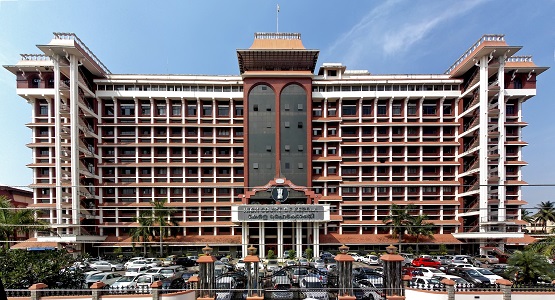
The Kerala High Court recently comprising of a single Judge bench of Justice Mohammed Nias C.P while addressing the matter with regard to the media trial observed that media trials influence public opinion and that they could often lead to loss of faith in the justice delivery system. (T.N. Suraj v. State of Kerala & Ors.)
The bench remarked, "The media interest or media debate, are all permitted in a democracy government by rule of law subject to one inviolable exception namely that the media cannot during the course of trial or investigation suggest/publish/telecast that A or B is guilty or that C or D is untrustworthy or an honest witness. This is plainly impermissible as the said suggestions of guilt of innocence or credit worthiness of witness etc. are beyond the permissible rights of the media."
Facts of the case
A petition was moved by Malayalam actor Dileep’s brother-in-law, Suraj. He moved the court alleging that media channels were subjecting him to media trials while reporting about a murder conspiracy case and a sexual assault case.
Dileep and a few others were arrayed as accused in the case where a South Indian actress was allegedly abducted and molested inside her car by a group of few people.
Petitioner was arrayed as the third accused alleged for the commission of offences under Sections 116, 118, 120-B and 506 read with Section 34 of the Penal Code, 1860, though a report was filed by the investigating officer changing Section 120B to Section 120 B (1) for adding offence under Section 302 IPC. The investigation is still going on.
Contention of the Parties
The learned Senior Counsel reiterating the contentions raised in the Writ Petition pointed out that the contents of Exts. P8 to P11 clearly proved that there was a trial by media with respect to the aforesaid crime and the Sessions Case. He also pointed out that these reports would clearly show that there has been selective leaking of information allegedly gathered during the investigation by respondents 3 to 5. It was further argued that inspite of the orders and the orders of the Magistrate Court in Ext. P5 and the orders of the Sessions Court in Ext. P6 concerning the publication of the details of the court, the 6th respondent as well as the other media are reporting matters as explained in paragraphs 10 to 16 of the writ petition. They clearly interfered with the administration of justice besides causing prejudice to the writ petitioner. Reports made against the petitioner and his close relatives involved in the crime and in the Sessions Case are damaging their reputation.
The learned Senior Counsel submitted that a free trial is hampered by the actions of the 6th respondent with the help given by respondents 3 to 5. He, therefore, prayed for the interim orders sought for. To support the contentions, the learned Senior Counsel relied on the decision reported in Sahara India Real Estate Corporation Limited and Others v. Securities and Exchange Board of India and Another [(2012) 10 SCC 603].
Sri. Gracious Kuriakose, the learned Senior Advocate and Additional Director General of Prosecution on the other hand contended that the petitioner has no locus to file the Writ Petition as he is not an accused in the Sessions Case mentioned above and that he is an accused only in the crime registered subsequently which is only at the investigation stage, there is no question of passing any interim order as sought for, since the crime in which the petitioner is the accused is not pending trial. He also submitted that the media would have got the materials from the documents produced before this Court in the various proceedings including in the applications of bail and thus reporting of the same cannot be said to be illegal.
He further argued that the second relief sought for in the writ petition cannot be granted as no such demand in that line has been made to the respondents before filing the writ petition and since that relief itself cannot be granted, there cannot be any interim order granted on same lines. The learned Senior counsel submitted that on the basis of the ratio laid down in Sahara India (supra) it is premature on the part of the petitioner to claim any relief in the Writ Petition. He also argued that the publication of which the petitioner seeks to prevent must be seen by the court before passing any orders to restrain them.
Courts Observation and Judgment
The bench at the very outset observed, “Reports/telecast having the effect of prejudicing mankind against the parties and the court before the Case is heard clearly interferes with the course of Justice. A larger negative impact to a Trial by Media, a more subtle one which often goes unnoticed also needs a mention.
In a trial by Media which apart from adversely affecting the rights of an Accused for a Fair Trial has immense power to influence public opinion.
A perception is created for or against the Accused in the mind of the laymen. So much so, that when a Judge passes a verdict which may be totally against the layman’s perception, it causes him to distrust the integrity of the very Legal System."
The Bench also remarked, “This loss of faith in the Justice Delivery System is aggravated when the Judge, not the Judgment itself is subjected to media criticism. In such Cases Trial by media results in denigration of the Justice Delivery System which without doubt, is the very foundation of the rule of law in any democratic setups.”
The bench noted that media cannot usurp the jurisdiction of the courts which alone has the constitutional authority to decide the guilt/innocence of a person or decide on the content, quality or the width of any right available to any citizen/accused/suspect.
Further, it was observed that Publication of leaks from the investigation agencies and to level allegations against individuals based on such leaks are not protected by the freedom of press under Article 19 (a) of the Constitution and it cannot be a defense that what was telecast was the allegation based on the prima facie findings of an investigating agency or worse on the basis of suspicions of Investigating agency.
Moreover Half-truths and misinformation cannot be the basis of publications or telecast. The media cannot be given the right to speculate on the outcome of the on going investigations or the Court Proceedings or Criminal Trials.
The bench prohibiting the Reporter TV from publishing anything except the court orders in the case for the next three weeks observed, “The propensity of the 6th respondent is clear and therefore, a reasonable inference about its continuance can be drawn. Considering the nature of the contents of the publication/telecast…and that those materials had not been established in any legal proceedings, there cannot be any justification for permitting such publications. Thus viewed, I have no hesitation to hold that the instant case warrants the extreme step of passing directions against the 6th respondent to prevent such publications in future.”
The court further pointing to the specific allegations made against three officers investigating the cases for leaking information to media portals, asked them to file counter-affidavits in response. The State Police Chief was also directed to ensure that no information regarding the investigation in the murder conspiracy case shall be leaked out to anyone by any of the Investigating Officers.
The matter will be next heard on April 29.
Read Judgment @Latestlaw.com
Picture Source :




















