









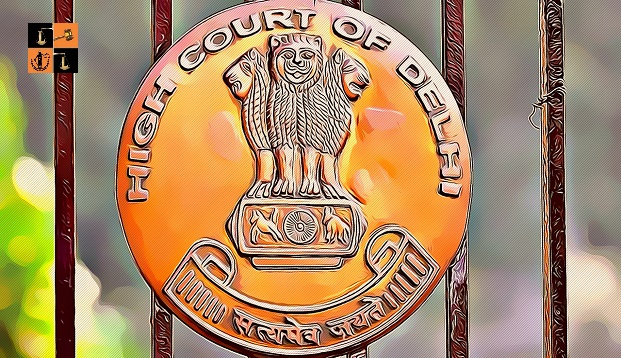
The Delhi High Court has reiterated that the right to default bail ceases when the charge sheet is filed. It opined that the requirements of 15-day time limit and reasoned order under Section 167 of the Code of Criminal Procedure, 1973 (hereinafter referred to as “CRPC”) are only followed till the pendency of the investigation.
Brief Facts:
The investigation into the affairs of Bhushan Power and Steel Ltd. (hereinafter referred to as “BPSL”) and its 10 group companies was assigned to the Serious Fraud Investigation Office (hereinafter referred to as “SFIO”) by the Ministry of Corporate Affairs (hereinafter referred to as “MCA”). Subsequently, an investigation of another 20 companies associated with BPSL was assigned to SFIO.
The case of the Applicants is that they had been fully cooperating with the investigation agency and one day the SFIO arrested the Applicants and produced them before the Learned Special Court, Dwarka. Pursuant to this, the SFIO was granted custody remand for 2 days and later judicial custody for 14 days which was extended from time to time.
It was alleged by the Applicants that without any application for extension of remand, the Applicants were produced via video conferencing and their remand was extended without passing of any speaking order for the same. It was submitted that the Applicants filed bail applications under Section 439 read with Section 167(2) of the CRPC and the said applications were adjourned. Thereafter, a production warrant was issued and while the arguments of the Applicants were completed, the SFIO sought more time, and subsequently, a remand order was passed for judicial custody. The said bail application was dismissed and therefore, the present application is being filed.
The issues involved in both bail applications are similar and therefore, are being decided by a common order.
Contentions of the Applicants:
It was contended that the custody of the Applicants was illegal as there was no judicial order of remand but mere endorsement on the warrant. Relying on Section 167(2) and 309 of the Cr.P.C. the Applicants argued that whether the remand order is at the pre-cognizance stage (Section 167(2) Cr.P.C.) or post-cognizance stage (Section 309 Cr.P.C.), application of mind is a sine qua non for each remand order. It was contended that the remand order cannot be for more than 15 days and hence, the Applicants have become entitled to bail. Two major arguments of the Applicants were that first since the custody is in the hands of the Magistrate as per Section 167 the maximum time for remand would be 15 days, and secondly, for each remand, a reasoned order must be passed. The basic thrust of the argument was that Section 167 must be followed by the Magistrate irrespective of whether a charge sheet or complaint has been filed. It was argued that the Magistrate exercises power under Section 167(2) for the period between the filing of the charge sheet till cognizance is taken. It was further contended that the trial will take a long time as there are 90 accused in the complaint and therefore, the Applicants cannot be put through this continued incarceration.
Contentions of the Respondent:
It was argued that Section 167 CRPC is only to be followed till the charge sheet or the complaint is filed. It was contended that if the detention is under police then a reasoned order of remand is required to be passed, but in the case of judicial custody, there is no such requirement. It was further contended that once the complaint or the charge sheet is filed, the accused cannot ask for bail, the only remedy would be to go for regular bail.
Observations of the Court:
The Applicants are alleged to have committed fraud resulting in misappropriation of the public money. The Court observed that the investigation report was filed within 60 days. Hence, Section 167(2) of CRPC will have no application and the Applicants are not entitled to default bail.
The High Court looked at various other cases and noted that it is significant to adjudicate considering the factual situation as even one different fact could make a world of difference between the conclusions. It was remarked that the Courts only interpret statutes, not judgments and therefore each case depends on its facts. It was opined what binds the Court is the ratio decidendi of a decision and not its mere observation.
In the case at hand, the complaint was filed within 60 days and when the production was directed, the complaint had already been filed then. Analyzing Section 167, the Delhi High Court opined that the Accused is only entitled to bail as stipulated under proviso to Section 167(2)(a). The right to default bail ceases when a charge sheet is filed. The right of default bail does not have anything to do with the irregularity or defect in the remand order. Bail can only be granted if there is a breach of Section 167 or if a case is made out for the grant of bail by the Accused.
The Court expounded that the bail application filed after the charge sheet will be considered on its own merits. The recourse available to the Petitioner is either filing petition under Article 226 of the Constitution of India or Section 482 of Cr.P.C. but bail cannot be claimed under Section 167.
The Delhi High Court propounded that post-filing of the complaint, the Applicants are not entitled to grant of bail due to the maximum 15 days’ time condition and endorsement by the Court on production warrant is sufficient for the purposes of Section 167. It is when the Accused is under police custody that a reasoned order is a sine qua non. After the filing of the charge sheet, the Accused only has the option of seeking bail on merits.
It was ruled that the 15-day time limit and reasoned order are only to be followed when the investigation is pending.
The decision of the Court:
The High Court did not find that the right for speedy trial is being infringed at this moment and found reasonable grounds to believe that the Applicants are guilty of the offenses and therefore, the bail was not granted, and the applications were accordingly dismissed.
Cause Title: Amarjeet Sharma & Alkesh Sharma v. Serious Fraud Investigation Office
Bench: Hon’ble Mr. Justice Purushaindra Kumar Kaurav
Decided on: November 03rd, 2022
Read Judgment @LatestLaws.com
Picture Source :



















