









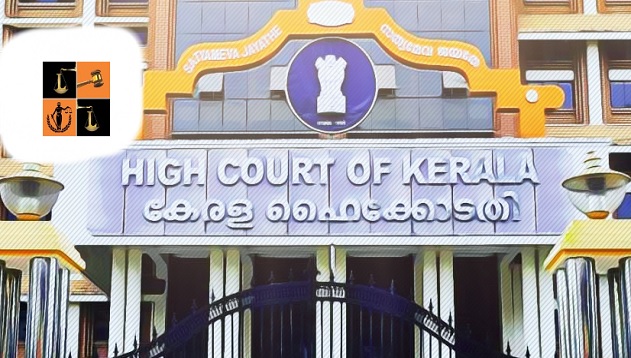
The Kerala High Court has stated that, “When the impugned order is a final order or the judgment in an appeal before the Sessions Court, resort to Article 227 is almost an absolute bar”.
Moreover, the High Court Bench, regarding the appropriate remedy against an order under section 29 (DV Act) noted that, “this Court is of the view that a person aggrieved by an order of the Sessions Court under Section 29 of the DV Act can prefer a criminal revision petition”
Brief Facts
The petitioner filed a petition under Article 227 of the Constitution of India challenging an order passed by Sessions Court in an appeal filed under Section 29 of Protection of Women from Domestic Violence Act, 2005 (Hereinafter, ‘DV Act’). In short, the wife preferred an application under section 12 of the DV Act and a final order was issued directing the other party to pay monthly maintenance. The aggrieved husband preferred an appeal against the said order under section 29 of the Act, filed before the Sessions Court and the same was dismissed by the impugned order. The petitioner filed the present petition before the High Court. However, the registry of the high court noticed the defect upon it’s maintainability, but instead of curing the defect, petitioner requested the matter to be placed for consideration before the court.
Issue
- Can Article 227 of the Constitution of India be invoked against final orders or judgments passed by the Sessions Court in an appeal?
- Can a revision petition be filed against a final order of the Sessions Court issued under section 29 of the DV Act?
Contentions of Petitioner
The Petitioner asserted that the jurisdiction under Article 227 of the Indian Constitution was wide / comprehensive and would also be applicable, notwithstanding any other remedy available under law. He argued that though the order of the Sessions Court issued under Section 29 of the DV Act is final, recourse can be made to Article 227 of the Constitution of India since no other remedy exists. The Petitioner further submitted that Section 28 of the DV Act indicates that Cr.P.C has no application beyond the stage of the court of first instance and therefore, the remedies provided under Cr.P.C cannot be followed after that stage.
Contentions of Respondent
The Respondent asserted that recourse to Article 227 of the Constitution of India is not maintainable as the power of superintendence can be exercised only regarding matters that are pending before the trial court. They further contended that in the instant case, since the challenge is against a final order, recourse to Article 227 of the Constitution of India ought not to be permitted. In addition to the above, they submitted that section 28 of the DV Act clearly indicates that the legislature had thought it fit to make Cr.P.C applicable to all proceedings and therefore only a revision will lie against a final order under section 29 of the DV Act.
Observation of the Court
The court noted that the power under Article 227 is purposed for superintendence over courts, which cannot be watered down or substituted for appellate or revisional powers. The court enumerated that Article 227 should not be used to correct errors of fact or law when the law already makes available alternative remedies. Several precedents were perused by the bench and it remarked that the effect of invoking Article 227 against final judgments and orders of Sessions Court could cause anomalous results.
Regarding the above, the court observed that, “Though the power under Article 227 is exhaustive and vast, it has to be exercised only as a measure of superintendence over the Courts and Tribunals, and that too, when there is perversity or if the order is capricious. The extraordinary power is not a substitute for the appellate or revisional powers.”… “It was also observed in the above decisions that when alternative remedies are available under the Statutes, recourse to the power under Article 227 of the Constitution of India cannot be resorted to.”
Regarding issue no. 2 of appropriate remedy against an appeal passed under section 29 of the DV Act, the court observed that, “When the intention of the statute, as is evident from Section 28 of DV Act, is to make the provisions of the Cr.P.C applicable to petitions under Section 12 of DV Act, in the absence of any specific exclusion, a challenge against an order under Section 29 of DV Act also has to be through the procedure under Cr.P.C itself. The legislative intention is obviously to make the provisions of Cr.P.C applicable to all proceedings initiated thereunder”
Decision
The bench, in respect of issue number one, held that, “When the impugned order is a final order or the judgment in an appeal before the Sessions Court, resort to Article 227 is almost an absolute bar.”
The High court, noted in regard to issue number two that, “this Court is of the view that a person aggrieved by an order of the Sessions Court under Section 29 of the DV Act can prefer a criminal revision petition”
The court concluded by pointing that, since there is no exceptional situation warranting the exercise of power under Article 227, the objection raised by the Registry regarding petition’s maintainability was sustained.
Case Title: C.K Kunjumon v. State of Kerala
Citation: 2024:IO:KER:29
Court: High Court of Kerala
Coram: Justice Bechu Kurian Thomas
Date: August 5, 2024
Read Judgment @LatestLaws.com:
Picture Source :



















