









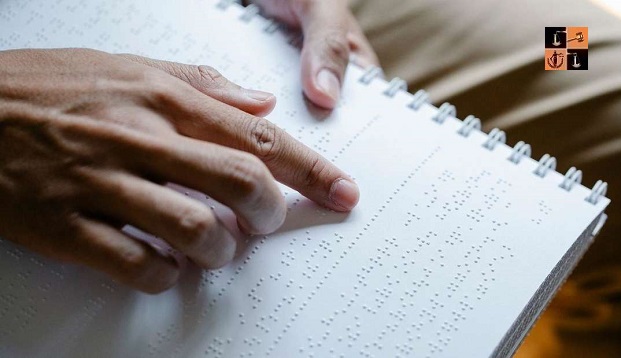
Recently, the Delhi High Court dealt with a writ petition filed by a visually impaired officer challenging his termination from the State Bank of India (SBI) for failure to clear the mandatory confirmation test during probation. The case raised significant questions concerning the rights of persons with benchmark disabilities (PwBDs) under the Rights of Persons with Disabilities Act, 2016 (RPwD Act), particularly regarding the duty of employers to provide reasonable accommodation and relaxation in service conditions. The Court examined the legality of SBI’s confirmation policy under Rule 16 of the SBI Officers Service Rules, 1992, the scope of the Chief Commissioner for Persons with Disabilities’ (CCPwD) powers, and the extent to which the RPwD Act mandates relaxation or modification in employment criteria for PwD candidates.
Brief Facts:
The case stemmed from the termination of a visually impaired officer by the State Bank of India (SBI) for failing to clear the mandatory confirmation test during probation. The petitioner, a 100% blind OBC candidate, was selected under the OBC (VH) category for the post of Probationary Officer through SBI’s recruitment process and appointed as Assistant Manager in the State Bank of Bikaner and Jaipur (SBBJ). Following the merger of SBBJ with SBI, the petitioner appeared twice for the confirmation test but failed to achieve the minimum qualifying marks required for OBC and PwD candidates. Consequently, his services were terminated under Rule 16 of the SBI Officers Service Rules, 1992.
He challenged the termination before the Chief Commissioner for Persons with Disabilities (CCPwD), which directed SBI to reinstate him, conduct a re-examination after special training, and ensure the question paper was provided in Braille with extra time. SBI, however, declined to comply with these directions. Aggrieved by the termination, Rule 16, and the bank’s refusal to implement the CCPwD’s recommendations, the petitioner approached the High Court by way of the present writ petition.
Contentions of the Petitioner:
The Petitioner contended that he was appointed as Assistant Manager (Probationary) under the SBBJ in 2015, where only a language test was prescribed for confirmation under the SBBJ Regulations, 1979. He argued that the confirmation screening process introduced by SBI under Rule 16 of the SBI Rules was arbitrary, unconstitutional, and violative of Article 14 of the Constitution, since neither the recruitment letter nor the advertisement mentioned such a test. He further asserted that the confirmation test, even if permissible, must conform to Part III of the Constitution and the Rights of Persons with Disabilities Act, 2016 (RPwD Act), as its rigid criteria amounted to indirect discrimination against persons with benchmark disabilities (PwBDs). The Petitioner alleged that the SBI failed to provide reasonable accommodation and did not reserve 4% of the seats for PwBDs in the confirmation test, contrary to Section 20, Section 33, and Section 34 of the RPwD Act. Relying on various decisions, he urged that Rule 16 of the SBI Rules be struck down as unconstitutional and his termination quashed.
Contentions of the Respondent:
The Respondents contended that the Petitioner, having accepted the terms of appointment, could not later challenge them after joining service. They maintained that a Probationary Officer has no vested right to confirmation, and the employer’s assessment of suitability is beyond judicial interference. It was argued that both SBBJ and SBI followed the same confirmation policy for JMGS-I officers, and upon the merger, the petitioner automatically became bound by the SBI Rules. Despite being provided scribe assistance, extended time, and a 5% relaxation in qualifying marks, the petitioner failed to secure the minimum 45% required for PwD candidates, leading to his lawful termination with due emoluments. Relying on Suman Mondal v. The State Bank of India and Ors. and Veerpal Kaur v. State Bank of India and Anr., the Respondents asserted that confirmation tests are not part of the recruitment process and hence not subject to reservation. They further argued that the CCPwD’s order was recommendatory in nature under Section 76 of the RPwD Act, and that SBI had provided valid reasons for non-acceptance, making the petition liable to dismissal.
Observation of the Court:
The Court, while referring to Section 3 of the Rights of Persons with Disabilities Act, 2016 (RPwD Act), which guarantees equality and non-discrimination for persons with disabilities, noted that public authorities are duty-bound to ensure reasonable accommodation. The Court emphasized that “no person with disability shall be discriminated on the ground of disability”, and that the concept of “reasonable accommodation” is central to fulfilling this right.
The Court observed that the RPwD Act not only prohibits discrimination but also casts a positive obligation on employers to provide suitable working conditions, relaxations, and modifications to ensure inclusiveness. Referring to Section 20, it reiterated that the Government establishment shall provide reasonable accommodation and appropriate barrier-free environment to employees with disability. It further noted that under Section 21, the appropriate Government is empowered to make rules relating to conditions of service and other matters for PwDs, which inherently includes the power to grant relaxations or modifications in employment criteria.
The Court reiterated, while referring to the case Taniya Malik v. High Court of Delhi, that “merely by the fact that some more posts were advertised and they are lying vacant, it could not have been a ground to relax the minimum marks for interview after the interview has already been held. It would not have been appropriate to do so and the High Court has objected to relaxation of minimum passing marks in viva voce examination in its reply and as the power to relax is to be exercised by the High Court and since it has opposed such a prayer on reasonable ground and the institutional objective behind such prescription, we are not inclined to direct the High Court to relax the minimum marks.”
The Court further reiterated, while referring to the case Rajinder Pal Singh v. State of Punjab & Ors, that "merely because the posts advertised under Category 9 have gone abegging would by itself not clothe the writ court to issue a direction contrary to the Rules of service to fill up such posts by relaxing standards. But looking to the fact that persons with disabilities have not made it on general standards, the appropriate Government i.e. the Government of Punjab may consider the issue raised in this petition in the light of the 1995 Act and take a final decision with respect to grant or non-grant of relaxed standards to persons with disabilities consistent with its duty both of affirmative action and empowerment and to maintain the efficiency required for holding judicial office."
The Court observed that "the CCPwD is inter alia empowered to recommend the corrective action to be taken by the Government in case it finds the deprivation of rights of PwDs. It can also recommend appropriate remedial measures where it finds factors that inhibit the enjoyment of rights of PwDs. Section 76 of the RPwD Act mandates that whenever the CCPwD makes a recommendation to an Authority in pursuance of Section 75(1)(b) of the RPwD Act, such authority shall take necessary action on it and inform the CCPwD of the action taken, within three months from the date of receipt of the recommendation. The Proviso to the said provision, however, states that where an authority does not accept a recommendation, it shall convey reasons for non-acceptance to the CCPwD and shall also inform the aggrieved person."
The decision of the Court:
In light of the foregoing discussion, the Court dismissed the petition but directed the respondents to consider granting further relaxation in the confirmation test for PwD candidates, if feasible, and to provide reasonable accommodation in the mode or manner of the test to ensure compliance with the RPwD Act. This decision is to be taken within four weeks and communicated to the petitioner. In case the respondents refuse to grant such relaxation or accommodation, they must provide valid reasons to the petitioner. If relaxation is granted, the petitioner shall be given another opportunity to appear in the screening test based on the relaxed standards.
Case Title: Munna Lal Yadav Vs. Department of Empowerment of Persons With Disabilities & Ors.
Case No: W.P.(C) 7197/2021
Coram: Hon'ble Mr. Justice Navin Chawla, Hon'ble Ms. Justice Madhu Jain
Advocate for Appellant: Advs. Praful Shukla and Vipin Shukla
Advocate for Respondent: Advs. Piyush Beriwal, Jatin Puniyani, Jyotsna Vyas, Ruchita Srivastava, Amisha P. Dash, SC Rajiv Kapur, AOR Akshit Kapur, Adv. Riya Sood, CM (L&D) Shobit Mehrotra, AGM Sachin Kumar Gupta.
Read Judgment @Latestlaws.com
Picture Source :




















