









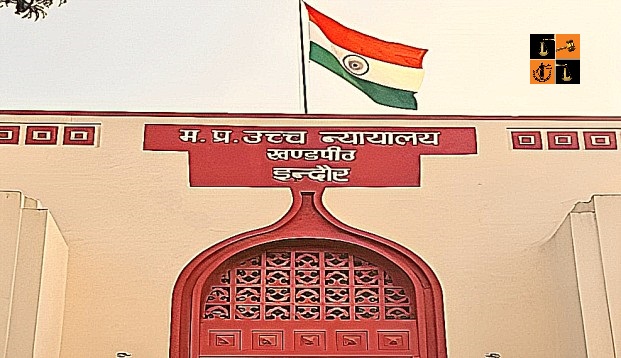
Recently, the Madhya Pradesh High Court was seized of a writ appeal concerning a biological father’s claim to have his name reflected in his minor child’s school records and to access the child’s academic information. The appeal arose from the dismissal of a writ petition on the ground of maintainability and required the Court to examine the statutory obligations of a private unaided school under the Right of Children to Free and Compulsory Education Act, 2009 and the availability of a public law remedy under Article 226 of the Constitution.
Brief Facts:
The case arose from the omission of the petitioner’s name from the school records of his minor son. The petitioner, an undisputed biological father, alleged that after the child’s admission to a private unaided school in Gwalior, his name was not reflected as the father and he was denied access to the child’s report cards and school portal. This was despite the child earlier studying in schools where the petitioner was recorded as the father and despite the petitioner paying school fees and holding visitation rights under court orders. Representations made to the school and district education authorities under the RTE Act, 2009 yielded no effective relief, leading to the filing of a writ petition which was dismissed on maintainability, giving rise to the present appeal.
Contentions of the Petitioner:
The counsel for the petitioner contended that the writ petition was maintainable as the school was discharging statutory public functions under the Right of Children to Free and Compulsory Education Act, 2009, particularly Sections 8 and 9, read with Rule 10 of the RTE Rules, 2010, which mandate maintenance of proper student records including details of parents or guardians. It was argued that denial of inclusion of the petitioner’s name and access to academic records violated his parental rights and the child’s right to education under Article 21A of the Constitution. Matrimonial disputes, it was submitted, could not extinguish the legal status of a biological father or exclude him from his child’s educational life.
Contentions of the Respondents:
The counsel for the respondents opposed the appeal, submitting that a writ under Article 226 was not maintainable against a private unaided school and that the dispute was essentially private in nature. It was further contended that unrestricted access to school records could adversely affect the child’s welfare. The State authorities submitted that advisory directions had been issued to the school under the RTE Act, while the school indicated that it would abide by any direction issued by the Court.
Observations of the Court:
The High Court observed that the Right of Children to Free and Compulsory Education Act, 2009 governs elementary education and casts statutory duties on schools as well as State authorities. The Court noted that “it is abundantly clear that RTE Act is a statute which governs elementary education for a child between 6 to 14 years of age and it is the duty of the State to ensure the admission of the child and maintenance of records by the School.”
Addressing the issue of maintainability, the Court held that where a statute mandates an authority or institution to act in a particular manner, a public law element is clearly involved. It observed that “School is also governed by certain provisions under RTE Act, 2009 to act in a particular manner… therefore, public law remedy is available in present case, writ petition against them is maintainable.”
On parental identity, the Court underscored that the petitioner’s status as the biological father was undisputed and that statutory records must reflect correct parental details. The Court stated that “welfare of the child is of paramount consideration” and that it is in the child’s interest “if he carries his identity in correct and proper manner. His identity owes the name of father as well as mother.”
The Court further observed that school records form the foundation for several future public documents and cautioned against allowing parental disputes to prejudice a child’s identity. It remarked that “parental rights of a biological father cannot be undermined at the altar of dispute between the couple. A child should not suffer the dispute, either emotionally or educationally/socially.”
The decision of the Court:
The High Court allowed the writ appeal and set aside the order dismissing the writ petition on maintainability. It directed the school to record the petitioner’s name as the father in the child’s school records in accordance with the RTE Act, 2009 and the RTE Rules, 2010.
Case Title: Vickramh Kkalmady v State of Madhya Pradesh
Case No.: Writ Appeal No.2559/2025
Coram: Hon’ble Mr. Justice Anand Pathak and Hon’ble Mr. Justice Anil Verma
Counsel for the Petitioner: Advocates Smrati Sharma and Krati Sachdev
Counsel for the Respondent: Additional Advocate General Vivek Khedkar with Government Advocate Ravindra Dixit
Read Judgement @Latestlaws.com
Picture Source :




















