









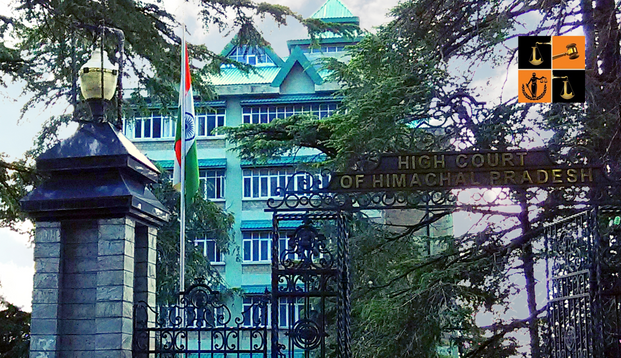
Recently, in a detailed adjudication on the interface between civil jurisdiction and proceedings under the SARFAESI Act, the Himachal Pradesh High Court has declined to interfere with a trial court’s rejection of UCO Bank’s application under Order VII Rule 11 CPC. Justice Ajay Mohan Goel held that disputes involving allegations of fraud and the validity of title documents fall outside the adjudicatory limits of Section 17 of the SARFAESI Act, observing that the relief sought “by no stretch of imagination can be granted under Section 17 of the 2002 Act.”
Brief Facts:
The case arose from a civil suit instituted by the Respondent, who claimed ownership of a residential flat pursuant to a registered sale deed executed in December 2019. She asserted that the property was duly transferred after requisite permissions from HIMUDA and that she had verified from ICICI Bank that no subsisting charge existed on the property. After purchasing the property, she was confronted with UCO Bank’s attempt to take possession on the basis of an alleged mortgage executed years earlier by a third party. The plaintiff alleged that the mortgage documents relied upon by the bank were false, fictitious, and fraudulently executed, prompting her to seek declaratory and injunctive relief before the civil court.
The Bank, in response, filed an application under Order VII Rule 11 CPC, contending that the civil suit was barred under Section 17, Section 34, and Section 35 of the SARFAESI Act. The trial court rejected the application, holding that the issues raised required a civil adjudication and could not be examined by the DRT. UCO Bank thereafter approached the High Court.
Contentions:
The Counsel for UCO Bank argued that the SARFAESI Act ousted the jurisdiction of civil courts where secured creditors take measures under Section 13(4), and asserted that the plaintiff had no enforceable cause of action. It was submitted that the trial court ignored the statutory bar under Section 17 and Section 34 and that the plaintiff should have approached the DRT.
On the other hand, the Counsel of the Respondent maintained that the suit properly invoked civil jurisdiction, as the pleadings centred on allegations of fraud and the validity of earlier title documents, matters that could not be adjudicated under the SARFAESI mechanism. It was further contended that the plaintiff, being neither a borrower nor guarantor, had no nexus with the alleged mortgage and thus required recourse before a civil court.
Observation of the Court:
The Court noted that the essence of the Respondent's suit revolved around allegations that the gift deed and mortgage deed relied upon by the bank were void, fictitious, and products of fraud attributed to the alleged mortgagor and bank officials acting in concert. These assertions, in the Court’s view, raised complex issues of title and legitimacy of documents, questions that inherently require the evidentiary scrutiny available only in a civil trial.
The Court emphasised that the Respondent was neither a borrower nor a guarantor in any transaction involving UCO Bank and had no connection with the person who allegedly executed the mortgage. The Court observed that, placed the plaintiff outside the category of individuals who could realistically invoke remedies under Section 17 of the SARFAESI Act, and held that the relief concerning the validity of title documents “by no stretch of imagination can be granted under Section 17 of the 2002 Act and for the grant of that relief obviously the Fora is the Civil Court.”
Further, the Court observed, "jurisdiction under Order VII, Rule 11 of the CPC and throwing out the plaint at the very initial stage, would be a very-very dangerous step as it would take away the right of the plaintiff to agitate the cause before the appropriate Fora. As far as Section 17 of the 2002 Act is concerned, it is again reiterated that the issues which are raised in the suit, cannot be decided under Section 17 of the 2002 Act."
The Bench also reaffirmed that where a Respondent asserts ownership and challenges the very basis of the bank’s claim, particularly when coercive measures under the SARFAESI Act are being undertaken against a person unconnected to the loan transaction, the civil court retains jurisdiction. In this backdrop, the Court found that the trial court had rightly declined to reject the plaint and that a full-fledged trial was necessary to determine the rival claims. The Court further noted that, since the bank was attempting to take possession of a property that the plaintiff asserted as her own, “there is a cause of action in her favour against the bank,” thereby justifying continuation of the civil proceedings.
The decision of the Court:
In light of the foregoing discussion, the Court declined to interfere with the trial court’s ruling and dismissed the petition, thereby affirming the refusal to reject the plaint under Order VII Rule 11 CPC. The Court held that the controversy, centred on allegations of fraudulent title documents and the plaintiff’s assertion of ownership, could not be adjudicated within the confines of Section 17 of the SARFAESI Act, and must consequently advance to trial before the civil court.
Case Title: UCO Bank & Anr. v. Smt. Manjana Verma Sahni & Anr.
Case No.: CMPMO No. 294 of 2022
Coram: Hon'ble Justice Ajay Mohan Goel
Advocate for the Petitioners: Adv. Jitender Pal Ranote
Advocate for the Respondent: Sr. Adv. Bimal Gupta, and Adv. Varun Thakur
Read Judgment @Latestlaws.com
Picture Source :



















