









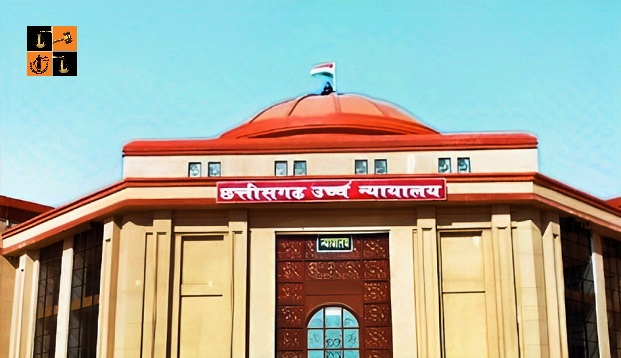
Recently, the Chhattisgarh High Court refused to quash criminal proceedings against a petitioner accused of entering a private school campus, raising slogans and abusing staff, holding that a school building can fall within the scope of “house-trespass” under the Indian Penal Code. Declining to interfere at the charge-framing stage, the Court underscored a settled principle: at the threshold, courts must only assess whether a prima facie case exists, not conduct a “mini trial.”
Brief Facts:
The case arose from an incident at a private school in Raipur, where, according to the prosecution, members of a student organisation allegedly entered the premises and began raising slogans. The complainant, the school’s administrator, claimed that when he attempted to intervene, the petitioner and others abused him and behaved inappropriately with female staff members.
An FIR was registered, investigation followed, and a charge-sheet was filed. The trial court subsequently framed charges, including for house-trespass with preparation for assault and for use of obscene language with common intention under the Indian Penal Code. The petitioner’s challenge before the revisional court failed, prompting him to invoke the High Court’s inherent jurisdiction to set aside the orders framing charges.
Contentions of the Petitioner:
Counsel for the petitioner argued that the prosecution was retaliatory, asserting that the complaint stemmed from his earlier objections to the alleged illegal functioning of the school. It was contended that a school cannot be equated with a dwelling house and therefore the essential ingredients of house-trespass were absent. The petitioner further maintained that the lower courts had mechanically framed charges without proper scrutiny of the evidence, and that continuation of proceedings would amount to abuse of process.
Contentions of the Respondent:
The State, in response, submitted that multiple witness statements, including those of the complainant and school employees, supported the allegations of unlawful entry, sloganeering and verbal abuse. It argued that at the stage of framing of charges, the court is not required to meticulously evaluate evidence but merely to determine whether sufficient grounds exist to presume the commission of an offence. The material on record, according to the prosecution, clearly met that threshold.
Observations of the Court:
The High Court examined the statutory contours of house-trespass and clarified that the offence is not confined to residential dwellings. It observed that the provision extends to buildings used for custody of property and lawful occupation, noting that a school, where furniture, records and educational assets are maintained, falls within this ambit. The Court found that witness statements prima facie disclosed that the petitioner had entered the premises and misbehaved with staff members.
Emphasizing the limited scope of judicial scrutiny at the charge stage, the Court reiterated that it is impermissible to undertake a detailed evidentiary assessment or weigh the defence case. What is required, it said, is only satisfaction that the “basic ingredients of the offence” are disclosed. Interference under inherent jurisdiction, the Court stressed, is warranted only where there is patent illegality or absence of material, neither of which was demonstrated in the present case.
The decision of the Court:
Finding no perversity or legal infirmity in the orders of the trial and revisional courts, the High Court dismissed the petition and allowed the criminal proceedings to continue. The ratio is clear, at the stage of framing of charges, Courts must confine themselves to determining the existence of a prima facie case, and even non-residential premises like schools can attract the offence of house-trespass where statutory ingredients are satisfied.
Case Title: Vikas Tiwari vs. State of Chhattisgarh and Ors,
Case No.: CRMP No. 8 of 2026
Coram: Hon’ble. Justice Ravindra Kumar Agrawal
Advocate for the Petitioner: Adv. Vaibhav P. Shukla
Advocate for the Respondent: Adv. Sunita Manikpuri
Read Judgment @Latestlaws.com
Picture Source :




















