









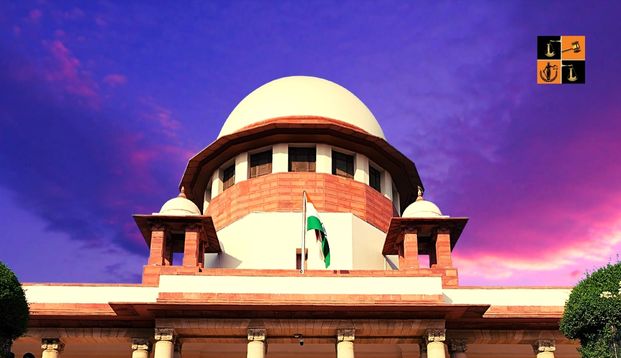
Recently, the Supreme Court clarified that delay in filing a suit does not defeat the element of urgency in cases involving continuing infringement of intellectual property rights. The Court held that pre-institution mediation under Section 12A of the Commercial Courts Act cannot be used as a procedural barrier where ongoing infringement is causing irreparable harm. The Court observed that “urgency lies not in the age of the cause but in the persistence of the peril.”
Brief Facts:
The case arose out of a commercial dispute where a company alleged that its former distributor had dishonestly appropriated its proprietary designs and patents to manufacture and market identical fans under a deceptively similar name. The appellant sought an injunction to restrain the continuing infringement, claiming that the acts of the distributor were causing immediate and irreparable loss to its business reputation and goodwill.
The High Court had earlier dismissed the appellant’s plea, holding that the delay in filing the suit negated the element of urgency, thereby requiring pre-institution mediation under Section 12A of the Act. Aggrieved, the appellant approached the Supreme Court.
Contentions of the Appellant:
The counsel for the appellant argued that each act of manufacture and sale of the infringing product constituted a recurring cause of action and that delay in initiating proceedings did not legalise an ongoing infringement. It was further contended that insisting on mediation in such cases would allow the infringer to continue profiting under procedural protection, thereby frustrating the object of intellectual property protection.
The appellant maintained that its plea for urgent interim relief was not a device to bypass mediation but a genuine response to continuing infringement, which was causing daily damage to its market reputation and goodwill.
Observations of the Court:
The Court extensively analysed the scope of Section 12A of the Commercial Courts Act, 2015, which makes pre-institution mediation mandatory for commercial disputes unless the suit contemplates “urgent interim relief.” Referring to earlier decisions including Patil Automation Pvt. Ltd. v. Rakheja Engineers Pvt. Ltd., Yamini Manohar v. T.K.D. Group, and Dhanbad Fuels Pvt. Ltd. v. Union of India, the Court reiterated that non-compliance with Section 12A renders the suit institutionally defective, except in cases where urgency is clearly demonstrated from the pleadings and documents.
Elaborating on the test of urgency, the Court observed that courts must assess whether the plaint and supporting materials “genuinely contemplate urgent relief” by considering immediacy of peril, irreparable harm, or risk of losing proprietary rights. The Court clarified that a mere proforma or anticipatory prayer for injunction would not suffice, but if the urgency appears real and plausible from the standpoint of the plaintiff, mediation can be dispensed with.
In a significant passage, the Court remarked that, “Urgency lies not in the age of the cause but in the persistence of the peril. Each day of continuing infringement aggravates injury to the intellectual property and erodes market standing. When imitation masquerades as innovation, it confuses consumers and diminishes faith in the sanctity of trade.”
The Court further held that the element of public interest, protecting consumers from deception and maintaining the integrity of the marketplace, also imparts a sense of immediacy to the relief sought in such cases. It cautioned that a rigid insistence on pre-institution mediation in cases of ongoing infringement would leave plaintiffs remediless and embolden infringers.
The decision of the Court:
Allowing the appeal, the Supreme Court set aside the judgments of both the Single Judge and the Division Bench of the High Court. It held that in cases of continuing infringement of intellectual property rights, urgency must be evaluated in the context of ongoing harm and public interest, and mere delay in filing a suit cannot negate urgency.
Accordingly, the Court restored the commercial suit to the file of the High Court for adjudication on merits, observing that the High Court had erred in examining the merits of the injunction rather than the urgency apparent from the plaintiff’s pleadings.
Case Title: Novenco Building and Industry A/S vs. Xero Energy Engineering Solutions Private Ltd. & Anr.
Case No.: S.L.P. (C) No. 2753 Of 2025
Coram: Justice Sanjay Kumar, Justice Alok Aradhe
Advocate for Petitioner: Adv. Gaurav Pachnanda (Sr. Adv.), Pankaj Soni, Vineet Rohilla, Shradha Karol, Rohit Rangi, Debashish Banerjee, Ankush Verma, Tanveer Malhotra, Vaishali Joshi, Gurneet Kaur, Udbhav Gady, Rohit Lochav, Vikrant Narayan Vasudeva (AOR)
Advocate for Respondent: Adv. Shadan Farasat (Sr. Adv.), Abhishek Babbar, Harshit Anand, Aman Naqvi, Yash S. Vijay (AOR), Shikhar Aggarwal
Read Judgment @Latestlaws.com
Picture Source :



















