









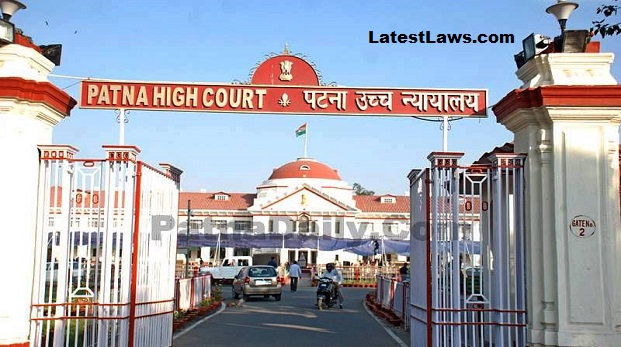
The Patna High Court, while dismissing a petition filed under Article 226 of the Constitution of India, seeking issuance of an order, direction, or writ in the nature of Mandamus, thereby commanding the respondents concerned to allot a seat to the petitioner for MBBS Course, held that once it is found that there is sufficient material for taking a particular policy decision, bringing it within the four corners of Article 14 of the Constitution, the power of judicial review would not extend to determine the correctness of such a policy decision or to indulge into the exercise of finding out whether there could be more appropriate or better alternatives.
Brief Facts:
The petitioner is an aspirant for admission in undergraduate medical Courses, for which the petitioner appeared in the NEET Examination, 2023. The Bihar Combined Entrance Competitive Examination Board (BCECEB) issued a notice dated 24.09.2023 for the 3rd Round of Online Counselling, for which the petitioner was eligible. Hence, she applied for the same. The MCC published the results of the Stray Round, wherein the petitioner was allotted a seat in the BDS Course. Subsequently, on 29.09.2023, the BCECEB issued a notification declaring that candidates who had been allotted any seat in the Stray Round of the All India Quota by MCC were debarred from obtaining a seat in the 3rd Round of Online Counselling for the Bihar Quota. As a result, despite having a higher ranking compared to the candidates allotted an MBBS seat in Bihar, the petitioner was not allotted a seat.
Contentions of the Petitioner:
The Learned Counsel for the Petitioner submitted that the petitioner’s rank in the Reserved Category Girl (RCG) is 405, whereas the last selected candidate for the MBBS course in the RCG category had a rank of 445. This clearly shows that candidates with significantly lower ranks than the petitioner were granted admission to the MBBS course during the third round of counselling under the State Quota.
Contentions of the Respondent:
The Learned Counsel for the Respondent submitted that if the petitioner decided to exit and she did not join the seat allotted to her by the MCC in the Stray Round in defiance of the counselling scheme prepared and published by the MCC, she is responsible for the consequence of debarment for one year from NEET Examination as well as for forfeiture of fees as provided by the MCC in the guidelines for the final Stray Round.
Observations of the Court:
The Court noted that it was mandatory for the petitioner to join the seat/college allotted by the MCC to the petitioner during the stray round. The petitioner had no choice but to exit, and as such, she could not have opted not to join the seat/college allotted to her during the stray round of counselling conducted by the MCC for the all-India quota.
The Court observed that once it is found that there is sufficient material for taking a particular policy decision, bringing it within the four corners of Article 14 of the Constitution, the power of judicial review would not extend to determine the correctness of such a policy decision or to indulge into the exercise of finding out whether there could be more appropriate or better alternatives. Once the parameters of Article 14 are satisfied, the Court has to respect such a decision of the Executive as the policy-making is the domain of the Executive.
The decision of the Court:
The Patna High Court, dismissing the petition, held that the policy decision taken by respondents is neither arbitrary nor based on irrational consideration and is not mala fide or against statutory provisions.
Case Title: Munmun Kumari v The State of Bihar & Ors.
Coram: Hon’ble Justice Anjani Kumar Sharan
Case No.: Civil Writ Jurisdiction Case No.14875 of 2023
Advocate for the Petitioner: Mr. Shivesh Kumar Singh
Advocate for the Respondents: Mr. Madhaw Pd. Yadaw
Read Judgment @LatestLaws.com
Picture Source :




















