









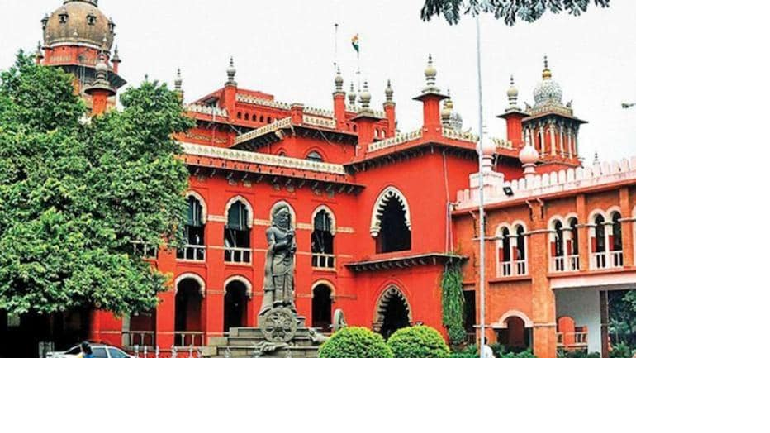
The Division Bench of the Madras High Court, comprising Chief Justice Munishwar Nath Bhandari and Justice D Bharatha Chakravarthy in the case of Rangarajan Narasimhan v. The Additional Chief Secretary to Government of Tamil Nadu & Ors has issued a general direction to all temples to put up sign boards prescribing the dress code of the nature where any customary practice of wearing a particular dress exists.
Background of the Case
The petitioner is a resident of Tamil Nadu. He seeks directions from the Court against the State Government to put up necessary visible sign boards clearly mandating the dress-code for the devotees entering into the temple and to put in place checks and balances to ensure that any person entering into the temple is a believer of Sanathana Dharma in an effort to prevent atheists from entering into the Hindu temple.
Submission of the Petitioner
The Counsel for the Petitioner submitted that a direction be issued on the third respondent to put up necessary visible sign boards mandating the dress code and as per the provisions of the Hindu Religious and Charitable Endowments Act, 1959 only a Hindu can enter the temple. But, in the absence of dress code, even persons of other religion are making entry into the temple.
Therefor he prayed before the Court that a general direction be given to the respondents to put a sign boards in the temples requiring the dress code to be followed.
Submission of the Respondent
The Learned Advocate General representing the State informed the Court that sign boards are put in place in those temples, where the dress code is stipulated. A general direction as prayed for by the petitioner may not be issued. In the absence of dress code of a particular temple, putting up of sign board prescribing the dress code cannot be issued. He also paid reliance on the case Mrinalini Padhi v. Union of India and others, (2018) which was passed by Apex Court and observed that direction was left to the discretion of the management of the temple to take regulatory measures in regard to the dress code.
Reasoning and Decision of the Court
The Court considered the rival submissions and perused the materials available on record. The Court first referred to Rule 4 of Tamil Nadu Temple Entry Authorisation Act, 1947 which entails that “No person shall enter into any temple premises unless he has had a bath and wears cloths of such materials and in such manner as is customary in such temple. No person shall enter a temple with any footwear.”
Making the perusal of the rule, the Court expounded that a duty is cast on a person who intends to enter the temple premises to wear cloths as is customary in such temple.
The court also looked into the Section 4 of the Tamil Nadu Temple Entry Authorisation Act, 1947 which empowers the Trustee or the authority in charge of the temple, subject to control of the State Government to make regulations for maintenance of order and decorum in temple.
Analyzing the facts presented before the Court, the Court held that we find no reason to accept the prayer of the petitioner seeking a particular dress code to be followed, as suggested by him in the writ petition, the basis whereof is not known.
The Court further held that Court cannot issue a general direction to all temples to put up sign boards prescribing the dress code of the nature suggested by the petitioner. Visible sign boards may be fixed by those temples which have prescribed the dress code based on customary practice.
The Court also made the opinion that The devotees are expected to enter the temples in proper dress to maintain the sanctity of the temple. It is not for the Courts to venture into unchartered waters and thrust our opinions on society. It is the devotees who should realise that they are entering into a place of worship and they need to adhere to the customs in vogue at such temple, if any.
Therefore, the Court disposes of the writ petition and passed the following directions:
(1) The temples having dress code may fix visible sign boards to ensure that the dress code is followed and the temples can take regulatory measures in such regard.
(2) The general direction of the nature sought by the petitioner, appearing in person, cannot be given. If the temple is not having any dress code for the devotees, such devotees should be permitted to enter into the temple according to the provisions of the Act of 1947.
(3) The devotees are, however, expected to enter the temples in proper dress to maintain the decorum.
(4) The temple management can take regulatory measures for the aforesaid.
Case Details
Case: - W.P.No.1981 of 2022
Petitioner: - Rangarajan Narasimhan
Respondent: - The Additional Chief Secretary to Government of Tamil Nadu & Ors
Judge: Chief Justice Munishwar Nath Bhandari and Justice D Bharatha Chakravarthy
Picture Source : https://akm-img-a-in.tosshub.com/indiatoday/images/story/202009/cover_pic_6_1200x768.jpeg?1vJXVlbHWXYU4wxJOML_a7L1IMWk3.vm&size=770:433




















