









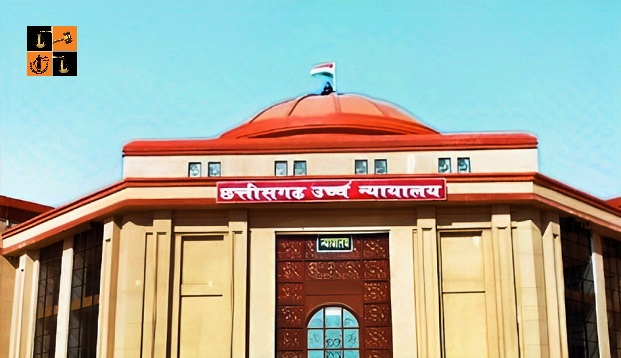
The Chhattisgarh High Court dismissed the appeal and upheld the conviction of the appellant under Section 6 of the POCSO Act and Section 377 IPC. The Court said that the evidence of a hostile witness does not get effaced from record, rather is the position is required to be examined cautiously to find out as to what extent he supported the prosecution version.
Brief Facts:
The appellant was convicted by the Special Judge (POCSO Act) for committing carnal intercourse with a minor boy. The victim’s had found her brother-in-law (the appellant) in a compromising position with her son. The FIR was lodged, the victim was medically examined, and a charge sheet was filed following investigation. The trial court convicted the appellant under Section 6 of the POCSO Act and Section 377 IPC, sentencing him to life imprisonment under both offences along with a fine of ₹5,000 under each, directing the sentences to run concurrently. Hence, the present appeal
Contentions of the Appellant:
The Counsel for the appellant argued that the victim’s testimony was unreliable due to contradictions and omissions, and key witnesses including the victim’s parents had turned hostile. It was submitted that the medical report did not conclusively establish carnal intercourse, and as the victim was a child witness, his uncorroborated statement should not be the sole basis for conviction.
Contentions of the Respondent:
The Counsel for the State contended that the victim had consistently narrated the incident and assigned clear roles to the appellant. The hostile approach of other witnesses was attributed to familial relations with the accused. The prosecution emphasized that the victim’s testimony was corroborated by medical evidence, which noted injuries on the anal region and psychological trauma. The victim’s age below 12 years was established through Anganwadi records and parental testimony.
Observations of the Court:
The Court noted that the age of the victim was clearly established to be below 18 years, and specifically under 12 years, based on unchallenged documentary evidence and testimonies. It stated, "we do not have any hesitation in holding that the victim on the date of incident being below the age of 18 years, is 'child' within the meaning of section 2(d) of the POCSO Act."
While addressing the issue of key witnesses turning hostile, the Court clarified that: "under law mere their hostile approach does not preclude this court, to bring the case to a logical conclusion based on the testimony of the victim and other materials with attending circumstances." It reaffirmed the settled legal position that "the statement of hostile witness cannot be noted en bloc… the evidence of a hostile witness does not get effaced from record."
Importantly, the Court highlighted that the testimony of the child victim remained consistent and reliable. It observed, "If the testimony of the victim is trustworthy and totality of the circumstances appearing on the record of the case disclose that the victim does not have a strong motive to falsely implicate the person charged, the Court should ordinarily have no hesitation in accepting her/his evidence." It reiterated that: "conviction can be based on the solitary statement of victim, provided same inspires confidence of the court."
The Court described the victim’s statement as being delivered in a natural manner and stated that it "inspires confidence of this court." Notably, it recognized that the testimony was not merely passive or coached, "he not only denied the suggestion but has also attributed his role in commission of crime… He has stated like a natural witness." With regard to inconsistencies, especially given the age and vulnerability of the child witness, the Court remarked, "minor contradictions in the statement of a natural witness, that too of a child witness… does not require much attention to be paid."
Relying on the Supreme Court’s decision in Rai Sandeep alias Deenu v. State (NCT of Delhi), the Court recalled the principle of a “sterling witness”, a witness whose version is unassailable, consistent from start to end, and withstands cross-examination. It observed, "only if the version of such a witness qualifies the above test… it can be held that such a witness can be called as a 'sterling witness' whose version can be accepted by the Court without any corroboration."
Corroboration was nonetheless available in the present case through medical evidence. The Court noted that the examining doctor "proved on record his examination report… as per which probability of carnal intercourse has been affirmed." Physical injuries and the condition of the victim during examination further supported the case. It concluded: "statement of victim stands corroborated by the medical evidence as well."
The decision of the Court:
On the basis of the above findings, the Court concluded, "the prosecution has proved on record beyond reasonable doubt, that on 7th April, 2018 at around 1 PM, the accused above named committed carnal intercourse with the victim below 12 years of age." Accordingly, the Court held, "the prosecution has succeeded in proving its case beyond all reasonable doubts… The conviction and sentence as awarded by the trial Court is hereby upheld. The present appeal lacks merit and is accordingly dismissed."
The Registry was directed to inform the appellant of his right to appeal before the Supreme Court and to forward the judgment and trial records for necessary compliance.
Case Title: Abdul Shaheed vs. State of Chhattisgarh
Coram:Chief Justice Ramesh Sinha, Justice Bibhu Datta Guru
Case No.: CRIMINAL APPEAL NO: 16/2021
Advocate for the Appellant: Adv. Madhunisha Singh
Advocate for the Respondent: Adv.. Sangharsh Pandey
Read Judgment @LatestLaws.com
Picture Source :



















