









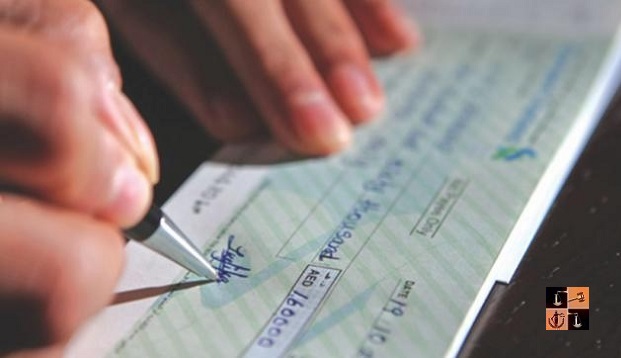
Recently, the Delhi High Court dismissed a petition seeking quashing of criminal proceedings under Section 138 of the Negotiable Instruments Act, observing that a cheque issued as security may mature into a legally enforceable debt depending on the circumstances. The Court noted that such cheques cannot be treated as “worthless pieces of paper” if the underlying liability crystallises.
Brief Facts:
The petitioner, Director of M/s Mahesh Prefab Pvt. Ltd., approached the High Court under Section 482 CrPC seeking quashing of the criminal complaint filed by M/s Negolice India Ltd. and the summoning order passed by the Metropolitan Magistrate. As per records, M/s Negolice India Ltd. had awarded a work order to the petitioner’s company for the supply and installation of GRC grills. The respondent company paid a mobilisation advance of ₹6,82,416, for which the petitioner issued a cheque of the same amount as security.
Subsequently, the respondent terminated the contract, leading to a dispute regarding the final payment. Despite the petitioner’s notice requesting that the cheque not be presented, the respondent presented it for encashment, resulting in dishonour due to the account being closed. A statutory notice was issued, and thereafter, a complaint under Section 138 NI Act was filed before the Magistrate.
Contentions of the Petitioner:
The counsel for the petitioner argued that the cheque in question was issued only as a security for the mobilisation advance and not towards discharge of any existing debt or liability, a mandatory element under Section 138 of the NI Act.
It was contended that the dispute was purely civil in nature, arising out of contractual obligations, and the respondent had no right to present the cheque for an amount exceeding the alleged recoverable dues. It was further submitted that the summoning order was issued mechanically without proper application of mind.
Contentions of the Respondent:
On the other hand, the respondent contended that as per the terms of the contract and indemnity bond, the petitioner had expressly agreed that the cheque could be encashed without prior notice in the event of default or non-performance.
It was submitted that the petitioner failed to complete the contractual work within the stipulated time, resulting in recoverable dues exceeding ₹7,20,000, including refund of unadjusted advance, penalty, and interest. Hence, the cheque was presented in discharge of an existing legally enforceable liability.
Observations of the Court:
The Court examined whether a cheque issued as security could attract penal consequences under Section 138 of the NI Act. Referring to Indus Airways Pvt. Ltd. v. Magnum Aviation Pvt. Ltd. and Sampelly Satyanarayana Rao v. IREDA, the Court reiterated that the determinative factor is whether a legally enforceable debt or liability exists on the date the cheque is presented, not on the date it was issued.
Citing Sripati Singh v. State of Jharkhand, the Court observed, “A cheque issued as security pursuant to a financial transaction cannot be considered a worthless piece of paper. If the loan amount or liability is not repaid before the due date, the cheque issued as security would mature for presentation, and dishonour would attract consequences under Section 138 of the NI Act.”
The Court further relied on Bir Singh v. Mukesh Kumar, stating that even a signed blank cheque voluntarily given towards payment attracts a presumption under Section 139 of the NI Act unless the accused rebuts it by cogent evidence.
The Court noted that in the present case, the petitioner had issued the cheque as a security against mobilisation advance, and disputes regarding the actual outstanding amount were matters of trial. Thus, at the stage of summoning, it could not be held that no legally enforceable liability existed.
The decision of the Court:
Dismissing the petition, the Delhi High Court held that the cheque, though issued as security, could be presented once liability crystallised, and its dishonour would attract penal provisions under Section 138 of the NI Act. The Court concluded that the petitioner failed to make out a case for interference under Section 482 CrPC, observing that, “It cannot at this stage be said that there was no legally enforceable liability. What exactly is the amount due is a disputed fact, which can only be proved during trial.”
Accordingly, the petition to quash the complaint and the summoning order was dismissed.
Case Title: Manmohan Gaind vs. Negolice India Pvt. Ltd.
Case No.: Crl.M.C. 1379/2021
Coram: Justice Neena Bansal Krishna
Advocate for Petitioner: Adv. Rajnish Kumar Gaind, Hemant Kaushik, Himanshu Gupta
Advocate for Respondent: Adv. Umakant Kataria and Pulak Gupta
Read Judgment @Latestlaws.com
Picture Source :



















