









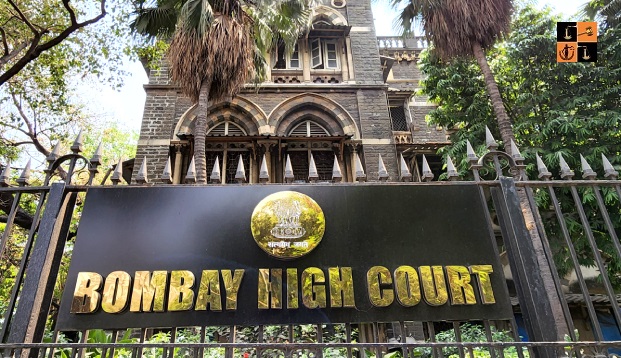
Recently, the Bombay High Court dealt with an important jurisdictional challenge arising under the Maharashtra Slum Areas (Improvement, Clearance and Redevelopment) Act, 1971. The case revolved around the implementation of a slum rehabilitation scheme and the authority of the Tehsildar to direct eviction under Sections 33 and 38 of the Act. The petitioners questioned the legality of the eviction proceedings, contending that no declaration under Section 3C had been made and that the Tehsildar lacked jurisdiction. The Court examined whether such a declaration was mandatory for initiating rehabilitation measures and clarified the scope of delegated powers under the Act.
Brief Facts:
The facts of the case revolved around the slum rehabilitation scheme under the provision of Maharashtra Slum Areas(Improvement, Clearance and Redevelopment) Act, 1971. During the implementation of the said scheme, out of total 689 slum -dwellers, 641 have been declared eligible and 645 have already vacated the premises. Under Section 33 and 38 of the Slum Areas Act, petitioners have to vacate their structures which are in their possession in the backdrop of slum rehabilitation scheme being implemented. In consequence of this, the petitioner filed an appeal which got dismissed by the order dated 22.08.2024 passed by Tahsildar and directed to handover the possession. In lieu of this, the petitioners have raised grounds of Jurisdiction stating that the Tahsildar/ Slum Rehabilitation Authority (SRA) power is without jurisdiction in the present case.
Contentions of the Petitioner:
The copunsel for the petitioner contended that Tehsildar in the present case lacks Jurisdiction to entertain the application filed under Sections 33 and 38 of the Slum Areas Act. It was further contended that no notice was furnished under section 3C of the Slum Area Act stating that the area was designated as a Slum Rehabilitation Area under a specific Slum Rehabilitation Scheme. The petitioner emphasised that section 3D(e)(I-a) of the act substitutes original sections 33 and 38 of the Slum Areas Act with new Sections where SRA lacks the power of eviction and issue order of demolition. Since there has been no specific declaration of Slum Area under section 3C, section 3D remains inapplicable and the jurisdiction can exercise only by competent authority and not by SRA.
Contentions of the Respondent:
The counsel for the respondents raised a contention that in the writ petition, the petitioners categorically stated that they are not opposed to the slum rehabilitation project under the scheme approved by the SRA. They argued that declaration under Section 3C of the Slum Areas Act is not required. The respondents relied on the case of Abdul Aziz and ors v. Apex Grievance Redressal Committee and others, and Om Sai Darshan CHSL(proposed V. State of Maharashtra, stating that notice under Section 4 of the Slum Areas Act is sufficient to declare it as Slum Rehabilitation area. No specific declaration under Section 3C of the Slum Area act was necessary. It was further argued by the respondents that section 3S of the Slum Areas Act states that SRA or CEO can delegate powers under this act to any of the officers of the SRA and thus Tehsildar in the present case is not barred by the jurisdiction.
Observations of the Court:
The Court observed that the issuance of notification under Section 3-C(1) of the Slum Areas Act was not necessary for sanctioning a scheme of slum rehabilitation. The Court relied on the judgement of Abdul Aziz and others vs. Apex Grievance Redressal Committee and others observing that, “A careful reading of Regulation 33(10) of the DCPR 2034 and the provisions of Chapters I-A and I-B of the Slum Areas Act shows that there is no question of a separate declaration under Sections 4(1) or 3C if there is a censused slum.”
The Court therefore held that a declaration under Section 4 or 3C of the Slum Areas Act is not a prerequisite. The court further held that the Tehsildar as a delegate of the CEO of the Slum Rehabilitation Authority (SRA), had the jurisdiction under section 33 and 38 of the act as under paragraph 17 of the petition, the petitioner did not oppose the slum rehabilitation scheme. The contention of the petitioner that the substituted section 33 and 38 do not apply was deemed to be refuted by the court.
The Court on relying on the above judgement held that declarations under Section 3-C and 4 of the Slum Areas Act are not sine qua non and in this context Regulation 33(10) of the DCPR was accepted. The Court further held that “the moment the CEO of SRA approves a slum rehabilitation scheme in an area, it is deemed to be a slum rehabilitation area”.
Furthermore, on the question of Tehsildar not having the power to entertain the proceeding under section 33 of the Act, the court observed that section 3S of the Slum Area Act specifies that the SRA or the CEO can delegate power to any officer of the SRA.
Based on the contentions, the Court was of the opinion that writ jurisdiction in the present case is not maintainable.
The decision of the Court:
The Court dismissed the writ petition and disposed of all pending applications.
Case title : Ritesh Trikamdas Patel and others v. Alex Grievance Redressal Committee and others.
Case No: Writ Petition No. 7630 of 2025
Coram: Justice Manish Pitale
Counsel for the Petitioner: Girish Godbol (Senior Advocate), Omkar Khaiyam Shaikh
Counsel for the Respondent: Adv. Nhavkar, Vishwanath Patil, Ravleen Sabharwal, Aarushi Yadav, Mandar B. Waidande, Mayur Khandeparkar, Vikram Garewal, Kiran Mohite, Deepika Mule, Kiran Mohite, Chirag Balsara, Rajesh Yadav
Picture Source :



















