









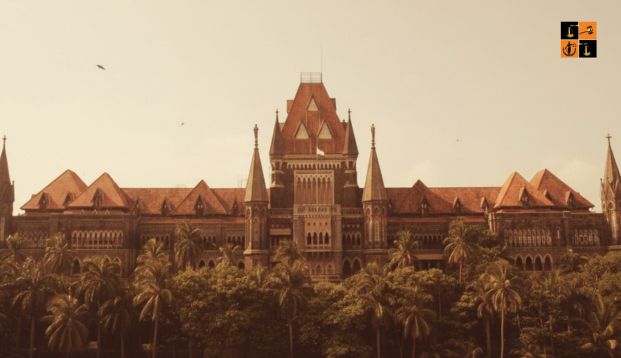
Recently, the Bombay High Court quashed criminal proceedings initiated against a father-in-law and brother-in-law under Section 498A of the IPC, holding that vague and omnibus allegations against distant relatives cannot justify subjecting them to a criminal trial. Arising out of matrimonial disputes between the complainant-wife and her husband. Emphasising the need for judicial scrutiny at the threshold, the Court observed that criminal law cannot be permitted to become a weapon of harassment in matrimonial discord.
Brief Facts:
The dispute traces back to a marriage solemnised on 20 June 2014, after which the complainant-wife resided with her husband and his family members, including the present petitioners, her father in law and brother in law. Alleging cruelty, the wife lodged an FIR claiming that she was compelled to hand over her gold ornaments, which were allegedly misappropriated, and that she was subjected to physical and mental abuse by her husband.
As far as the family members were concerned, the allegations were confined to verbal taunts, expressions of dissatisfaction over dowry, and advice to tolerate the husband’s conduct. On the basis of these allegations, criminal proceedings were initiated, prompting the petitioners to invoke the High Court’s jurisdiction under Article 226 of the Constitution and Section 528 of the Bharatiya Nagarik Suraksha Sanhita, 2023, seeking quashing of the FIR and consequential proceedings.
Contentions of the Petitioner:
The Counsel for the Petitioner contended that the dispute was purely matrimonial between the husband and wife, and that the petitioners had been roped in only to exert pressure. It was argued that the FIR did not disclose any specific acts attributable to the father-in-law or brother-in-law that would satisfy the statutory ingredients of “cruelty” under Section 498A IPC.
Placing reliance on Supreme Court precedents, counsel submitted that continuation of proceedings against relatives on the basis of general and sweeping allegations would amount to a clear abuse of the process of law.
Contentions of the Respondent:
On the other hand, argued that the allegations in the FIR and the statements recorded during investigation disclosed sufficient material to proceed to trial. It was submitted that disputed questions of fact could not be adjudicated in writ jurisdiction, and that the High Court ought not to stifle a legitimate prosecution at the threshold.
Observations of the Court:
The Court undertook a careful scrutiny of the allegations and reiterated the principles laid down by the Supreme Court in Kahkashan Kausar @ Sonam v. State of Bihar and K. Subba Rao v. State, cautioning courts against mechanical prosecution of relatives in matrimonial offences. The Court noted that the allegations against the petitioners were “general, non-specific and lacking in proximate acts”, and did not disclose conduct that could prima facie constitute cruelty within the meaning of Section 498A IPC.
Significantly, the Court observed that “criminal prosecution, when initiated casually against family members, has the potential to cause irreparable damage to reputation, mental peace and professional life”.
Stressing its constitutional duty, the Court held that where criminal law is misused as a tool of harassment, judicial intervention at the inception becomes imperative to prevent injustice.
The decision of the Court:
Concluding that the continuation of criminal proceedings against the petitioners would amount to an abuse of the process of law, the Bombay High Court allowed the writ petition and quashed the FIR and all consequential proceedings insofar as the father-in-law and brother-in-law were concerned.
The ratio decidendi emerging from the decision is clear, in matrimonial offences, relatives cannot be prosecuted in the absence of specific, credible, and legally sufficient allegations, and High Courts are empowered to exercise their writ and inherent jurisdiction to prevent misuse of criminal law at the threshold.
Case Title: Amrik Singh Saini vs. State of Maharashtra
Case No.: Writ Appeal No.4833/2024
Coram: Justice Bharati Dangre, Justice Shyam C. Chandak
Counsel for the Petitioner: Adv. Pritish Chatterjee, Nitish Banka
Counsel for the Respondent: Adv. Supriya KaK
Read Judgment @Latestlaws.com
Picture Source :



















