









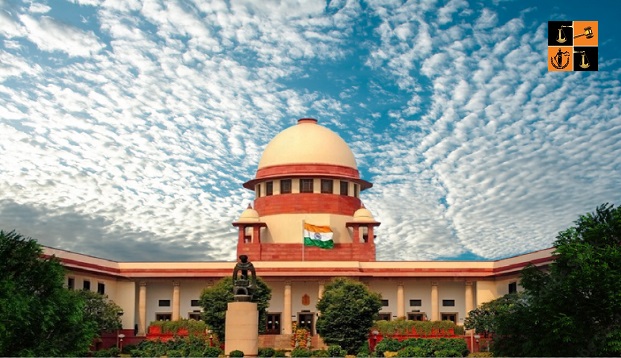
“At the stage of summoning or of framing of charges the Court is not expected to weigh the probative value of the materials in microscopic detail.” – SC
In a significant case arising from an alleged fake police encounter, the Supreme Court was called upon to examine the threshold for summoning public officials in criminal complaints, the necessity of prior sanction under Section 197 Criminal Procedure Code, 1973 (CrPC), and the scope of Section 210 of the CrPC where parallel proceedings exist. At the heart of the matter lay serious allegations of extrajudicial killing, evidence tampering, and the extent to which official duty can shield police actions from prosecution. Read on to explore how the Court approached these intersecting legal issues with lasting implications for accountability and procedural law.
Brief Facts:
The case arose from the alleged fake encounter killing of Mukhjit Singh @ Mukha, when a police party in three vehicles intercepted a white Hyundai i-20 and nine plain-clothed officers allegedly opened fire, killing the driver. Eyewitnesses, including complainant Princepal Singh, raised an alarm, drawing locals to the scene. DCP Parampal Singh allegedly ordered removal of the car’s registration plates, amounting to evidence destruction. That night, police registered an FIR citing self-defense against gangster Jaggu Bhagwanpuria. Following public protests, an SIT found the self-defense claim false and recommended prosecution of eight officers for culpable homicide. Princepal Singh later filed a criminal complaint against nine officers for murder and the DCP for tampering with evidence. The Magistrate summoned the accused and framed charges against the nine officers, but proceedings against the DCP were stayed. The Punjab & Haryana High Court upheld charges against the officers but quashed proceedings against the DCP for want of sanction under Section 197 CrPC, leading to the present appeals before the Supreme Court.
Contentions of the Petitioner/Appellant:
The accused argued that the Magistrate violated Section 210 CrPC by proceeding with the complaint during the pendency of the FIR investigation and that cognizance was barred without sanction under Section 197 CrPC, as their actions were in discharge of official duty. They also claimed it was a case of mistaken identity, negating culpability, which should have been considered at the summoning stage. The appellant contended the High Court erred in quashing proceedings against the DCP, as the alleged removal of the vehicle’s number plates—amounting to evidence destruction under Section 201 IPC, had no nexus with official duty and thus did not require prior sanction.
Contentions of the Respondent:
The State and complainant supported the High Court’s refusal to quash charges against the nine officers, citing prima facie evidence from the complaint, eyewitnesses, SIT findings, and CCTV footage indicating a coordinated firearm assault. They argued that Section 210 CrPC was not violated, as no final report under Section 173 CrPC had been filed, and that the officers’ actions lacked nexus to official duty, making sanction under Section 197 CrPC unnecessary. Conversely, DCP Parampal Singh relied on CCTV and CFSL reports showing the vehicle without number plates, claiming his actions were in discharge of official duty and protected under Section 197 CrPC, thus requiring sanction. He also maintained that his second challenge to the summoning order was valid under Section 482 CrPC despite the bar under Section 397(3).
Observation of the Court:
The Division Bench of Justice Vikram Nath and Justice Sandeep Mehta observed that, “The criminal complaint alleges, in clear and specific terms, that the nine petitioners surrounded the Hyundai i-20, alighted with firearms, and fired in concert, fatally injuring the occupant. That narrative is supported, at least prima facie, by two eye-witness depositions recorded under Section 200 CrPC during the preliminary inquiry. In addition, the Special Investigation Team, constituted at the behest of senior police administrators, found the self-defence version subsequently projected in FIR 242 of 2015 to be false and recommended prosecution of eight of the petitioners for culpable homicide.
“A CCTV clip recovered by the SIT depicts the three police vehicles converging on the i-20 exactly as alleged. Taken together, these materials furnish a coherent evidentiary thread sufficient, at the threshold, to justify summoning and the framing of charges”, added the Bench.
While rejecting the Section 210 of the CrPC violation claim, the Court stated, “Section 210 CrPC being in terms attracted only when a police report covering the ‘same offence’ is actually before the Court". On the sanction issue, it held, “Such conduct, by its very nature, bears no reasonable nexus to the duties of maintaining public order or effecting lawful arrest,” emphasizing that acts outside official duty do not require sanction. For the DCP, the Court restored proceedings, finding the High Court erred in requiring sanction. It observed, “An act that is per se directed to erasing a potential exhibit, if ultimately proved, cannot be regarded as reasonably connected with any bona-fide police duty.” Citing Gauri Shankar Prasad v State of Bihar, the Court reiterated, “The offence alleged to have been committed must have something to do, or must be related in some manner, with the discharge of official duty.”
While dismissing the DCP’s reliance on CCTV footage, the Bench observed that “Those materials, however, do not identify when or by whom the plates were removed. They merely raise a matter for evidentiary evaluation at trial. Nor can the respondent overcome the statutory bar under Section 397(3) CrPC by styling his second challenge to the summoning order as an application under Section 482 CrPC. The remedy of revision had already been exhausted before the Sessions Court. The High Court therefore erred in quashing the complaint against the respondent.”
The decision of the Court:
Under the light of the foregoing discussion, the Apex Court upheld the High Court’s refusal to quash the criminal complaint and charges against the nine accused police officers. The Court also set aside the High Court’s order quashing proceedings against DCP Parampal Singh. The criminal complaint and summoning order against the DCP were restored, to be continued in accordance with law, with no influence on the Trial Court’s evidence appraisal or discharge pleas.
Case Title: Head Constable Raj Kumar etc. Vs. The State of Punjab & Anr.
Case No.: SLP (CRL) Nos. 8656-8657 of 2019
Coram: Justice Vikram Nath and Justice Sandeep Mehta
Advocate for Petitioner: Sr. Adv. Rekha Palli, Advocates Chritarth Palli, Deepak Samota, Nilanjan Sen, Ajay Nagpal, Pankaj Jain, and Saksham Maheshwari, AORs Shubham Bhalla and Jagjit Singh Chhabra
Advocate for Respondent: AORs Jagjit Singh Chhabra, Amit Pawan, and Siddhant Sharma, Advocates Hassan Zubair Waris, Shivangi Singh Rawat, and Osheen Bhat
Read Order @ Lateslaws.com
Picture Source :




















