









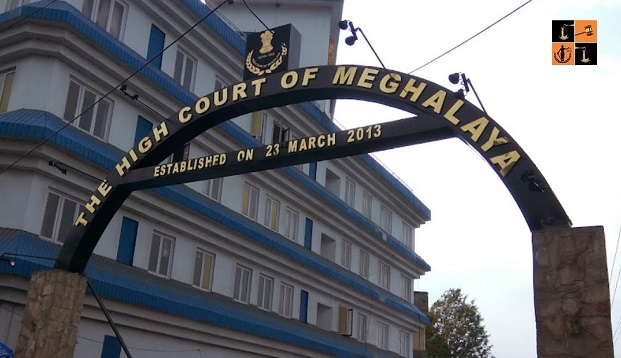
The Meghalaya High Court dealt with a public interest litigation challenging a State notification requiring SC/ST students to furnish Aadhaar details to avail financial assistance. The Court held that insisting on Aadhaar for children to access such benefits contravenes the Supreme Court’s directions in K.S. Puttaswamy v. Union of India, and clarified that no eligible student can be denied benefits for want of an Aadhaar card.
Brief Facts:
A public interest litigation was filed questioning a notification issued by the Government of Meghalaya, which mandated students belonging to the SC/ST category to provide an Aadhaar number or undergo Aadhaar authentication to receive financial assistance. The petitioner, representing the interests of students unable to avail the benefits due to the absence of Aadhaar, contended that the requirement was inconsistent with the Central Government’s earlier exemptions and constitutional protections.
It was pointed out that the Ministry of Finance and other Central authorities had issued press releases and circulars exempting the residents of Meghalaya from the mandatory requirement of Aadhaar, noting the State’s distinct demographic and geographic conditions.
Contentions of the Petitioner:
The counsel for the petitioner argued that the notification violated the constitutional right to privacy as recognized in K.S. Puttaswamy v. Union of India. It was contended that forcing children to obtain Aadhaar numbers to access welfare schemes infringes upon their autonomy and dignity. The petitioner relied on multiple government notifications and RTI clarifications, asserting that Aadhaar had been declared optional for citizens of Meghalaya.
The petitioner further submitted that the notification was in direct conflict with the Apex Court’s pronouncements which held that no individual should be denied benefits of welfare schemes due to lack of Aadhaar.
Contentions of the Respondents:
The Deputy Solicitor General, representing the Union of India, referred to Section 7 of the Aadhaar (Targeted Delivery of Financial and Other Subsidies, Benefits and Services) Act, 2016, emphasizing that the provision was upheld as constitutionally valid. It was argued that Aadhaar enables effective governance and ensures targeted delivery of welfare benefits to the marginalized sections of society. The State’s counsel aligned with this view, maintaining that the Aadhaar requirement was a measure to prevent misuse of government schemes.
Observations of the Court:
The Court examined the scope of Section 7 of the Aadhaar Act and the Apex Court’s rulings in K.S. Puttaswamy & Ors. v. Union of India & Ors. The Bench noted that while Aadhaar can be used for authentication in welfare schemes, the Supreme Court had categorically held that “no deserving person would be denied the benefit of a scheme on the failure of authentication.”
Referring to paragraph 512.6 of the Puttaswamy judgment, the Court highlighted, “No child shall be denied benefit of any of these schemes if, for some reasons, she is not able to produce the Aadhaar number and the benefit shall be given by verifying the identity on the basis of any other documents.”
The Court observed that children pursuing higher secondary education, who had already submitted identity proofs at the time of admission, could not be compelled to produce Aadhaar to access scholarships. It reaffirmed that welfare benefits aimed at children must not be withheld for failure to furnish Aadhaar details.
The decision of the Court:
The Court held that the State’s notification mandating Aadhaar for SC/ST students to access post-matric scholarships shall not apply to students up to the age of 18 years. The Court directed that such students may establish their identity through other reliable documents, including birth certificates or authenticated identity proofs.
Disposing of the PIL, the Bench reiterated that no child should be denied welfare benefits for non-possession of Aadhaar and emphasized adherence to the Supreme Court’s privacy jurisprudence and constitutional principles of equality and dignity.
Case Title: Greneth M. Sangma Vs. The Union of India & Ors.
Case No.: PIL No.6/2025
Coram: Chief Justice W. Diengdoh, Justice Soumen Sen
Advocate for Petitioner: Adv. P.T. Sangma
Advocate for Respondent: Adv. Dr. N. Mozika (DSGI), K. Gurung, R. Colney
Read Judgment @Latestlaws.com
Picture Source :




















