









The Authors, Kumail Fatima is a fourth year law student of Faculty of Law, Jamia Millia Islamia, New Delhi and Priyanshu Agarwal, a student of LLM from Faculty of Law, Jamia Millia Islamia, New Delhi.
Indian Patent system is consisting of Indian Patent Act, 1970 read with Patent Rules 2003, which provides elaborate and comprehensive provisions for patent registration. Patent registration is the process of registering the patentable invention in question with the purpose of creating a monopoly over the production of the invention. Patent registration in general means putting a patentable invention on record as with the authority, in accordance with procedure as prescribed by the patent law. Patents are granted to the inventions that satisfy the statutory requirements of novelty, inventive step, industrial application and which do not fall under the statutory excluded category.
Patent Rights and its Importance in the Pharmaceutical Industry
The term Patent originated from the Latin word “Patere” which means to ‘lay open’ i.e. to make available to the public. Patent is the exclusive right given to the inventor to use or exercise an invention granted to him for a limited period as per terms of the grant of patent in consideration of the disclosure of the complete specification of the invention. In simple words, Patent is a government sanctioned monopoly granted over a new invention for a limited period.
Patent is an award for the inventor whereas, it is a reward for the investor. Once the inventor receives patent for his invention, his invention attracts investment because the commercial exploitation of the invention is possible to its fullest extent during the term of Patent. Patent in the pharmaceutical industry promotes the much needed research and development and plays a crucial role in motivating research and development in the medical industry.
What is Compulsory licensing and whether the Compulsory licensing is a need of the hour?
“Give me six hours to chop down a tree and I will spend the first four sharpening the axe.”
- Abraham Lincoln
Compulsory licensing is when a government authorizes a party other than the patent owner to produce the patented product or process, without the
inventor’s consent. These flexibilities always exist in the TRIPS Agreement, ever since it took effect in January 1995.[1] More importantly, compulsory licensing forms a part of a larger package of flexibilities that India negotiated with the support of other G-77 and African countries in the Doha Development Round.[2] Doha submit provided that strict rules of patent protection can be minimized in case of national emergency
Section 92(1) of the Indian Patent Act, 1970 provides for Special provision for compulsory licenses on notifications by the Central Government. On grounds of national emergency or extreme urgency or in case of public non-commercial use i.e. in any one of the following situation compulsory licensing can be granted by the central government. However, the recent pandemic occurred as a national health emergency and caused extreme urgency, and the same compulsory licensing can be used for non-commercial production of Covid-19 medicines, to provide medical help to the people. The landmark case in India on compulsory licensing is Bayer Corporation v. Union of India (“Bayer case”). In this case for the first time, compulsory license was granted in order to produce a generic version of an anti-cancer drug. Considering the above mentioned case, it can be concluded that compulsory licensing can be a huge relief to the country.
Reverse consequences of compulsory licensing in Covid-19 medicines
Keeping aside the present debate going on in the international realm regarding the waiver of patent and looking into the practical aspect of it. It seems that beside the requirement of permission for production of vaccines, input for production is the second most crucial requirement for the production and also desire of other pharmaceutical industries to produce such vaccines is required. Presently, our country doesn't have the required resources for the production and also no one has shown his willingness by applying for the license of production. In such a situation, asking for a waiver of a patent is an irresponsible act and can lead to a new battle in the international trade market.
Also, waiver of license can also lead to the loss of credibility in the vaccine. India isn’t only battling with the Covid-19 right now but also battling with the black market of other essentials of Covid-19, waiver of patent of vaccine will become an addition to this menace of black marketing.
Willingly Giving up of patent right is far different from asking the inventors to waive off their patent right by exerting pressure. India’s adoption of Compulsory Licensing (CL) in industrial sectors affects the flow of capital and technology from overseas.[3] Further, India faces international pressure to strictly follow the patent regime. India stands on 40 ranks among 53 countries in the International IP Index 2021 issued by the Global Intellectual Property Center (GIPC) of the US Chamber of Commerce. That’s the main thing the US considers that India does not provide security to patents and breaks patent agreements in the name of public interest. Hence it has marked India in the last in the given report.
Present scenario and courts view on compulsory licensing
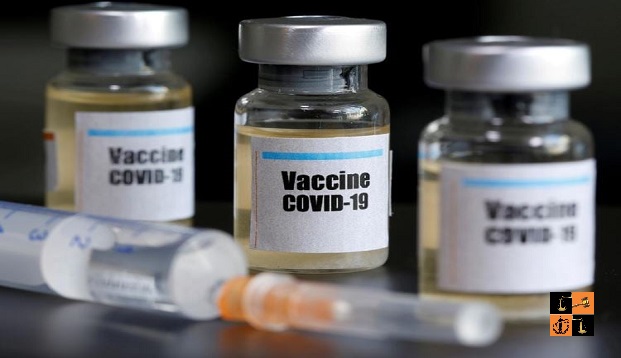
Recently there is a debate going on in the legal fraternity, especially the judicial community regarding the issue of compulsory licensing of Covid-19 medicines and vaccines. All Covid-19 related cases were transferred to the Supreme Court. In the Supreme Court, the center filed an affidavit regarding compulsory licensing of Covid-19 vaccines. In the affidavit, the center stated that “the center is not in a condition to use compulsory licensing because of non-availability of products for making such drugs”.[4]
Seeing the deteriorating condition of the country's health infrastructure and massive increase in the fatality rate, different High Courts of the states are raising questions in front of the central government. Recently Kerala High Court has asked center’s response on compulsory licensing of Covid-19 vaccine.[5] The Bombay High Court also urged for door to door vaccination. Similarly, Delhi High Court has pointed for drive-in vaccination centers in open spaces. But more recently the Karnataka High Court points out the most pertinent question and asked the center’s position on vaccine shortage. The shortage of vaccines is a brutal reality, which can only be resolved by method of compulsory licensing. With the help of compulsory licensing, other pharmaceuticals will get the opportunity of producing the Covid-19 vaccine, which will enhance the supply of vaccines in the country.
Conclusion
As it was said by the, Mike Ryan, epidemiologist at WHO, that "Be fast, have no regrets... If you need to be right before you move, you will never win”. The same should be the approach of the government to take rigorous steps to control the pandemic. One such step which the government can use is compulsory licensing that will help Indian pharmaceutical industry to produce more drugs and vaccines to deal with the pandemic without facing the brunt of the patent laws. Compulsory licensing in the current situation can be seen as a tool of social justice enshrined in the constitution and hence must be applied for protecting the citizen’s from this deadly pandemic.
References:
[1] Compulsory licensing of pharmaceuticals and TRIPS, available on https://www.wto.org/english/tratop_e/trips_e/public_health_faq_e.htm, accessed on 12, May, 2021.
[2], “Standing up to patent bullying” May 21, 2016 available on http://www.thehindu.com/opinion/op-ed/standing-up-to-patent-bullying/article8377812.ece, accessed on 12 May, 2021.
[3] “Compulsory licensing in manufacturing may slow investments: EU” (The Hindu February 5, 2016) available on http://www.thehindu.com/business/compulsory-licensing-in-manufacturing-may-slow-investments-eu/article8194418.ece accessed on 12 May, 2021.
[4] https://www.businesstoday.in/current/economy-politics/using-trips-flexibility-for-local-production-of-patented-covid-19-medicines-not-good-idea-centre/story/438709.html accessed on 12 May, 2021.
[5] https://www.thehindubusinessline.com/news/national/kerala-high-court-seeks-centres-response-to-invoke-compulsory-licensing-of-covid-vaccines/article34534257.ece accessed on 21 May,2021.
Picture Source : CNBC




















