









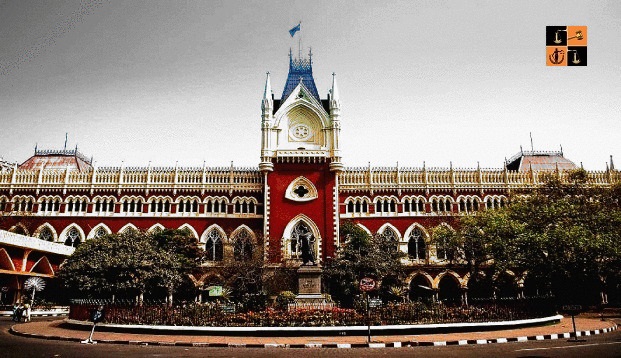
Recently, the Calcutta High Court refused to refer a commercial lease dispute to arbitration, holding that a claim seeking specific performance of a fresh lease, founded on correspondence exchanged after expiry of the original lease, cannot be compelled into arbitration solely because the earlier, lapsed lease contained an arbitration clause. The Court reiterated that once a lease has expired, rights asserted independent of that lease fall outside the scope of its arbitration clause.
Brief Facts:
The dispute arose from a commercial premises originally owned by Williamson Magor, later transferred to HDFC Limited, and eventually vested in the defendant-landlord following the merger of HDFC Limited in March 2023. The plaintiff-lessee occupied the premises under a parent lease deed dated 24 September 2014, executed for a fixed term of nine years, which admittedly expired on 31 March 2023. Prior to expiry, the parties exchanged a series of emails and letters dated 12 May, 19 May, and 26 May 2022, which the plaintiff claimed constituted a concluded contract for renewal or further lease. Despite the lease expiring without execution of any renewal deed, the plaintiff continued in possession, allegedly with the landlord’s consent, and rent was accepted. Matters escalated when the defendant issued an eviction notice on 5 September 2023, citing statutory obligations under the Banking Regulation Act.
This prompted the plaintiff to file a commercial suit seeking specific performance of the alleged concluded contract and injunctive reliefs, while the defendant responded with an application under Section 8 of the Arbitration and Conciliation Act, 1996, seeking reference of the dispute to arbitration.
Contentions of the Plaintiff:
Senior Counsel for the plaintiff countered that the suit was narrowly tailored to enforce a concluded contract arising independently from the expired lease, based solely on the 2022 correspondence. The parent lease, it was argued, had admittedly come to an end on 31 March 2023, and the relief sought was not renewal under that lease but execution of a fresh lease from 1 April 2023.
It was further contended that even if the commercial terms of the earlier lease were referred to, the arbitration clause could not be imported by implication into a new contract unless specifically incorporated. Reliance was placed on M.R. Engineers and Contractors Pvt. Ltd. v. Som Datt Builders Ltd. to submit that arbitration clauses do not automatically travel with referenced contracts. Additionally, the plaintiff argued that the legality of eviction premised on the Banking Regulation Act was a matter beyond the arbitrator’s jurisdiction.
Contentions of the Defendant:
Counsel for the defendant argued that a plain reading of the plaint revealed that the plaintiff’s claim was rooted in the parent lease and its alleged renewal. Reliance was placed on Clause 6 of the lease, which contemplated the possibility of a fresh lease by mutual agreement prior to expiry, and Clause 7, the arbitration clause, which was framed in expansive terms covering disputes “otherwise howsoever in relation to the demised premises.”
It was contended that whether a concluded contract for renewal existed, or whether the plaintiff was obliged to vacate upon expiry, were disputes intrinsically connected to the lease relationship and therefore squarely arbitrable. Emphasis was laid on the mandatory nature of Section 8, asserting that once an arbitration agreement exists, the Court is duty-bound to refer the parties to arbitration.
Observations of the Court:
The High Court began by reaffirming the settled law governing Section 8 applications: if the subject matter of a suit is covered by an arbitration agreement, reference to arbitration is mandatory. However, the Court stressed that this determination must be made by reading the plaint as it stands, without testing the merits of the claim or the defence. On a meaningful reading of the plaint, the Court found that the plaintiff was not asserting any subsisting right under the parent lease, which had “admittedly expired on March 31, 2023.” The Bench made a crucial conceptual distinction, observing that “the moment the parent lease stands expired, question of renewal does not arise,” and any subsequent arrangement could only be in the nature of a fresh lease.
The Court rejected the defendant’s attempt to characterise the suit as one for renewal under the old lease, holding that the plaintiff’s prayer was clearly for “execution of a lease… with effect from April 1, 2023 on the basis of the said three correspondences.” It further held that such a claim could not be stretched to fall within the phrase “otherwise howsoever in relation to the demised premises” in the arbitration clause of an expired lease. In a pointed observation, the Court clarified that even at the Section 8 stage, it was impermissible to compel arbitration where the very foundation of the claim lay outside the arbitration agreement.
The decision of the Court:
The Court ultimately dismissed the defendant’s Section 8 application, holding that the subject matter of the suit, specific performance of an alleged concluded contract for a fresh lease post-expiry, was not covered by the arbitration clause contained in the expired parent lease. The ratio of the decision is clear, an arbitration clause does not survive to govern disputes arising from an independent, post-expiry arrangement unless expressly incorporated, and courts will not compel arbitration by artificially linking such disputes to a dead contract.
Case Title: The New India Assurance Company Limited vs. HDFC Bank Limited
Case No.: CS-COM/41/2025
Coram: Justice Aniruddha Roy
Advocate for Petitioner: Adv. Sabyasachi Choudhury (Sr. Adv.), Rajdeep Bhattacharya, Shreyaan Bhattacharya
Advocate for Respondent: Adv. Sayantan Bose, Soorjya Ganguli, Pooja Chakrabarti, Prithwish Roy Chowdhury
Read Judgment @Latestlaws.com
Picture Source :



















