









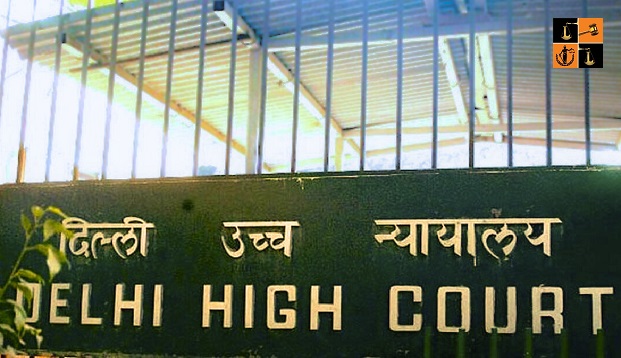
Recently, the Delhi High Court, while examining a petition filed by the Municipal Corporation of Delhi (MCD) under Section 37 of the Arbitration and Conciliation Act, 1996, held that an emergency award issued under the Delhi International Arbitration Centre (DIAC) Rules, 2023 cannot continue to operate beyond 90 days unless its validity is extended by a duly constituted Arbitral Tribunal. The petition had been filed to challenge an emergency order passed in favour of Himalyan Flora and Aromas Pvt. Ltd.
Justice Purushaindra Kumar Kaurav, while allowing the appeal, observed that the “term ‘emergency’ in ‘Emergency Arbitrator’ has some significance,” clarifying that such powers are conferred only to deal with emergent situations and not to extend interim measures indefinitely.
The dispute arose when the Emergency Arbitrator had extended the operation of his interim order beyond the prescribed 90-day period. MCD argued that under Rule 14.13 of the DIAC Rules, only the Arbitral Tribunal has the authority to modify, substitute, vacate, or extend the operation of an emergency order, not the Emergency Arbitrator himself.
The Respondent, represented by Senior Advocate Rajshekhar Rao, contended that the rule’s language permits the Emergency Arbitrator to extend the operation of his own order and that “Arbitral Tribunal” includes “Emergency Arbitrator” under Rule 2(c) of the 2023 Rules.
Rejecting that contention, the Court held that the two terms cannot be used interchangeably. Justice Purushaindra Kumar Kaurav observed, “for the purposes of Rule 14, the terms ‘Emergency Arbitrator’ and ‘Arbitral Tribunal’ cannot be used interchangeably. Rule 14.11 of the Rules of 2023 clearly bars the Emergency Arbitrator from being a part of the Arbitral Tribunal unless otherwise agreed by the parties. No such agreement has been reached between the parties in the aforesaid regard. Therefore, clearly, for the purposes of the present dispute, the Emergency Arbitrator cannot be deemed to be ‘Arbitral Tribunal’ so as to exercise the power vested in the latter under Rule 14.13 of the Rules of 2023.
The Court reasoned that allowing an Emergency Arbitrator to extend the duration of their own order would defeat the scheme and object of emergency arbitration under the A&C Act. It further noted that such powers are intentionally limited to prevent the emergency mechanism from evolving into a parallel arbitration process.
Finding that the emergency order had already lived its life and ceased to remain in operation beyond a period of 90 days, the Court set it aside. However, acknowledging that the order had been operational for nearly eleven months, Justice Kaurav directed that status quo be maintained for seven days to allow the respondent to seek interim relief under Section 9 or 17 of the Arbitration and Conciliation Act.
Concluding the matter, the Court clarified that its observations were confined to the peculiar facts of the case and that the Arbitral Tribunal, once constituted, shall adjudicate independently “without being influenced by the observations made hereinabove.”
Case Title: Muncipal Corporation of Delhi Vs. Himalyan Flora And Aromas Pvt Ltd.
Case No: ARB. A. (COMM.) 54/2025
Coram: Hon’ble Mr. Justice Purushaindra Kumar Kaurav
Advocate for Petitioner: Sr. Adv. Arundhati Katju, Advs. Sanjay, Ritika and Siddhartha and ASO Sanjeet
Advocate for Respondent: Sr. Adv. Rajshekhar Rao, Advs. Anand Mishra, Vandita, Ayushi, Ajay, Devansh, Avadh Bihari Kaushik, Saloni Mahajan and Rishabh Kumar
Picture Source :




















