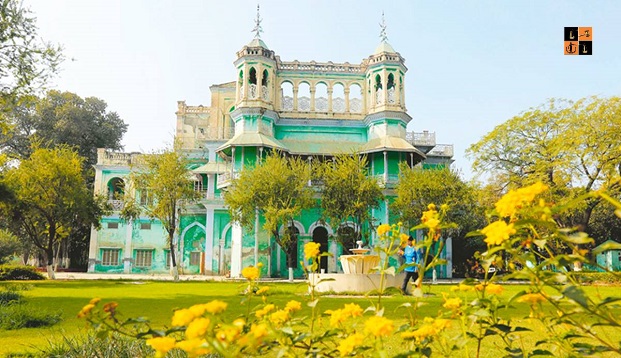
In a significant judgment, delivered by the High Court of Punjab and Haryana, a decade long dispute of property of Late Maharaja Harinder Singh Brar worth Rupees 20,000 Crore was decided on June 1, 2020. The dispute arose over the contents of a purported Will allegedly executed by Maharaja by which his entire estate was bequeathed to a Trust called Maharwal Khewaji Trust and its control and management was also allegedly transferred to the Board of Trustees and the Executor. Reiterating the finding of lower Court, the HC in its 547 long Judgment, has held that the Will is “forged, fabricated and shrouded with suspicious circumstances.” Further, the claim of petitioners regarding getting ‘entire estate to themselves’ were dismissed and their shares as determined in a Will executed by mother of Maharaja, was held to be valid and directed to be decided as per the Hindu Succession Act.
Facts of the Case
Maharaja Harinder Singh Brar was son of Maharaja Brij Inder Singh; the Raja of Farikot. He along with his mother, Maharani Mohinder Kaur and his brother Kuwar Manjit Inder Singh, survived his father. He had pre-deceased son named Tikka Harmohinder Singh and three daughters named Rajkumari(s) Amrit Kaur, Deepinder Kaur and Mihinder Kaur. His brother was survived by Tikka Bharat Inder Singh, Rajkumari Devinder Kaur and Rajkumari Heminder Kaur.
As mentioned above, after his death, a Will, alleged to have been executed by Maharaja on June 1, 1982, was read out to the public, by which the entire estate was bequeathed to a Trust called Maharwal Khewaji Trust and its control and management was also allegedly transferred to the Board of Trustees and Executor.
Thus, two suits were preferred against this Will by; (a) daughter of Maharaja; Rajkumri Amrit Kaur against her sisters, challenging the validity of the Will and claiming ownership of the entire estate under ‘The Raja of Faridkot’s Estate Act, 1948;’ and (b) brother of Late Maharaja through his LR seeking inheritance of entire estate by ‘Rule of Primogeniture’ besides challenging the validity of the Will.
Decision of the Trial Court
The Court of Additional Civil Judge (Senior Division) Chandigarh partly dismissed and partly decreed the Suit of plaintiff Rajkumari Amrit Kaur and held that; (a) the Will was null and void; (b) the plaintiff was entitled to joint possession to the extent of ½ (half) share with defendant No.1 Maharani Deepinder Kaur qua the properties specified by it except the properties acquired by any State Governments or Central Government; (c) the Trust was non-existent; and (d) the defendants were restrained from disposing of the suit property as specified. The second Suit preferred by plaintiff Kanwar Manjit Inder Singh through his LR was dismissed.
Aggrieved by the findings of the Trial Court, a bunch of appeals were preferred before the filed before the lower Appellate Court. Vide common judgment, all the Civil Appeals and cross-objections were taken up together and the lower Appellate Court vide judgment and decree dated 05.02.2018 dismissed all the appeal and cross-objections.
Thus, the matter eventually reached the Punjab and Haryana High Court as Regular Second Appeals by the following parties; (a) Rajkumari Amrit Kaur claiming the entire estate on the basis of The Raja of Faridkot's Estate Act, 1948 besides challenging the Will; (b) Bharat Inder Singh (since deceased) through his LR claiming the estate on the basis of primogeniture; and (c) Maharani Deepinder Kaur and others stalking their claims on the basis of validity of Will and Trust created thereunder and challenging the maintainability of the above mentioned suit(s). They also claimed that Rule of Primogeniture is not in existence and The Raja of Faridkot's Estate Act, 1948 had already ceased to operate after the merger agreement and coming into being of PEPSU.
Questions of Law before the High Court;
(1) Whether the Raja of Faridkot Estate Act 1948 is a valid and applicable for succession claim of Rajkumari Amrit Kaur?
(2) Whether Law of Primogeniture is applicable in the succession of Estate of deceased Raja Harinder Singh?
(3) Whether the Will executed was valid and Maharwal Khewaji Trust constituted thereunder is a legally constituted Trust?
Court's Decision
The Hon'ble Court came to the conclusion that basic question before it is the applicability of relevant provision of law in terms of Limitation Act. The Court held that the suit has been preferred within limitation.
Appeal of Rajkumari Amrit Kaur-
Dismissing the Appeal preferred by Rajkumari Amrit Kaur and her claim with regard to succession to the estate of late Raja Harinder Singh on the basis of The Raja of Faridkot's Estate Act, 1948, the Court held that it is not sustainable.
Appeal of Maharani Deepinder Kaur
With respect to the Appeal preferred by 'Maharani Deepinder Kaur and others vs. Rajkumari Amrit Kaur and others' the Court held that it is totally ‘devoid of merits’ and thus is dismissed.
Findings of the Will dated June 1, 1982
The Court held that the Will dated 01.06.1982 is “found to be forged, fabricated and shrouded with suspicious circumstances. Therefore, the same has been rightly discarded by the Courts below and the Trust created thereunder is also held to be unfounded.”
Appeal Preferred by Bharat Inder Singh through his LR
The Appeal titled Amarinder Singh Brar vs. Maharwal Khewaji Trust through its Boards of Trustees and others' was dismissed by the Court with the following observations:-
“The claim with regard to succession to the estate and private properties of deceased Raja Harinder Singh on the basis of Law of Primogeniture is dismissed, however the appellant would succeed to proportionate share of late Maharani Mohinder Kaur on the basis of registered Will dated 29.03.1990 executed by her. Maharani Mohinder Kaur (mother of Raja) was alive at the time of death of Raja on 16.10.1989 and she being one of the first class heirs of Raja would have succeeded share in the estate/properties of late Raja.”
Read Order/ Judgement @LatestLaws.com