In a sharp procedural challenge testing the limits of parental financial responsibility, the Allahabad High Court stepped in to examine whether a father facing a maintenance claim could compel the impleadment of the child's working mother as a co-party, a move widely seen as a tactic to dilute his own statutory liability. The case, arising from a maintenance application filed before the Family Court in Azamgarh on behalf of a minor girl, raised a pointed question: can a father, himself employed and earning, force the court's hand by insisting the mother, a Police Constable drawing a higher salary, must formally sit beside him in the dock before he pays a single rupee toward his child's upkeep?
The controversy began when a maintenance application under Section 144 of the Bharatiya Nagarik Suraksha Sanhita (B.N.S.S.) was filed before the Principal Judge, Family Court, Azamgarh, on behalf of a minor child, Km. Rittika, through her maternal grandfather, against her father, Arvind Kumar, a Railway Clerk earning approximately Rs. 41,000 per month. Seeking to share, or perhaps deflect, the financial burden, the father moved an application before the Family Court seeking to implead the child's mother, Smt. Poonam, a serving Police Constable with a monthly salary of around Rs. 55,000, as a party to the proceedings.
The Family Court rejected this application, holding that criminal maintenance proceedings are summary in nature and carry no specific provision analogous to Order I Rule 10 of the Code of Civil Procedure for impleadment of additional parties. Aggrieved, the father knocked on the doors of the High Court, armed with a Supreme Court precedent, Chandu Sridevi v. Chandu Sesha Rao, which recognises that where both parents are earning, child maintenance is a shared and joint parental responsibility.
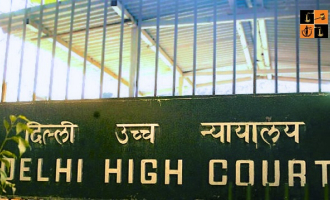
Justice Madan Pal Singh was not persuaded that the Family Court had erred, even while acknowledging the legal merit embedded in the father's argument. The Court firmly reiterated the principle of Dominus Litis, the master of proceedings, holding that the maternal grandfather, as the applicant, had the absolute prerogative to choose the parties against whom relief was sought. On the father's statutory duty, the Court was unambiguous: "The liability of the father to maintain his minor child is a legal and moral obligation and the revisionist cannot seek to avoid or postpone such liability by insisting that the mother must first be impleaded as a party to the proceedings."
However, in a significant rider, the Court balanced the scales by clarifying that while the impleadment was correctly refused, the Family Court must not assess maintenance in a vacuum, it shall factor in the mother's income and financial capacity when arriving at a just quantum. The criminal revision was accordingly dismissed.
Case Title: Arvind Kumar Vs. State of U.P. and Anr
Case No.: Criminal Revision No. - 5048 of 2025
Coram: Hon'ble Mr. Justice Madan Pal Singh
Advocate for the Petitioner: Adv. Ravindra Kumar Mishra
Advocate for the Respondent: G.A Chandra Bhushan Singh,
Read Judgment @Latestlaws.com